Hello design lovers,
Welcome to our exploration of one of the most charming and enduring interior design movements: Arts and Crafts.
In a world where sleek minimalism often takes center stage, there’s something deeply comforting and timeless about the warmth and craftsmanship of Arts and Crafts design. Join us as we delve into the origins, key characteristics, and enduring influence of this beloved aesthetic. Whether you’re a seasoned aficionado or a newcomer to the world of interior design, prepare to be inspired by the beauty and authenticity of Arts and Crafts.
Emergence of A New Way of Thinking
In the late 19th century, as the Industrial Revolution transformed Britain, the Arts and Crafts Movement arose in response to the era’s mechanized manufacturing and impersonal aesthetics. Advocating for handcrafted artistry, the use of natural materials, and thoughtful design, it critiqued the mass-produced and ornate goods of the Victorian era, promoting interiors of aesthetic beauty and integrity.
Pioneered by figures like William Morris and John Ruskin, the movement celebrated simplicity, practicality, and nature, profoundly influencing interior design. It extolled the virtues of wood, stone, and functionality in furnishings and decor.
Beyond Britain, the movement gained traction in the United States, influencing architectural styles such as the Prairie School. The Arts and Crafts Movement’s legacy is profound, championing a design philosophy that values the harmony of form and function and the delight in craftsmanship.

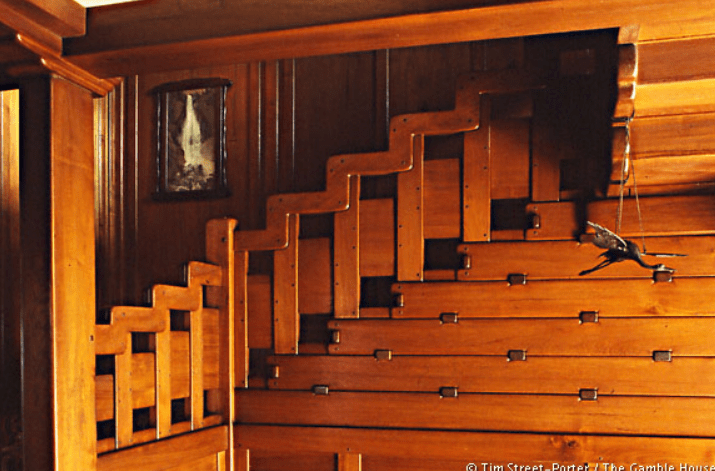
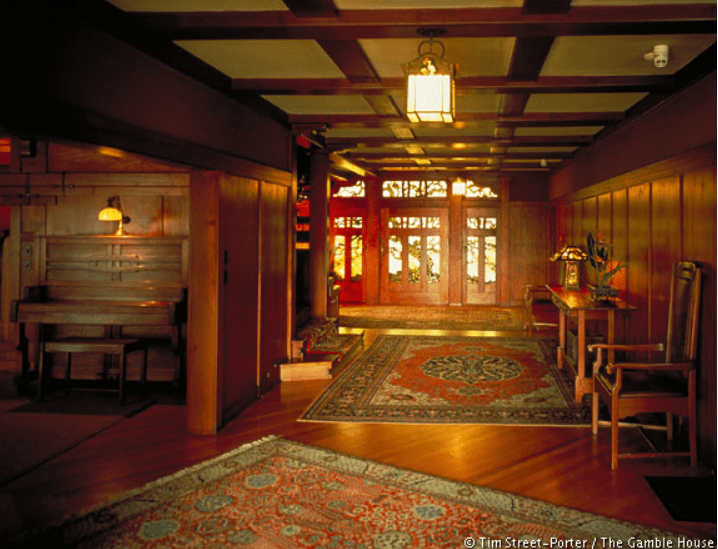
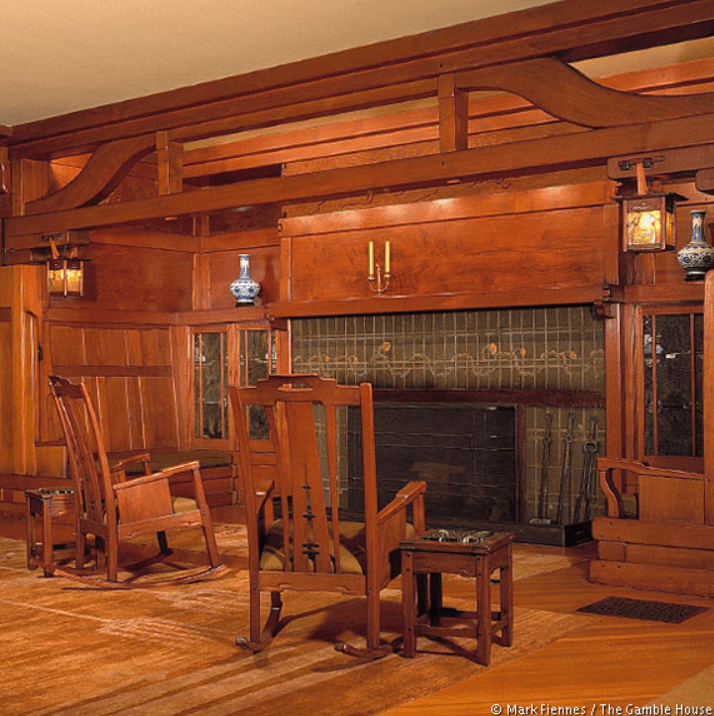
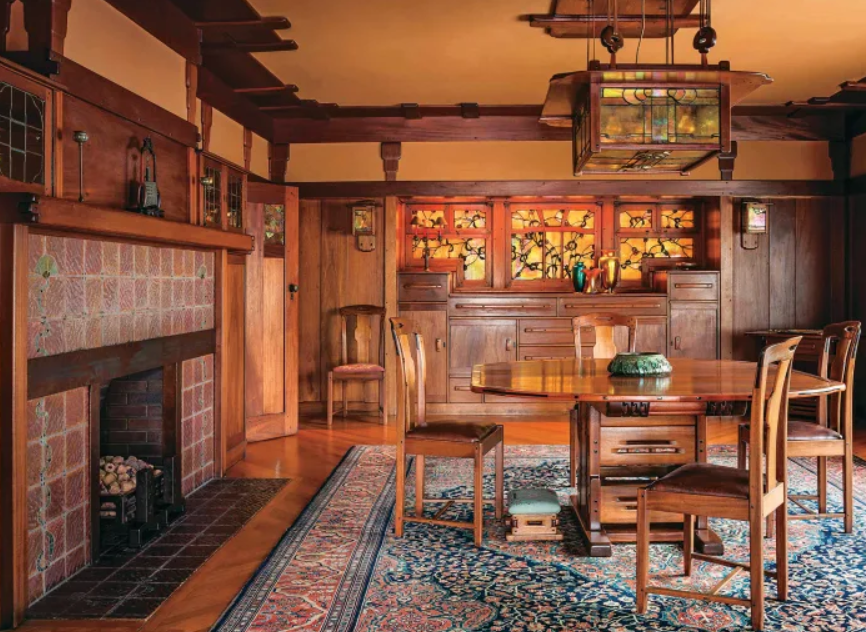
The Gamble House in Pasadena, California, designed by brothers Charles Sumner Greene and Henry Mather Greene, epitomizes the American interpretation of the Arts and Crafts Movement. Completed in 1909 as a winter residence for David and Mary Gamble of the Procter & Gamble Company, the Gamble House is celebrated for its exquisite craftsmanship, use of natural materials, and seamless integration with its landscape. The house’s interior features custom-made furniture, intricate wood paneling, and stunning leaded glass that create a warm and inviting atmosphere. The design of the Gamble House reflects the Greene brothers’ belief in the unity of art, architecture, and craftsmanship, with every detail of the home meticulously planned and executed to embody the principles of the Arts and Crafts Movement. As one of the most complete and best-preserved examples of the American Arts and Crafts style, the Gamble House continues to be a source of inspiration for its holistic approach to design and its celebration of craftsmanship.
Historical Context and Philosophical Foundations
In the late 19th century, the Arts and Crafts Movement emerged as a significant cultural response to the Industrial Revolution’s impact on society, which included increased production but also a decline in craftsmanship quality and a detachment in the workforce. It aimed to reinstate the value of craftsmanship and the integrity of design in Britain, challenging the era’s mass-produced, low-quality goods.
The movement was deeply influenced by John Ruskin and William Morris, who critiqued the industrial age’s division of labor and its alienation of workers from their creations. Ruskin advocated for aesthetically pleasing, ethically made designs, while Morris put these ideals into practice by founding Morris & Co., which focused on handcrafted goods and eschewed mechanical production. They sought to fundamentally change the relationship between artisans, their work, and the environment, promoting a philosophy where homes and workplaces were filled with items that were both practical and beautiful, crafted with pride and dignity.
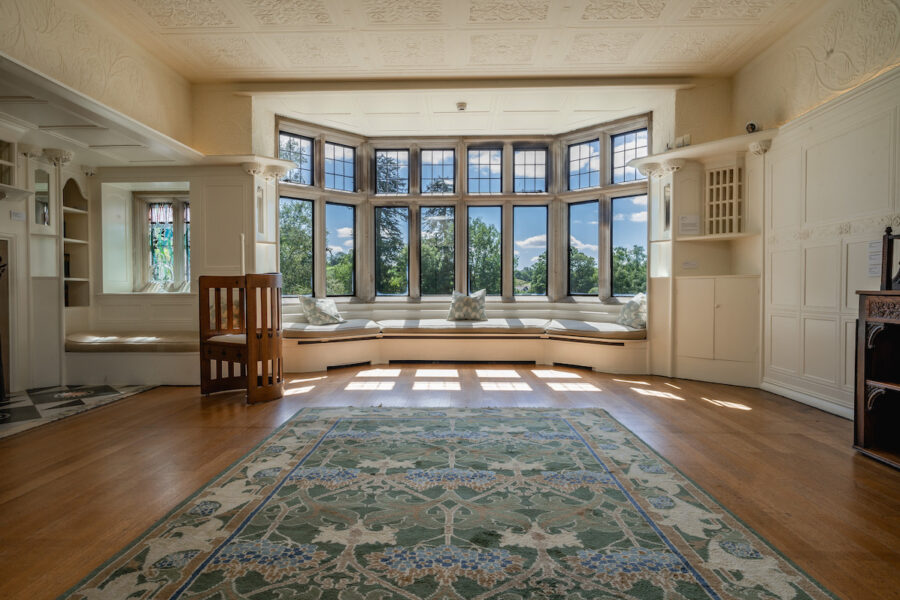
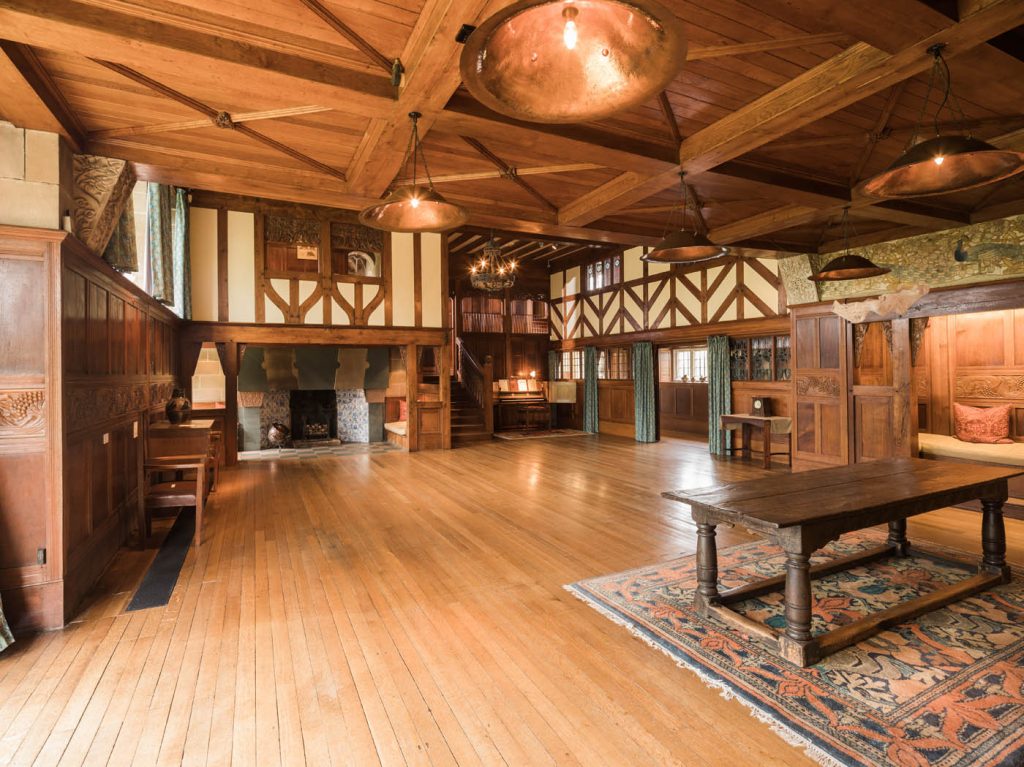
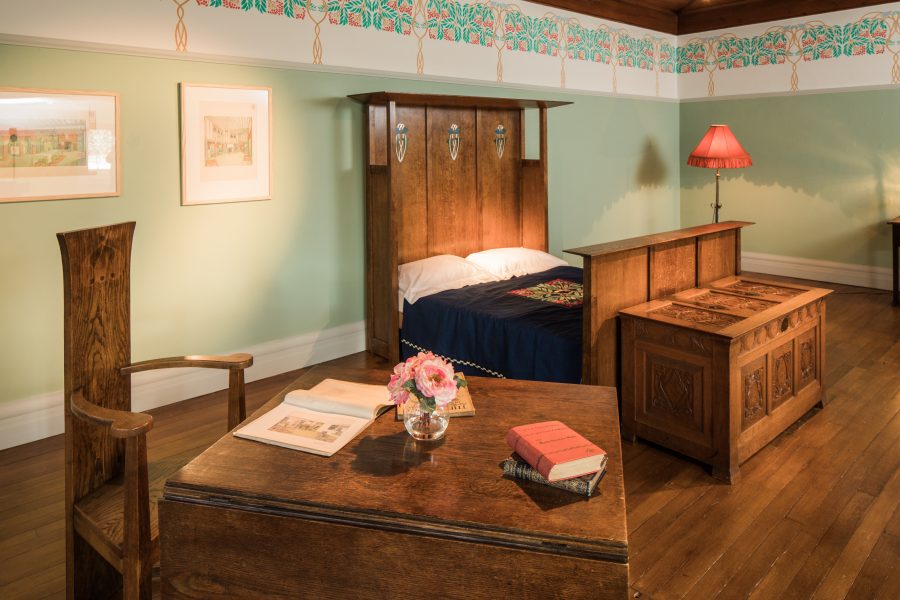
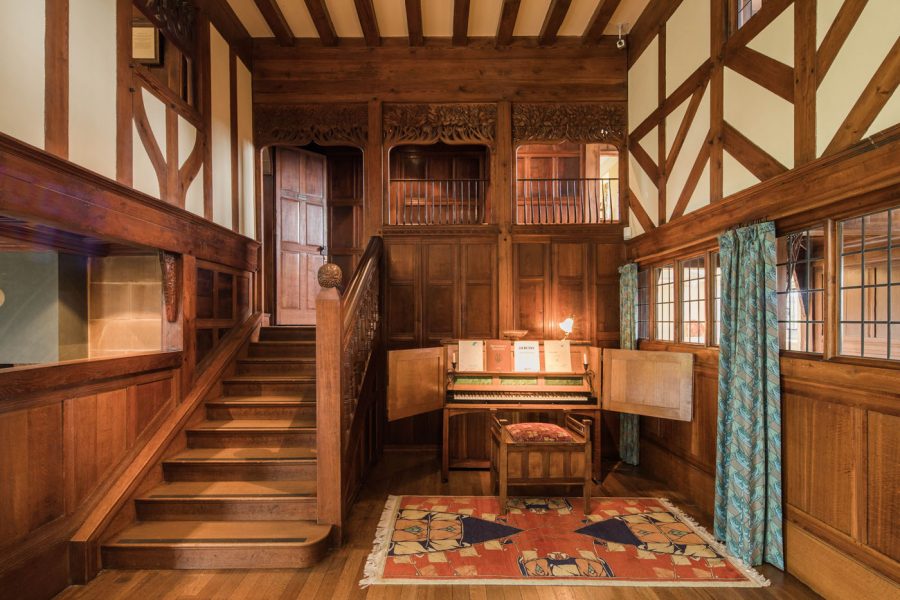
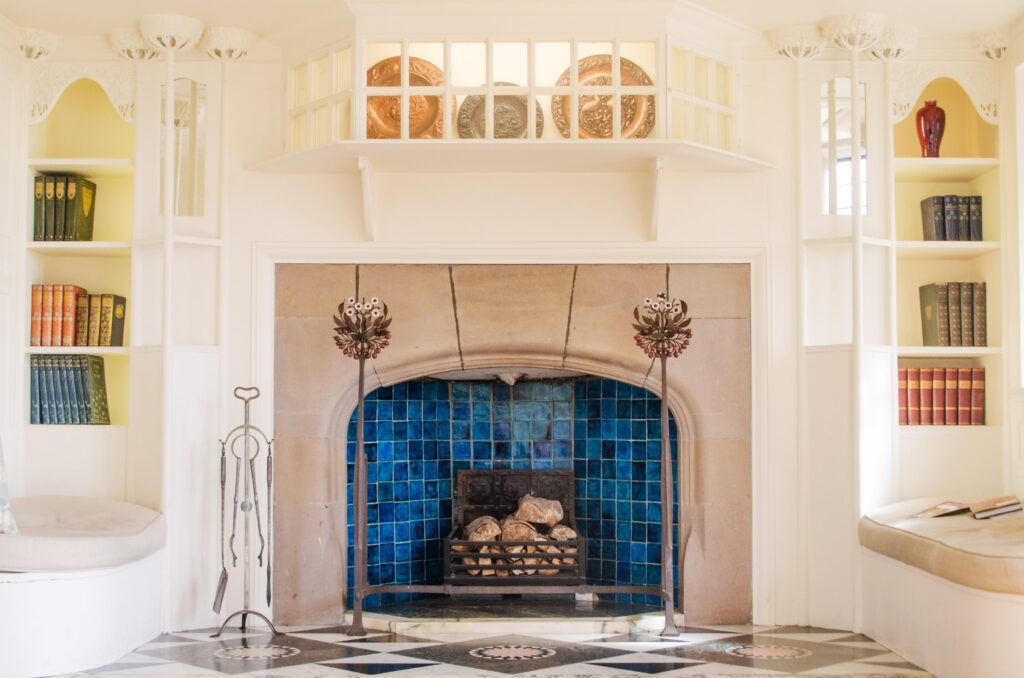
Blackwell House, situated in the Lake District of England, serves as a prime example of how the Arts and Crafts Movement flourished outside urban centers. Designed by architect M.H. Baillie Scott in 1898, Blackwell House captures the essence of Arts and Crafts with its emphasis on blending the house with its natural surroundings, extensive use of local materials, and handcrafted details. The house’s interiors, featuring inglenook fireplaces, bespoke furniture, and intricate stained glass, showcase a dedication to creating a complete and cohesive design that is both beautiful and functional. Blackwell House stands as a testament to the Arts and Crafts ideal of creating spaces that elevate the quality of domestic life.
The Arts and Crafts ethos was further spread through guilds, societies, and educational programs that championed manual skills and creativity, embedding its principles into society. By advocating for a return to handcraftsmanship and a thoughtful approach to design, the Arts and Crafts Movement addressed the negative effects of industrialization, laying the foundation for future design movements and continuing to impact aesthetic and ethical considerations in design.
Key Figures and Contributors
The propulsion of the Arts and Crafts Movement was due to a constellation of visionaries whose pivotal contributions shaped its philosophy, aesthetic, and legacy. This narrative delves into the lives and works of these key figures, spotlighting their unique contributions to the movement.
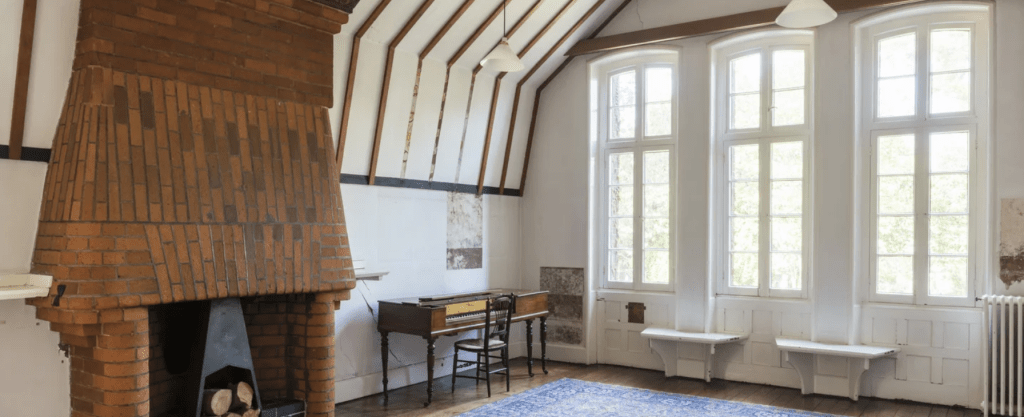
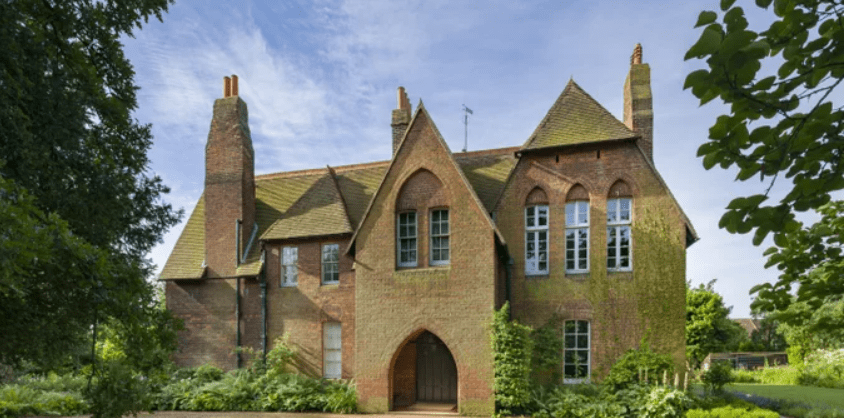
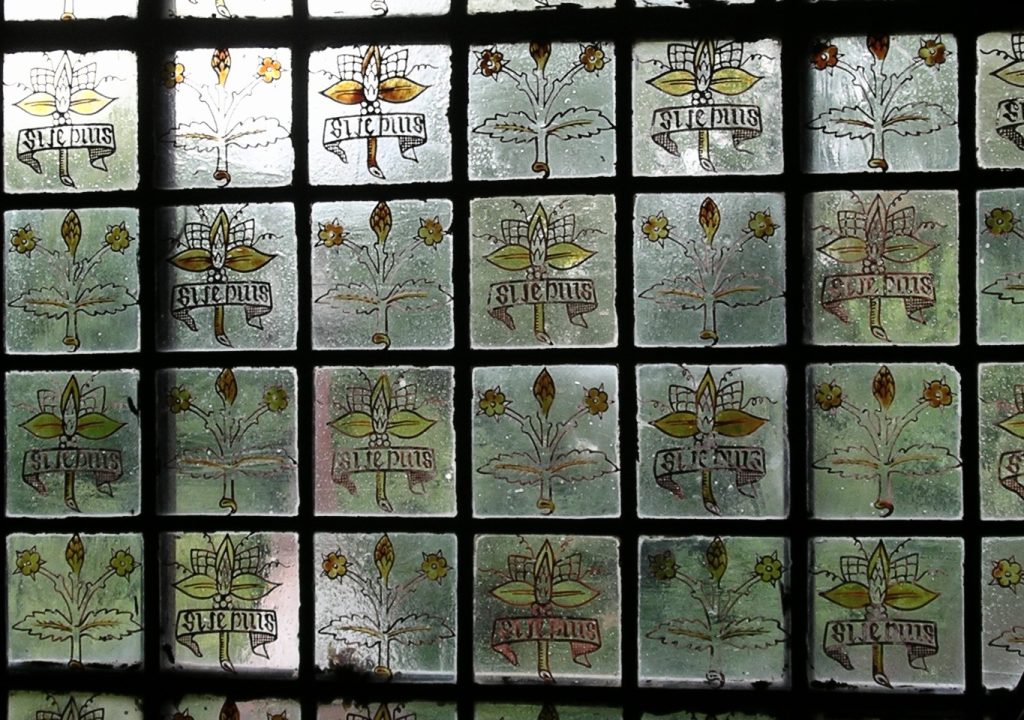
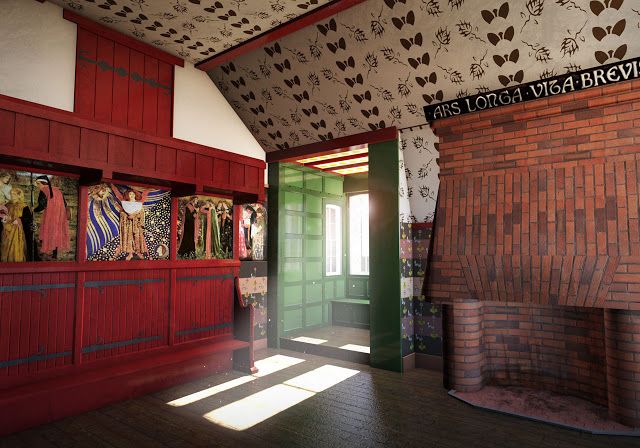
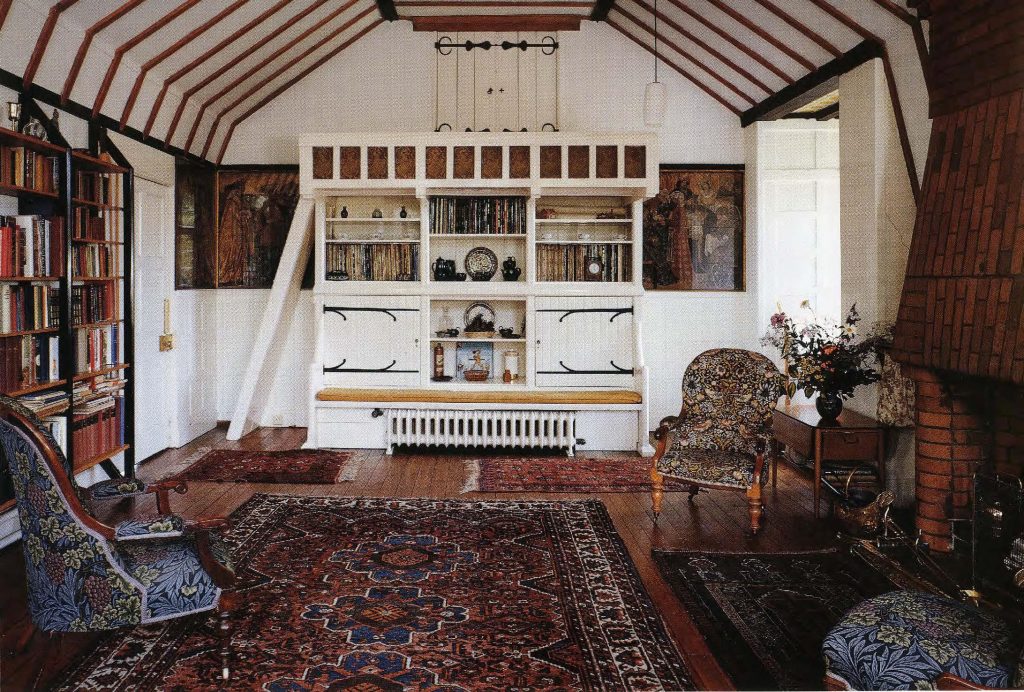
The Red House, located in Bexleyheath, England, and designed by architect Philip Webb for William Morris, stands as a testament to the Arts and Crafts Movement’s ideals. Completed in 1860, the Red House was conceived as a total work of art, where every element, from the architecture to the furnishings and wall decorations, was designed to create a harmonious and integrated interior. The house’s distinctive red brickwork, steeply pitched roofs, and use of natural motifs in its stained glass and murals reflect the movement’s commitment to traditional craftsmanship and the beauty of natural forms. Inside, Morris’s wallpapers and textiles, featuring intricate patterns inspired by the English countryside, adorned the rooms, creating spaces that were both beautiful and functional. The Red House remains a seminal example of the Arts and Crafts Movement, embodying Morris’s vision of a home that is in tune with its surroundings and crafted with human care and creativity.
- William Morris (1834–1896): A central figure of the Arts and Crafts Movement, known for his diverse contributions from textiles and wallpapers to furniture and stained glass, all driven by his belief in the unity of art and life. He strongly opposed industrial production for its poor-quality goods, advocating instead for craftsmanship and integrity in creation. His firm, Morris & Co., became a model for these ideals, reviving traditional crafts to produce functional, beautiful items.
- John Ruskin (1819–1900): An influential art critic and social theorist, significantly shaped the Arts and Crafts Movement’s principles without being a designer himself. His criticism of industrialization’s effects on society and his emphasis on the moral and aesthetic value of handcraftsmanship greatly inspired the movement. Through his notable works, including “The Stones of Venice” and “Unto This Last,” Ruskin advocated for Gothic architectural values and labor dignity, promoting a philosophy that combined beauty and practicality in objects to enhance daily life.
- Charles Rennie Mackintosh (1868–1928): A Scottish architect and designer, provided a unique interpretation of Arts and Crafts ideals. His work, characterized by linear elegance and the subtle use of natural motifs, served as a bridge between traditional Arts and Crafts values and the emerging Modernist movement. Mackintosh’s notable contributions, including the Glasgow School of Art design and his distinctive furniture, highlighted his innovative approach to space and light in interior design.
- Gustav Stickley (1858–1942): In the United States, Gustav Stickley emerged as a prominent figure in the Craftsman Movement, the American counterpart of the Arts and Crafts Movement. Through his furniture making and publication of “The Craftsman” magazine, Stickley played a crucial role in popularizing the movement’s ideals across America. His Craftsman (or Mission) style furniture, emphasizing simplicity, craftsmanship, and the natural beauty of wood, mirrored the movement’s principles and significantly impacted American interior design.
- Frank Lloyd Wright (1867–1959): Though not exclusively linked to the Arts and Crafts Movement, Frank Lloyd Wright incorporated many of its principles into his early architectural work. Wright’s designs, emphasizing the harmony between human habitats and the natural environment, resonated with the movement’s ideals. His Prairie School designs, which featured open floor plans and natural materials, marked a significant evolution in applying Arts and Crafts principles to modern architecture.
Design Characteristics and Techniques
The Arts and Crafts Movement, with its emphasis on a return to handcraftsmanship and the intrinsic beauty of natural materials, brought about a distinctive set of design characteristics and techniques. These principles were applied across various mediums, from architecture and furniture to textiles and decorative objects, creating a cohesive aesthetic that was both functional and beautiful. This section explores the key design features and methodologies that define the Arts and Crafts interior.
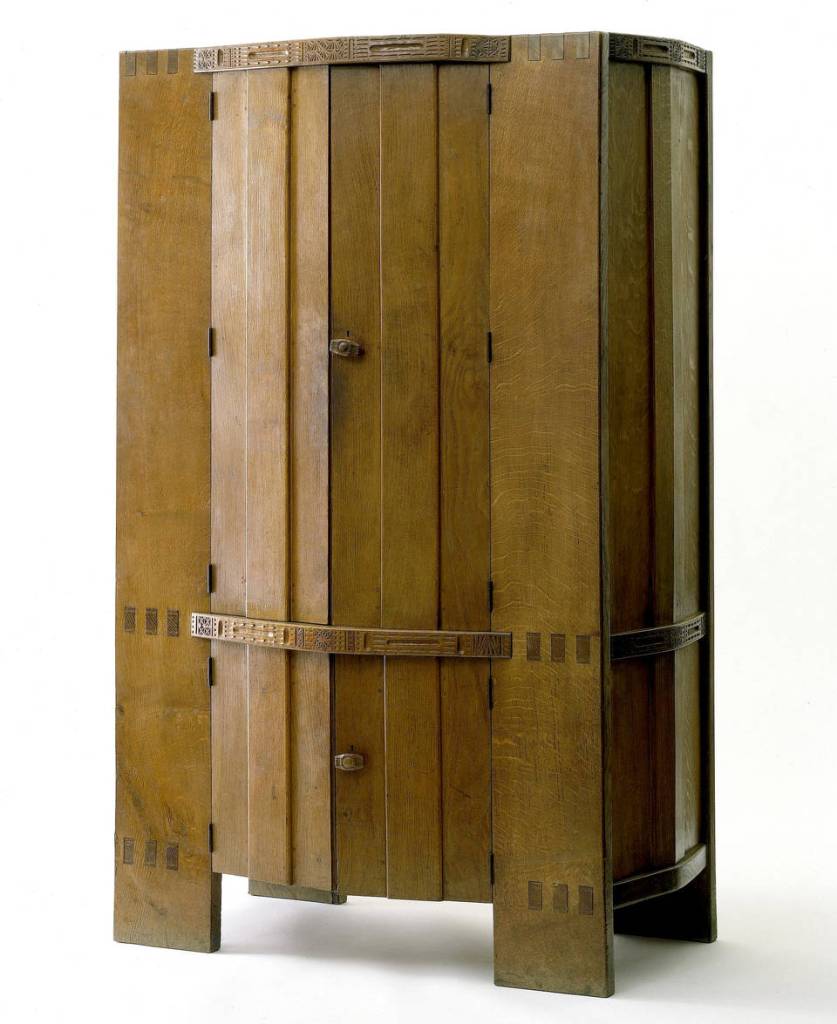
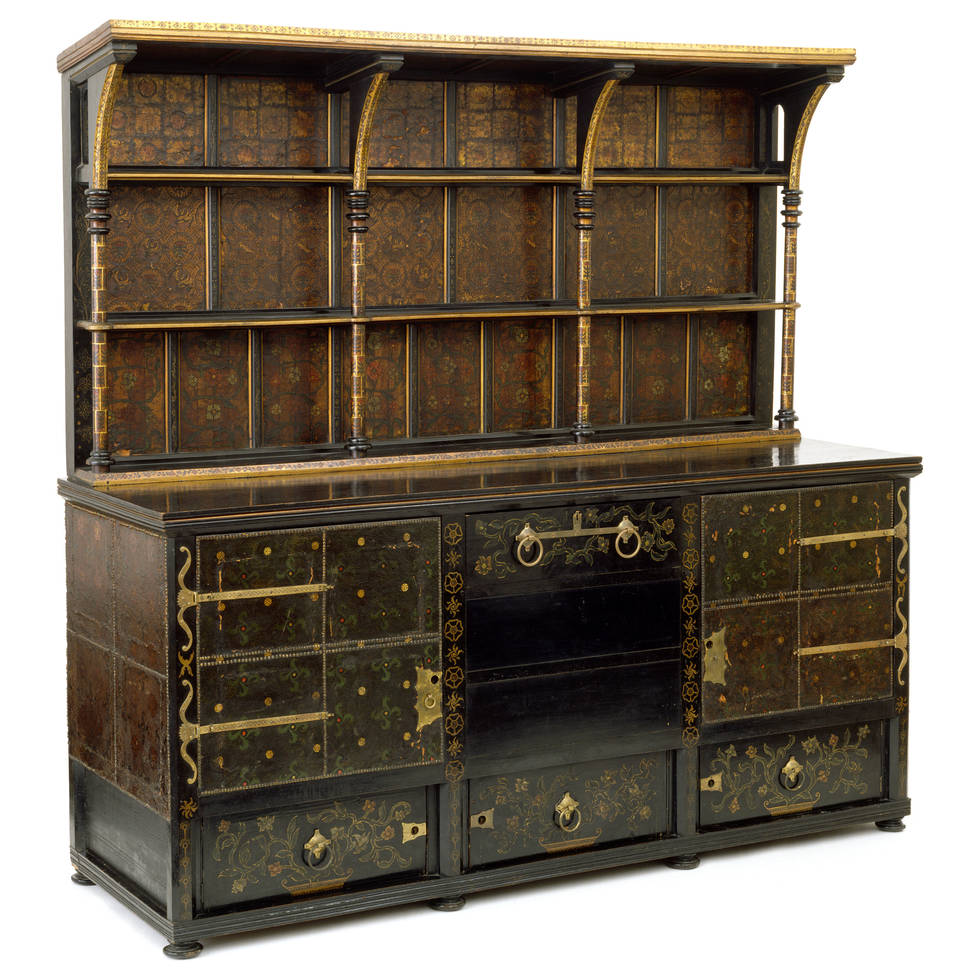

Fig. 16: Sideboard, designed by Philip Webb, made by Morris, Marshall, Faulkner & Co., about 1862, England. Museum no. CIRC.540:1 to 5-1963. © Victoria and Albert Museum, London.
Fig. 17: William de Morgan’s Enchanting Floral Tile: A Blossoming Example of Arts and Crafts Elegance.
- Emphasis on Handcrafted Woodwork and Furniture: One of the hallmark features of Arts and Crafts design is the emphasis on handcrafted woodwork and furniture that highlights wood’s natural beauty through minimal finishing. Furniture was designed to be both durable and simple, avoiding elaborate decoration in favour of showcasing the wood’s texture and the craftsmanship of traditional joinery like dovetail and mortise-and-tenon joints. These elements were not only functional but also served as decorative details.
- Use of Natural Materials and Motifs: The movement’s proponents advocated for the use of natural materials such as wood, stone, metal, leather, and textiles for their beauty, durability, and sustainability. Decor was inspired by nature, featuring stylized floral and botanical motifs in wallpapers, textiles, and stained glass, blending artistic interpretation with natural themes.
- Simplicity, Functionality, and Comfort: Arts and Crafts interiors focused on simplicity, functionality, and comfort, featuring open layouts for easy movement. Furniture was comfortable and multifunctional, avoiding excess decoration. Built-in features like benches and cabinetry enhanced space use and interior harmony.
- Colour Palettes and Patterns: Arts and Crafts interiors featured natural, earthy color palettes with deep greens, russets, blues, and warm wood tones, creating harmonious and welcoming spaces. Patterns in textiles and wallpaper were bold and simple, incorporating rhythmic, nature-inspired motifs.
- Architectural Features: The Arts and Crafts Movement in architecture featured homes with horizontal lines and a strong landscape connection, including exposed beams, large fireplaces, and spacious porches. Windows were designed for natural light and views, often with stained glass elements showcasing movement motifs.
Influence on Interior Design
The Arts and Crafts Movement has had a significant and lasting impact on interior design, challenging Victorian tastes and influencing modern design with its focus on simplicity, functionality, and craftsmanship. This shift towards cleaner, more organized spaces without unnecessary ornamentation paved the way for modernist design principles, emphasizing open spaces and clean lines.
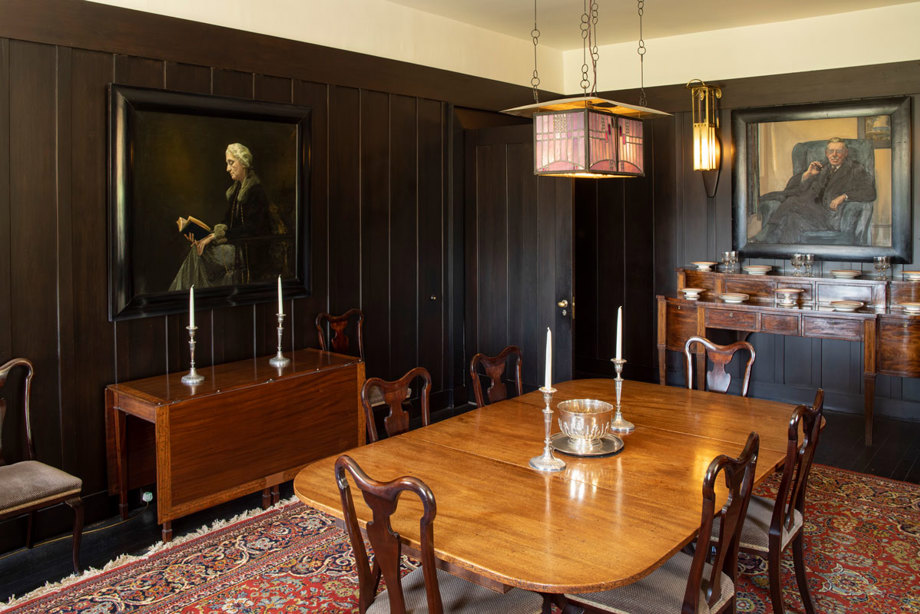
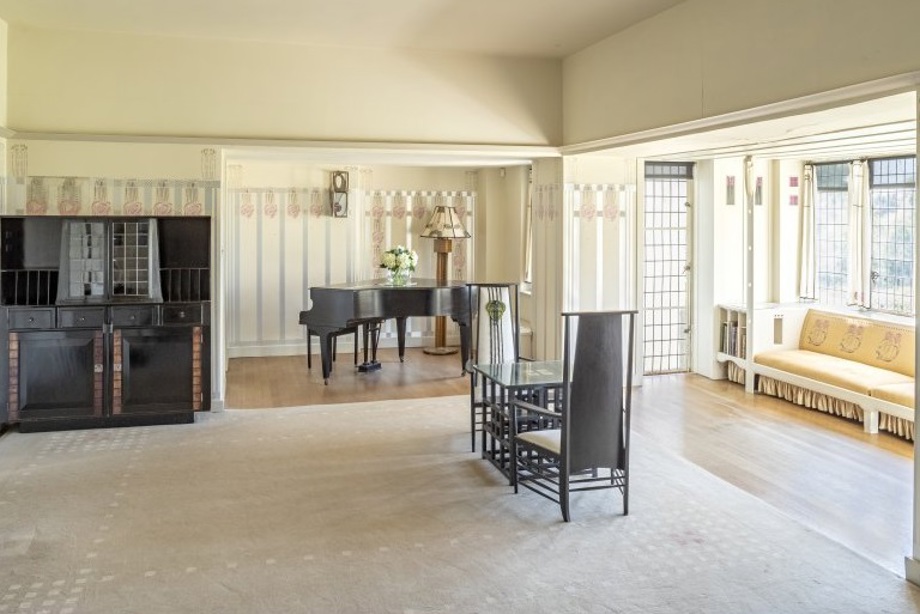
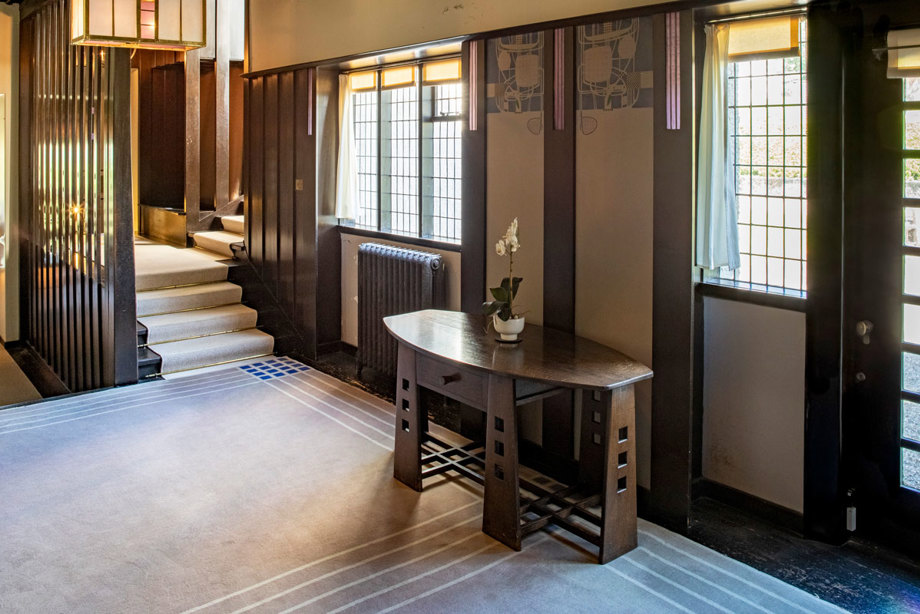
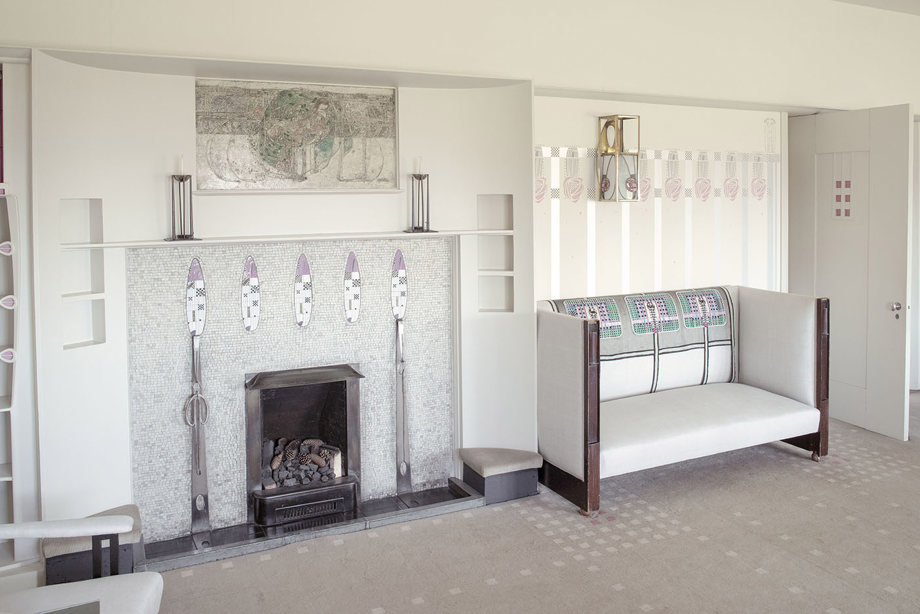
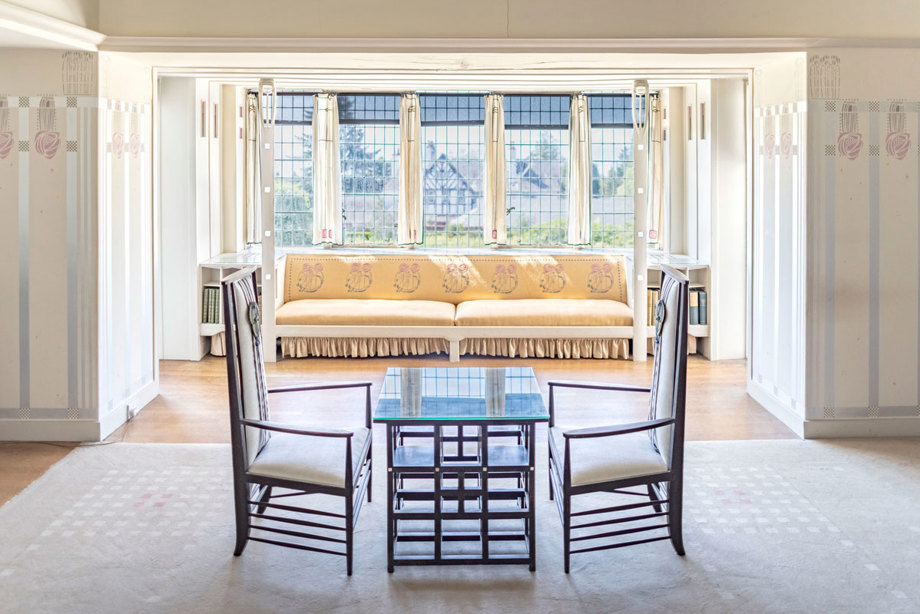
Designed by Charles Rennie Mackintosh for the publisher Walter Blackie, The Hill House in Helensburgh, Scotland, showcases Mackintosh’s unique interpretation of the Arts and Crafts principles. Completed in 1904, The Hill House merges traditional Arts and Crafts motifs with elements that would later define the Modern Movement. Mackintosh’s design for The Hill House emphasized simplicity and functionality, with each room carefully planned to serve its intended purpose while also providing aesthetic delight. The integration of custom-designed furniture, light fixtures, and stained glass created a cohesive interior that is both innovative and reflective of Arts and Crafts values.
The movement’s use of natural materials like wood, stone, and textiles not only celebrated the beauty and sustainability of these resources but also influenced contemporary design towards more sustainable and eco-friendly practices. Additionally, the movement’s emphasis on handcrafted details and artisanal quality has encouraged modern designers to include custom, crafted elements in their work, highlighting the importance of craftsmanship in creating distinctive and meaningful spaces.
Legacy and Continuing Influence
The Arts and Crafts Movement’s legacy is deeply felt in today’s design world, seen in the continued value placed on craftsmanship, sustainability, and the use of natural materials. Its holistic design philosophy, which integrates architecture, furniture, and decorative arts into a unified living space, has greatly influenced contemporary interior design towards creating environments that promote well-being and reflect personal values.
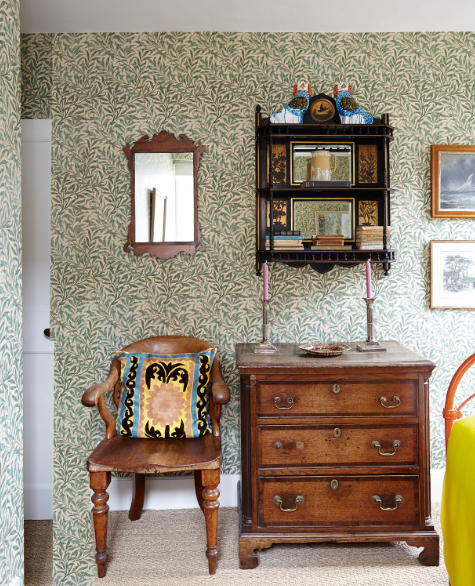
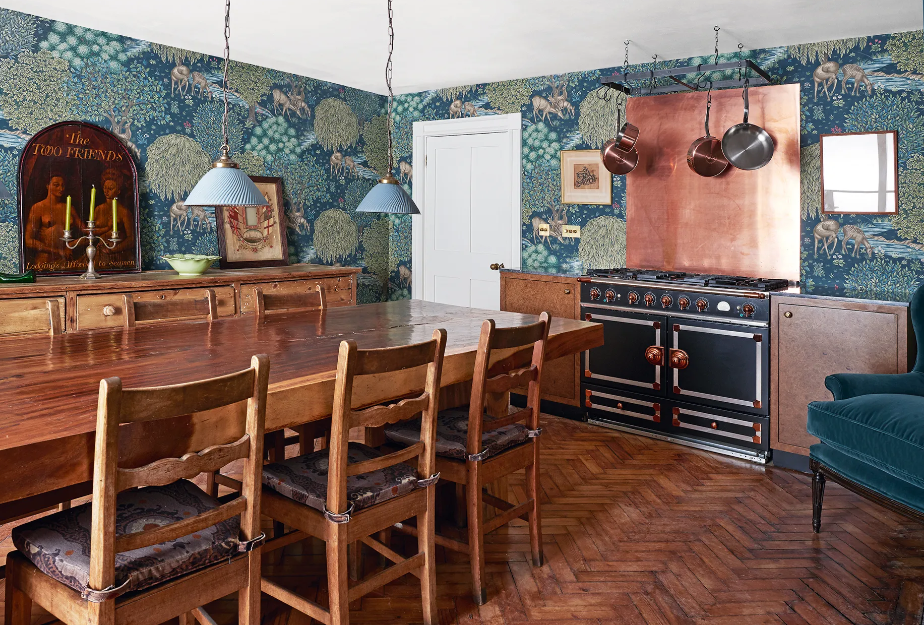
Modern trends like the “maker movement” and sustainable design draw heavily from the movement’s focus on ethical production and a meaningful connection between the creator and the creation. Amid rapid technological changes and a culture of disposability, the Arts and Crafts principles advocate for mindfulness, quality, and environmental responsibility in design, offering an alternative that emphasizes durability and authenticity.
The Arts and Crafts Movement, with its critique of mass production and advocacy for a more humane approach to design, has left an indelible mark on the world of interior design. Its impact is evident in the lasting appeal of environments that embody the movement’s core principles: the harmony between form and function, the celebration of natural materials, and the importance of craftsmanship in enhancing human experience.
Thank you for joining me on this fascinating journey. Stay tuned for next week, where we’ll venture into the whimsical and intricate realm of Art Nouveau.
Until then, keep embracing the beauty of design in all its forms!
JG x
Resources
- Britannica. (n.d.). Arts and Crafts movement. Retrieved March 25, 2024, from https://www.britannica.com/art/Arts-and-Crafts-movement
- Cheltenham Museum. (n.d.). Arts and Crafts Movement Style. Retrieved March 25, 2024, from https://www.cheltenhammuseum.org.uk/collection/arts-and-crafts-movement-style/
- Craftsman Bungalow. (n.d.). Gamble House Interior. Retrieved March 25, 2024, from https://www.thecraftsmanbungalow.com/gamble-house-interior/
- Fabrics and Papers. (n.d.). Arts and Crafts Movement Interior Design. Retrieved March 25, 2024, from https://www.fabricsandpapers.com/blog/arts-and-crafts-movement-interior-design
- Gallery Research Visit. (2022, October 13). The Red House. Retrieved March 25, 2024, from https://galleryresearchvist.myblog.arts.ac.uk/2022/10/13/the-red-house/
- Historic Environment Scotland. (n.d.). The Hill House, Helensburgh. Retrieved March 25, 2024, from https://www.historicenvironment.scot/archives-and-research/online-exhibitions/great-scottish-interiors/the-hill-house-helensburgh/
- House and Garden. (n.d.). Design Ideas Arts & Crafts. Retrieved March 25, 2024, from https://www.houseandgarden.co.uk/gallery/design-ideas-arts-crafts#:~:text=Spanning%201860%20to%201920%2C%20Arts,featured%20more%20than%20100%2C000%20objects.
- Lakeland Arts. (n.d.). Blackwell. Retrieved March 25, 2024, from https://lakelandarts.org.uk/blackwell/
- The Collector. (n.d.). An Introduction to the Arts and Crafts Movement. Retrieved March 25, 2024, from https://www.thecollector.com/introduction-arts-and-crafts-movement/
- The Metropolitan Museum of Art. (n.d.). The Arts and Crafts Movement in America. Retrieved March 25, 2024, from https://www.metmuseum.org/toah/hd/acam/hd_acam.htm
- The National Trust. (n.d.). The History of Red House. Retrieved March 25, 2024, from https://www.nationaltrust.org.uk/visit/london/red-house/the-history-of-red-house
- The Victorian Emporium. (n.d.). The Arts and Crafts Movement Victorian Design. Retrieved March 25, 2024, from https://www.thevictorianemporium.com/publications/editorial/article/the-arts-and-crafts-movement-victorian-design
- Victoria and Albert Museum. (n.d.). Arts and Crafts: An Introduction. Retrieved March 25, 2024, from https://www.vam.ac.uk/articles/arts-and-crafts-an-introduction
- Victoria and Albert Museum. (n.d.). Arts and Crafts Design for the Home. Retrieved March 25, 2024, from https://www.vam.ac.uk/articles/arts-and-crafts-design-for-the-home
- Arts and Crafts Tours. (n.d.). Hill House, Helensburgh, Scotland. Retrieved March 25, 2024, from https://artsandcraftstours.com/places/hill-house-helensburgh-scotland/
 GALATEA
Leave a comment