
I just wrapped up a whirlwind two-week interior design internship at Txtured – a top luxury interior design studio in Manchester – and I’m still reeling from the experience. If you’re an interior design student looking for real-world insights or a an interior enthusiast wanting to see what goes on behind the scenes in luxury interior design, then this post is for you.
Behind the Design
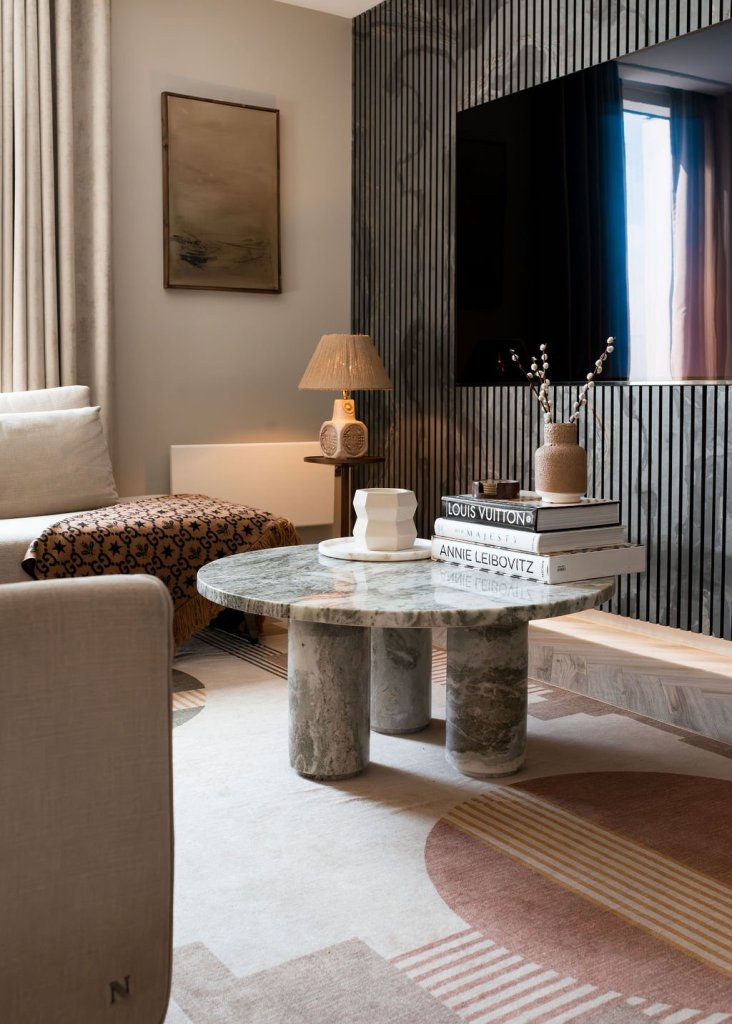
Luxury interior design is as much about creativity as it is about problem solving, and my time as an intern at Txtured gave me firsthand experience of this balance. One of the most exciting projects I worked on was a full renovation of a London townhouse for a young couple. They wanted a space that felt fresh and modern while still embodying the rich, layered aesthetic that Txtured is known for – heavily inspired by Soho Home.
This project was already in motion when I joined the team, but I quickly became immersed in the design process. From site visits to concept development, sourcing materials, and refining selections based on client feedback, I learned how a design evolves through multiple iterations. Here’s a behind-the-scenes look at the creative journey of this renovation, offering insights for aspiring designers and potential clients alike.
Step 1: The Site Visit – Setting the Foundation
Every successful design starts with a thorough site visit. This step is crucial for understanding the space beyond just floorpans – capturing natural light, existing architectural details, and any structural constraints that may influence the design. Good measurements and detailed photos are non-negotiable at this stage; they form the backbone of every decision that follows.
Step 2: Concept Development – Where the Magic Begins

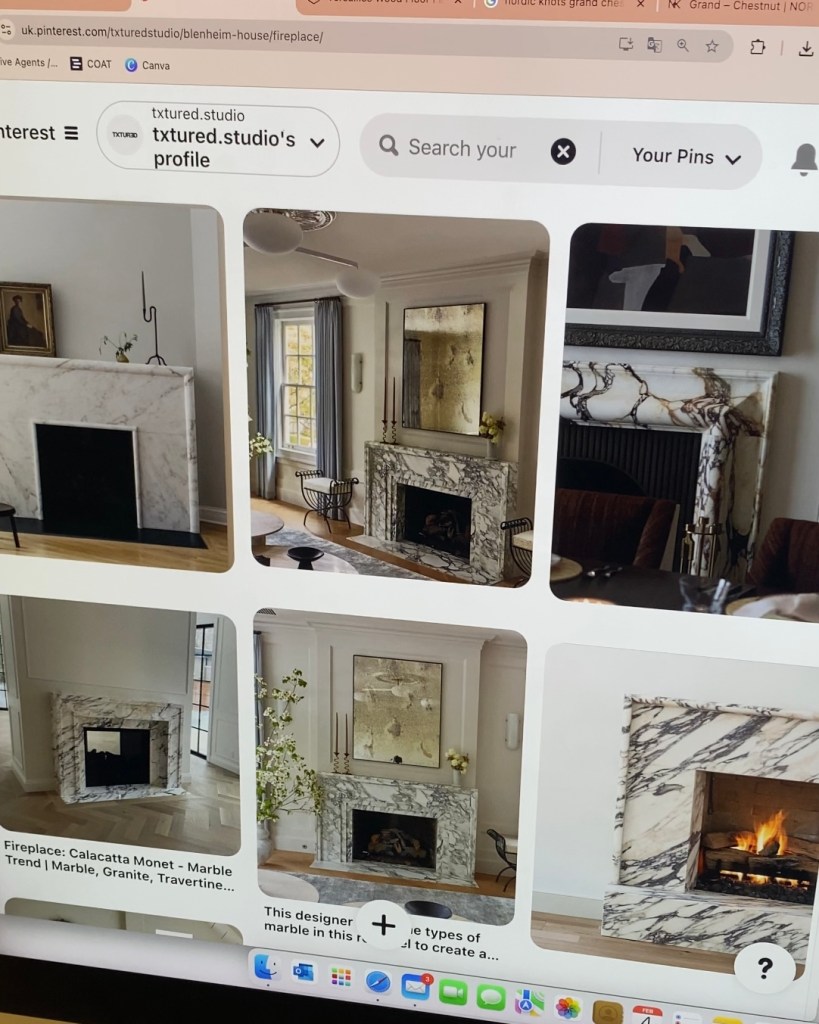

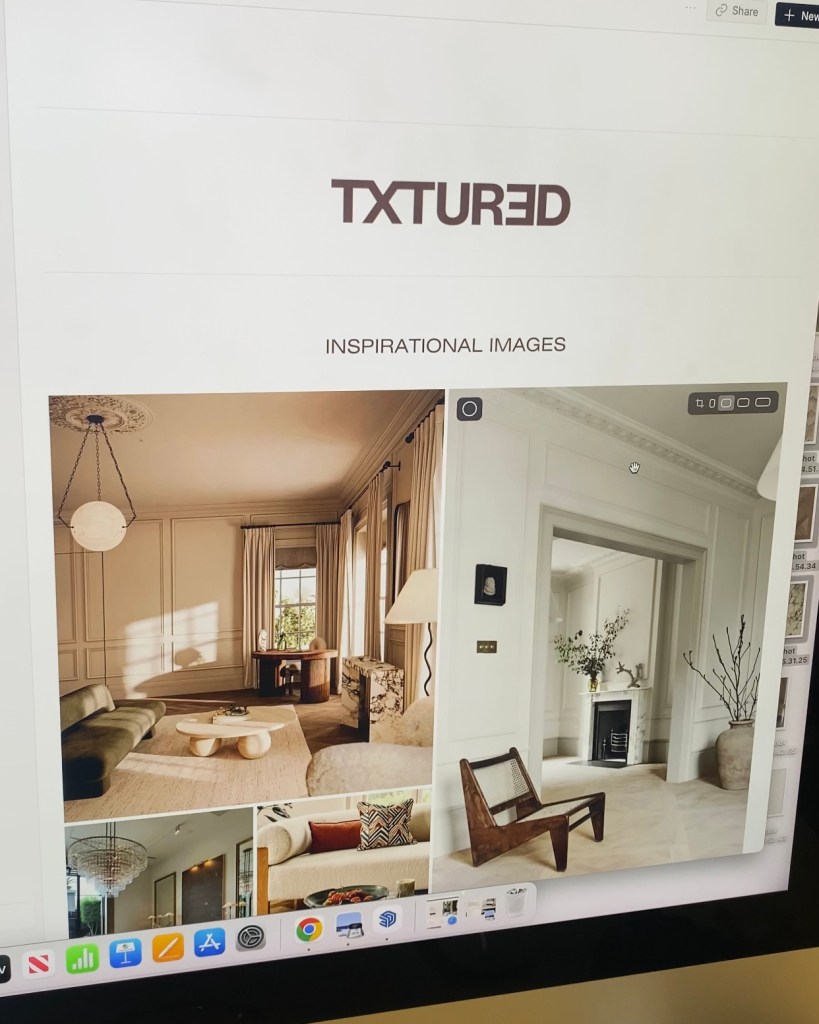
The concept phase is, in my opinion, the most creative and exhilarating part of the design process. It’s where ideas begin to take shape, and possibilities feel endless. Our starting point was the couple’s Pinterest board, a tool that proved invaluable in understanding their aesthetic preferences. They had a clear affinity for warm neutrals, rich textured, and refined yet relaxed interiors – aligning perfectly with Simon’s Soho Home-inspired approach.
At this stage, we curated inspiration images, built colour palettes, and sketched rough floorpans that aligned with their vision. A well-thought-out concept presentation helps clients visualise the potential of their space before committing to specific products or layouts. It also ensures that their personal style is reflected in the final outcome.
One of the biggest takeaways for designers at this stage is the importance of storytelling. A space is not just about furniture and finishes – it’s about how it makes you feel. Every texture, colour, and material contributes to an atmosphere that evokes emotion, comfort, and connection.
Step 3: The Challenge – Rethinking the Master Bathroom


One of the most pivotal moments in the project was reworking the master bathroom. Initially, our design concept featured a statement marble with bold green and brown veining set against a creamy background. We envisioned it flowing from the floor up the shower wall, creating a striking visual backdrop for the freestanding bathtub positioned directly in front as you opened the double doors. However, when we presented the concept, the client found the veining too bold for their taste.
This is where adaptability becomes key in interior design. By referring back to their Pinterest board, we found common threads in their inspiration images – softer, more minimalist tones with a focus on texture over pattern. Instead of using veined marble, we introduced fluted tiles to add interest through form rather than colour. This compromise still delivered a high-end, visually compelling space while ensuring the client felt comfortable with the final aesthetic. It reinforced an essential design lesson: the best spaces emerge from a dialogue between designer and client, blending creative vision with personal preference.
Step 4: Material Selection – Bringing the Vision to Life

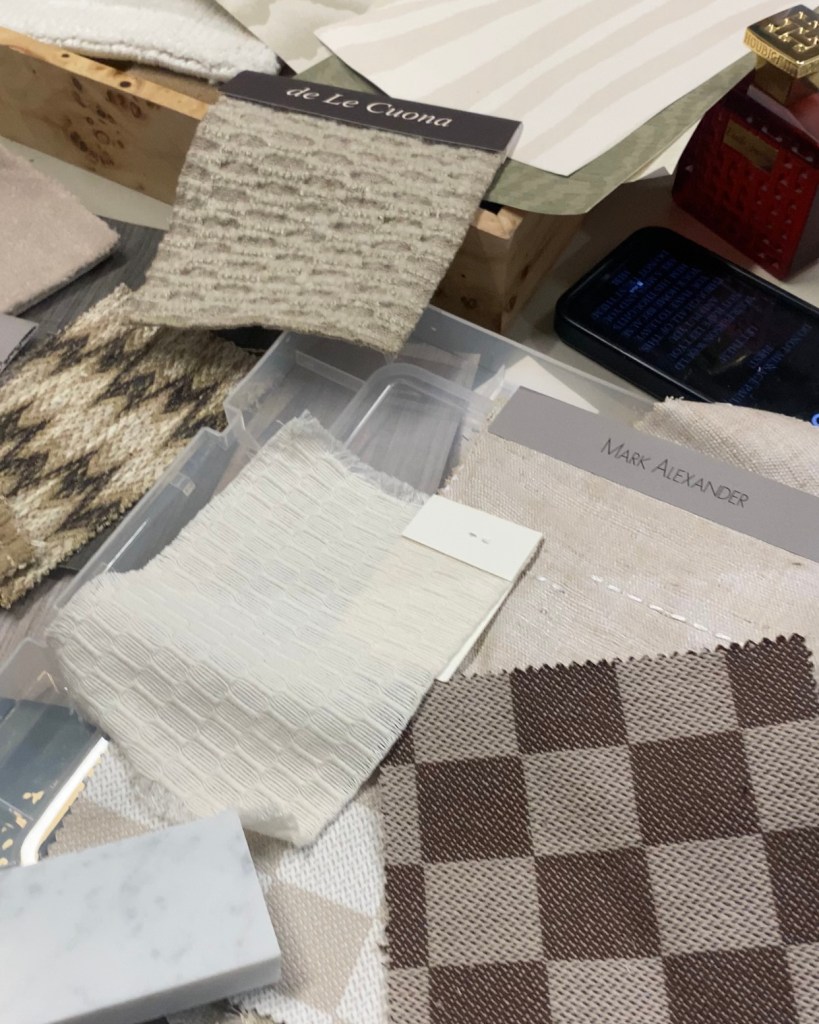
With the concept approved, the next phase was sourcing and selecting materials. This step transforms abstract ideas into tangible reality. We ordered sample of tiles, paint, and fabrics that aligned with our design direction, layering different elements to ensure cohesion across the entire home. Seeing physical samples together is critical – it’s one thing to choose colours and materials on a screen, but textures and finishes interact in unexpected ways when viewed in person.
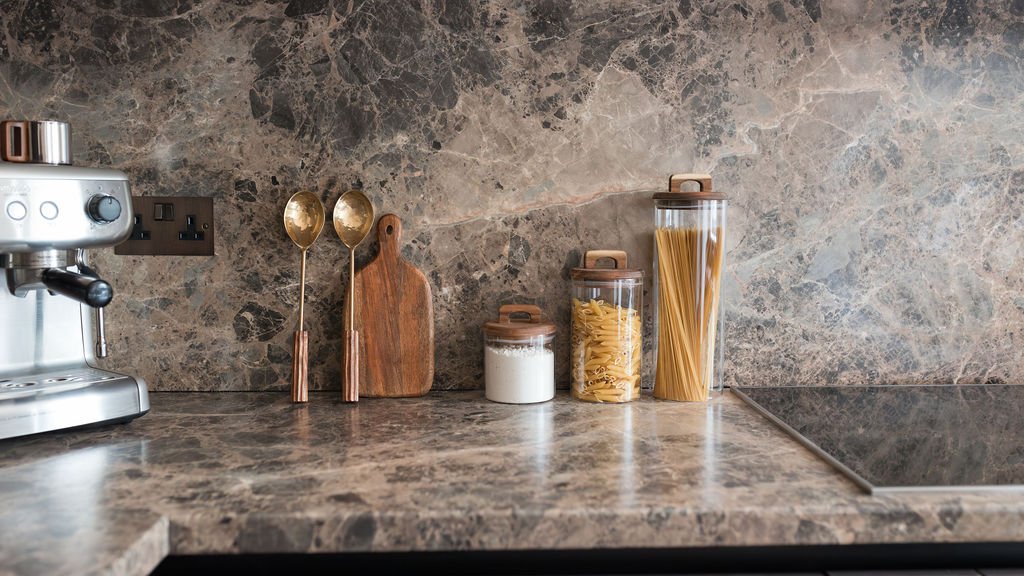

Simon pushed me to sep out of my comfort zone here. My personal style leans towards neutral, minimalist palettes that let textures and forms take centre stage. In contrast, Simon’s approach embraces colour, pattern, and contrast. Working under his guidance challenged me to infuse my designs with more visual depth, experimenting with layering different materials and finishes to create a space that feels rich and dynamic rather than simply cohesive.
Step 5: Building Relationships – The Key to Success


One of the most valuable lessons I took away from this internship was the importance of strong relationships with suppliers and tradespeople. Interior design is not just about creative vision – it’s also about execution. Understanding the capabilities and limitations of different materials, knowing who to call for custom finishes, and being able to source high-quality pieces efficiently can make or break a project.
A well-connected designer has a network of trusted suppliers who not only provide quality materials but also offer invaluable expertise. Whether it’s understanding the longevity of different flooring options or finding the perfect shade of bespoke paint, leveraging these relationships ensures the best results for the client.
Where I left Off & What’s Next

By the time my internship concluded, we had completed most of the materials boards and finalised specifications for many rooms. It was incredibly rewarding to see the project take shape, transitioning from digital concepts to physical elements. Though I won’t be thee to see the final installation, I’m excited to follow the transformation and see how all the carefully considered details come together.
For aspiring designers, this experience reinforced that design is an evolving journey rather than a one-time decision. It’s about balancing creativity with functionality, pushing boundaries while respecting the client’s vision, and always being ready to pivot when necessary. And for clients embarking on a design project, my biggest piece of advice is to trust the process. The most successful spaces come from collaboration, openness to new ideas, and a willingness to explore different possibilities before landing on the perfect solution.
I can’t wait to see how this project turns out, and I hope this behind-the-scenes look offer valuable insights into the reality of luxury interior design. Whether you’re an aspiring designer or considering a renovation or your own, remember – design is not just about aesthetics. It’s about creating spaces that feel deeply personal, functional, and inspiring.
 GALATEA
Leave a comment