The Panopticon at Home
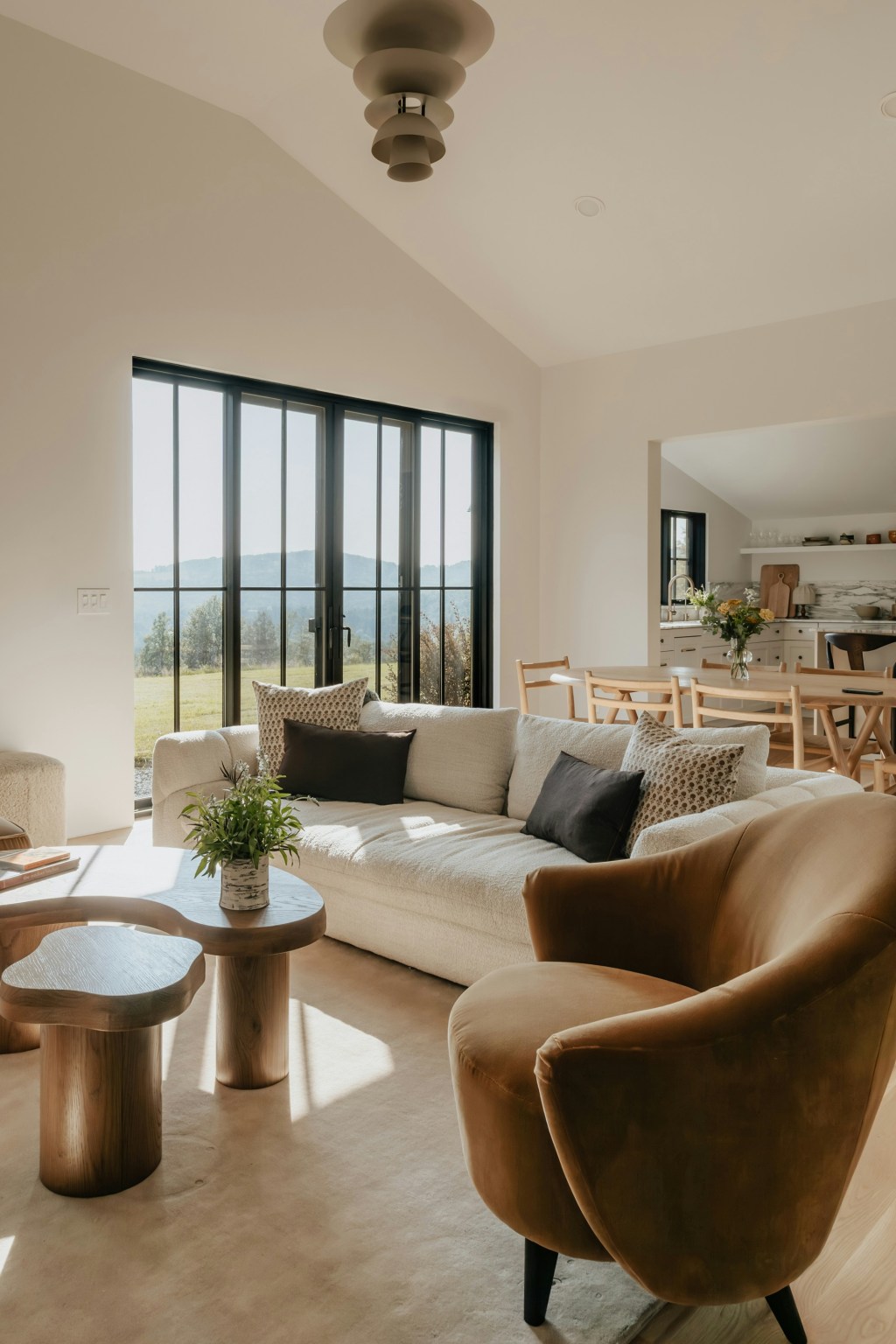
The contemporary real estate market sells open concept as flow, light, and connection. The dissolution of the wall – that most fundamental architectural boundary – is presented as a liberation from the prison of formality. We are told that tearing down the barrier between kitchen, dining, and living space fosters community and effortless social ease.
This is the architectural lie of the decade.
The open concept is not a liberation; it is an architectural mandate for surveillance. It is the domestic version of Jeremy Bentham’s Panopticon: a structure designed to ensure that everyone is visible, and therefore, self-regulating. The modern home is engineered for the market, not the mind.
The All-Seeing Eye
The moment the wall disappears, so does the fundamental right to be unobserved. In the open-plan home, there is no corner of true domestic solitude. The individual sitting on the sofa is visible to the person working at the kitchen island, who is visible to the person taking a call by the window.
This is not connection; it is perpetual visibility.
The consequence is psychological exhaustion. Our subconscious never fully switches off the performance required of the public self. The private moments – the slump, the sigh, the unedited emotion – must be immediately suppressed because they are always within the sightline of another occupant. The open plan denies us the crucial, restorative privacy necessary to shed the social mask and retreat into the unobserved self. It maintains a constant, low-level anxiety that forces the resident to be perpetually “on-stage.”
The Productivity Trap
The kitchen island, now the undisputed altar of the open concept, is the worst offender. It serves as the physical and ideological heart of the surveillance mandate.
The modern kitchen is no longer a place of messy, contained labour; it is a performance space where the preparation of food is an aesthetic activity that must be observed and approved by guests. Crucially, it doubles as the homework station, the secondary office, and the laptop dumping ground.
The open plan ensures that domestic life cannot be differentiated from economic life. The space where you might relax now constantly features the visible debris of work, and the space where you work is invaded by the visual debris of leisure. The architectural lack of separation is a tacit acceptance of capitalism’s ultimate demand: that we must be multitasking, productive, and visible even in our moments of rest. You cannot truly retreat because the office is now always in your peripheral vision.
The Death of the Boundary
Historically, rooms enforced roles: The formal dining room demanded reverence and ceremony; the library demanded silent contemplation; the kitchen demanded contained labour. The friction between these spaces created psychological boundaries, allowing the inhabitant to switch identities.
By dissolving the walls, we dissolve these roles. The open-plan inhabitant is one single, continuous, undifferentiated self: the multitasking provider, the casual entertainer, the digital worker. There is no longer a physical, architectural space for the Private Self – the person who can exist without judgment, without performance, and without the expectation of imminent productivity.
The open concept, therefore, is an ideal piece of architecture for the housing market, which prioritises easy-to-sell flow over difficult-to-define interiority. It sells us a lie about connection while robbing us of the fundamental conditions required to be psychologically whole.
JG x
Galatea Studio designs spaces that are rooted in intellectual honesty, not aesthetic denial. If you are ready to create an environment that rejects the tyranny of impossible perfection and reflects how you actually live – rather than how you aspire to be perceived – we invite you to view our portfolio or inquire about your next project in Manchester and Cheshire.

 GALATEA
Leave a comment