On the Architecture of Digital Purgatory
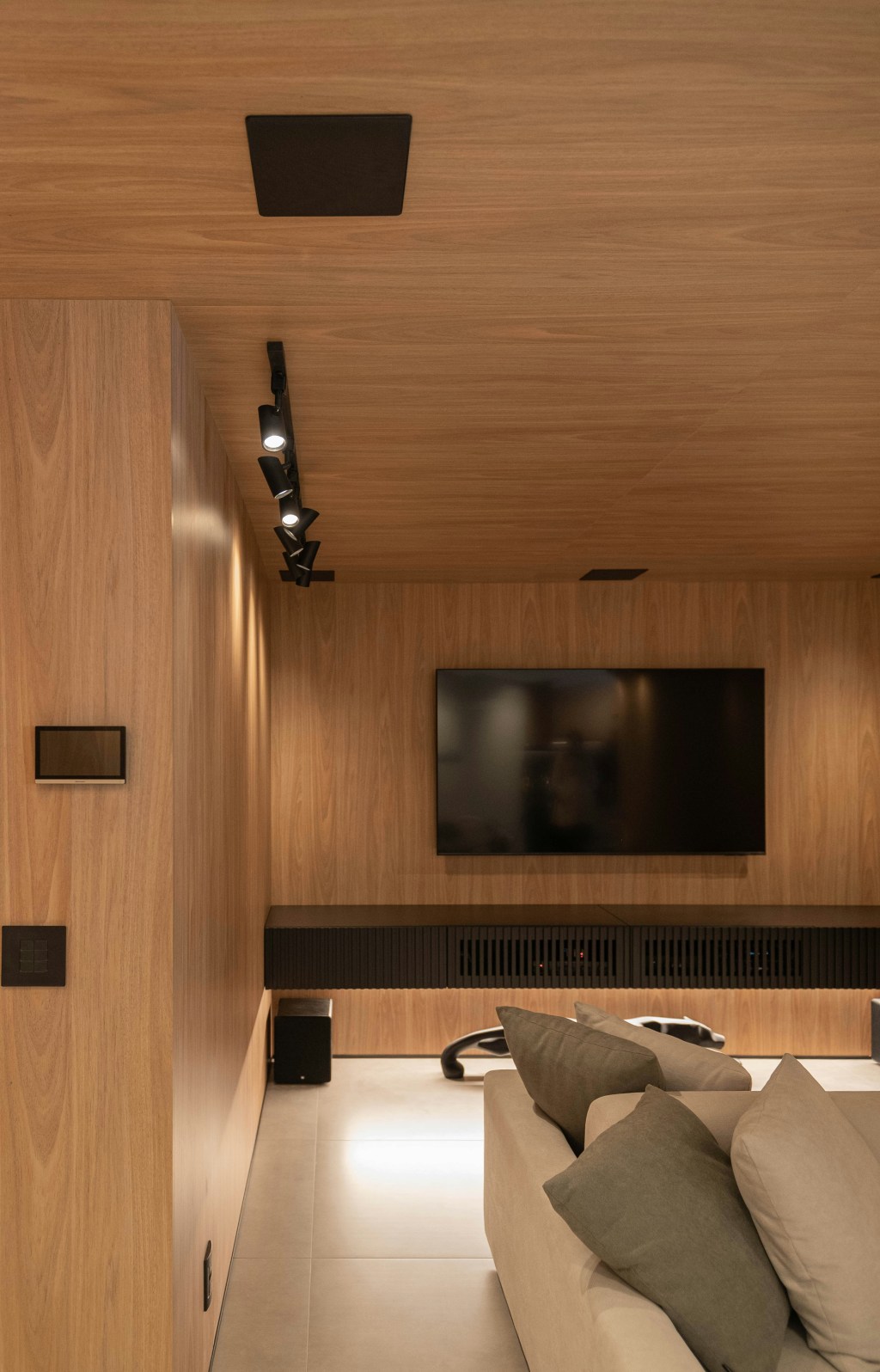
The television set is the elephant in the open-plan room – a cold, blank rectangle of anti-aesthetics dominating the wall. It is the most ubiquitous, culturally pervasive object in the home, yet the modern, high-end interior is defined by the absolute refusal to acknowledge its existence.
The contemporary home is waging a silent, expensive war against the screen. We don’t just turn it off; we subject it to an architectural purgatory. We hide it behind automated sliding panels, camouflage it with mirrored glass, or deploy elaborate, hydraulic lifts to sink it back into the ceiling cavity, like some embarrassing secret being lowered into a basement.
This is not a design decision; it is a confession of aesthetic shame.
The Unclean Object
Why does the television, a device capable of broadcasting the world’s most exquisite art and complex discourse, receive this unique architectural banishment? Because culturally, the screen is the Unclean Object.
The home is a stage designed to communicate status, taste, and intelligence. The objects we choose to leave on display – the shelf of literary novels, the framed abstract print, the bespoke record player – are proxies for our aspirational selves. These analog objects signify active cultural engagement: the rigor of reading, the contemplation of art, the discernment of music.
The screen, however, is a monument to passive leisure, mass culture, and immediate emotional escape. It represents slackness, emotional noise, and the vast, undiscriminating stream of globalised content. To openly display it is to admit to the cultural snob: I watch things that require no effort.
The Frame TV Fallacy
The ultimate symbol of this aesthetic denial is the Frame TV. This device, which costs a considerable premium, allows the screen to disappear by turning itself into a digital reproduction of a painting. The lie is staggering in its brazeness.
We do not eliminate the technology; we simply swap one piece of mass-produced content (a streaming service) for another (a digital scan of a museum piece). We replace the shame of the screen with the aesthetic detoxification of “Art.” The owner isn’t signaling that they don’t watch television; they are signaling that their estate is one of high-minded artistic contemplation.
The screen doesn’t become furniture; it becomes a Trojan horse – hiding the guilt of our viewing habits behind an aesthetically acceptable facade. It is the architectural equivalent of deleting your browser history before your partner sees it.
The Tyranny of the Analog Self
The deeper truth is that we are ashamed of the digital self that the television enables. In an age where self-optimisation is paramount, the act of lying slack on a sectional, consuming two hours of content, feels politically and ethically wrong. Our homes must perform the illusion that we are perpetually engaged in a meaningful, non-digital pursuits.
The television’s exile is the architecture of an inner conflict: the desire to escape versus the desire to appear elevated. Every dollar spent on a hidden panel or a mirrored wall is a dollar spent maintaining the performance that we, the modern elite, are immune to the lure of the easily consumed image.
The screen, when hidden, serves as a powerful reminder of what we feel must conceal to uphold our aesthetic status. We aren’t detoxing our living rooms; we are simply making our cultural confessions that much more expensive.
JG x
Galatea Studio designs spaces that are rooted in intellectual honesty, not aesthetic denial. If you are ready to create an environment that reflects how you actually live – rather than how you aspire to be perceived – we invite you to view our portfolio or inquire about your next project in Manchester and Cheshire.

 GALATEA
Leave a comment