
Our Couches Confess Everything
Forget the manifestos—if you want to understand politics, stop reading the news and just look at the sofa. Upholstery has always been a more honest historian than Parliament. The sofa is the most political object in the home because it holds the body, but it also bears the weight of a nation’s anxieties, aspirations, and quiet resignations. It is the inescapable backdrop to every whispered conversation about the public world, and as such, it confesses our collective values more honestly than any economic treatise. These aren’t just design choices; they are material ideology.
The Age of Repression
The Chesterfield sofa is not merely furniture; it is an upholstered fortress built to enforce Victorian social contracts. Born in the age of imperial and industrial supremacy, its deep button-tufting and heavy leather—dyed the colour of old wealth and deep ink—mandated a posture of rigorous, moral rectitude.
This sofa demands stillness. It forbids slouching and resists the kind of casual repose we now demand. It is the physical embodiment of Victorian rigidity: a symbol of contained wealth and the public performance of discipline. The Chesterfield was designed not to comfort the individual, but to uphold the institution—the family unit, the club, the empire—by making the physical act of sitting a constant, unspoken declaration of social rank.
The Age of Collective Effort
The post-war era, defined by austerity, rationing, and the communal project of the Welfare State, could not bear the aesthetic arrogance of the Chesterfield. The government stepped in directly to control design via the Utility Furniture Scheme.
The resulting sofa was functional, restrained, and utilitarian. These pieces were not aspirational; they were mandates of necessity. They were the aesthetic reflection of a society placing collective need above individual desire. The Utility sofa was the furniture of the Labour government: simple, honest, and utterly devoid of the expensive, expressive luxury that might imply a return to old class hierarchies. It declared: ‘We’ll get through this, together, without frills.’
The Age of Acquisition
The psychological exhaustion of austerity, paired with the rise of Thatcherism in the 1980s, demanded an immediate, visible aesthetic protest. The result was the eruption of floral chintz and the massive, overstuffed three-piece suite.
This was the furniture of triumphant, self-made individualism. Every frill, tassel, and heavily patterned cushion was a testament to private acquisition—a loud, unapologetic rejection of post-war modesty. The sofa was no longer a symbol of public duty but a trophy. It enforced a claustrophobic sense of ‘good taste’ rooted in comfort and maximum material density, ensuring the owner was visually insulated from the outside world by layers of expensive, highly flammable fabric.
The Age of Flexibility
The Third Way politics of the New Labour era, which sought to reconcile economic liberalism with social justice, found its aesthetic match in the ubiquitous, practical leather corner sectional.
This sofa is defined by its adaptability and its embrace of consumerism. It is a multitasking piece for a multitasking life—it seats everyone, absorbs spills, and can be endlessly reconfigured. Its very form reflects New Labour’s desire to be all things to all people: a piece designed to maximize both leisure and square footage. But in its bland, all-inclusive utility, the sectional is also the first modern sofa to enforce perpetual casualness, dissolving the architectural discipline of the home in favour of ceaseless, low-stakes entertainment.
The Age of Aesthetic Evasion
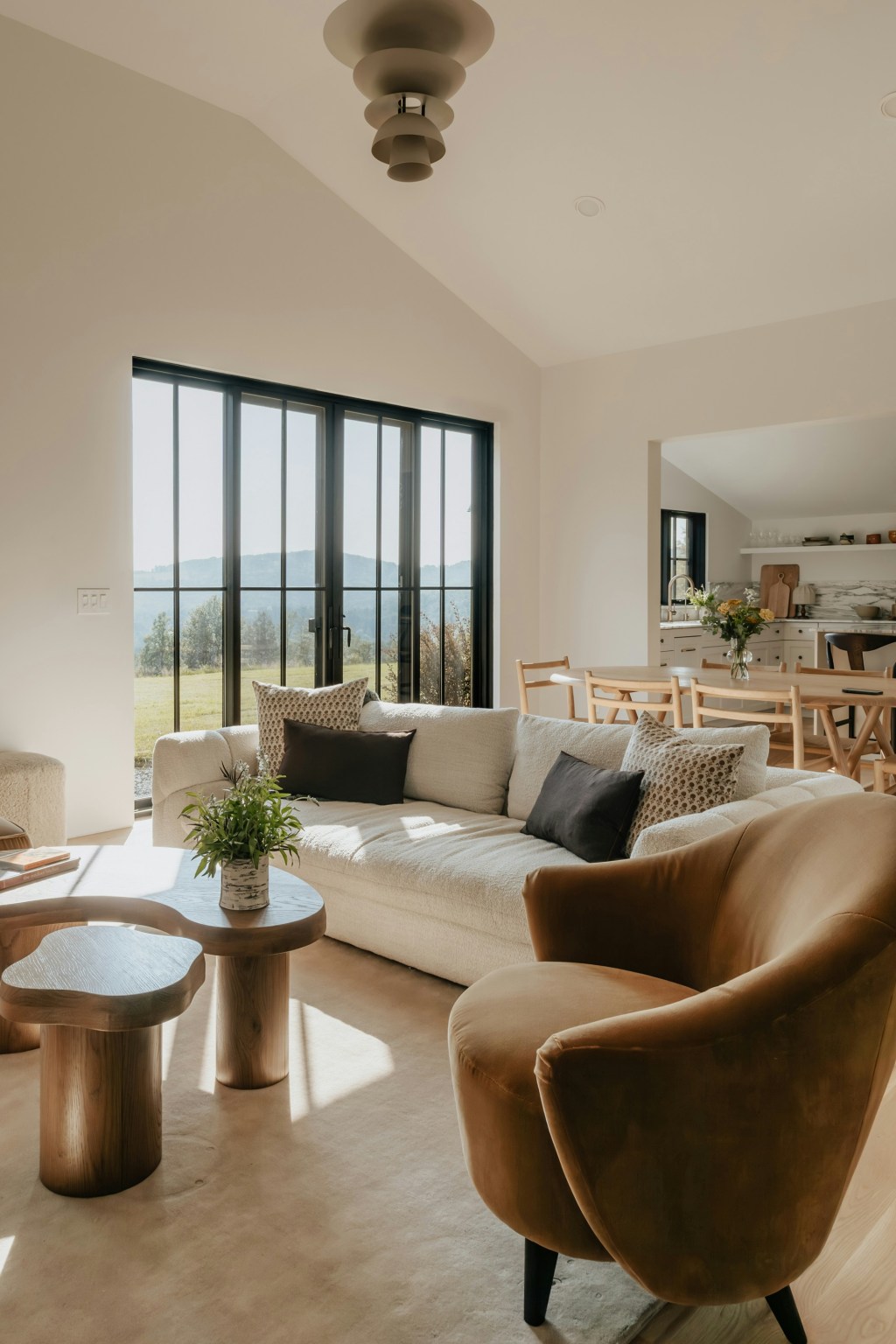
The Cameron-era 2010s, defined by austerity, introduced the precursor: the emotionally flat Scandi-grey minimalist sofa—a visual resignation. The subsequent political and social chaos of the 2020s has given us the sequel: the bouclé cloud sofa.
This isn’t furniture; it is an expensive, oversized, upholstered sedative. Its extreme softness is the privileged material expression of existential burnout. Purchased at a premium, the Cloud Sofa is a direct, desperate rejection of political noise. It is a highly aestheticized, aggressively soft crib designed for total retreat—a final, cushioned surrender where one can hide from the impossible complexities of the outside world, secure in the knowledge that one has purchased the most expensive form of apathy available.
Every political moment finds its perfect aesthetic confession. We do not merely sit on these objects; we are shaped by them, their structure dictating the level of discipline, ambition, or resignation we are permitted to display. If you want to know the true state of the modern mind, do not read the manifestos. Simply observe the way society chooses to finally, wearily, sit down.
JG x
At Galatea Studio in Manchester, we design homes that anticipate cultural shifts rather than merely following them. Our approach is rooted in creating interiors that feel considered, lived-in, and magnetic. We believe your furniture should be a reflection of who you are, not who the zeitgeist tells you to be.

 GALATEA
Leave a comment