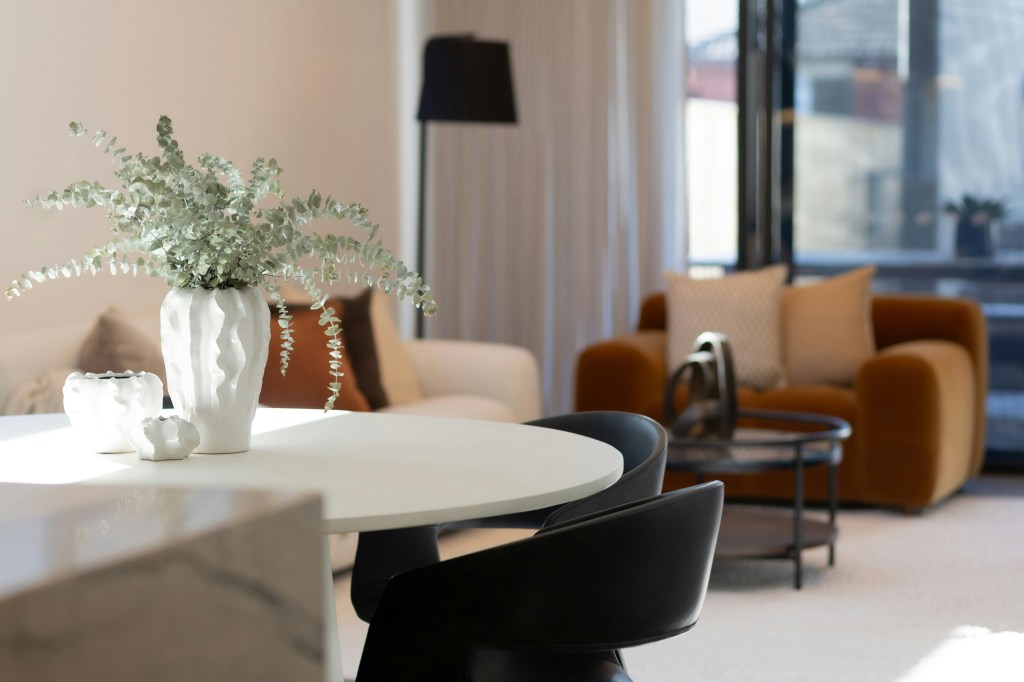
The Death of a Home’s Heart
It was once the stately, often silent, center of the house—a dedicated stage for ritual and formality. The room was not built for comfort; it was built for performance. Its very existence, segregated behind a heavy door, symbolized the essential human discipline of pausing: of setting aside the kitchen’s chaos and the living room’s leisure for a scheduled, often uncomfortable, act of social cohesion.
But the formal dining room is officially fading. It has not been deliberately demolished—it has simply been outgrown by the demands of modern apathy. We are gathering less around polished mahogany and more around glowing screens. The dedicated dining space has become an architectural casualty of a society that prizes perpetual convenience over genuine ritual. The real question isn’t where we put the table, but what this disappearance reveals about the social structures we have enthusiastically abandoned.
The Tyranny of Availability
The decline of this formal space is a direct result of two massive cultural forces colliding, each eroding the concept of the boundary:
- The Cult of Efficiency: Why dedicate prime square footage—often the best in the house—to a room used twice a year for holiday gatherings when the kitchen island or breakfast nook can handle the 363 days of casual takeout? This calculation is brutally American: if a space is not maximally utilized, it is inefficient. We have allowed utility to colonize tradition.
- The Erosion of Separation: Remote work has utterly annihilated the barrier between office and home, and the dining room was the first room to be conscripted. The space once reserved for silver service is far more valuable as a Zoom-friendly office, a quiet study, or a glorified folding table. It has been stripped of its singular purpose and forced into the humiliating, multi-functional role of a domestic freelancer.
Historically, the dining room symbolized rigid hierarchy. Its presence enforced dress codes, speaking order, and a clear demarcation between the public (guest) and private (family) self. When we tear down the walls of the dining room, we are not just celebrating casualness; we are rejecting the discomfort and intentionality required to maintain a formal social order. Without this dedicated room, what message is our modern architecture sending? Simply this: nothing is important enough to stop for.
The Aesthetic Compromise
In the current market, design has shifted toward the open-plan, multi-functioning “dining zone.” This is not an evolution of ritual; it is a failure of nerve.
We are now faced with dining tables that must be “elegant enough for entertaining” but “robust enough for daily work.” The resulting aesthetic is one of expensive, exhausting compromise—a single surface attempting to hold the weight of both family history and spreadsheet deadlines. This flexible zone enforces perpetual availability. It is the space where the laptop sits next to the bread basket, demanding that we blur all boundaries and eliminate all pause.
The dedicated dining room may be culturally obsolete, but what it represented—the difficult, necessary act of separating oneself for the performance of a shared, structured meal—is what we truly miss. Our homes, in their desperation to make us comfortable, have instead made us constantly accessible. We traded a room of enforced structure for a lifetime of blurred, anxious function.
Perhaps the dining room isn’t gone at all; it’s simply been replaced by the very thing we were trying to avoid: the office.
JG x
Galatea Studio designs interiors across Manchester and Cheshire that balance tradition with modern life. From reimagined dining spaces to entire home schemes, we create environments for how you truly live—and gather—today.
Explore our services or enquire about your next project.

 GALATEA
Leave a comment