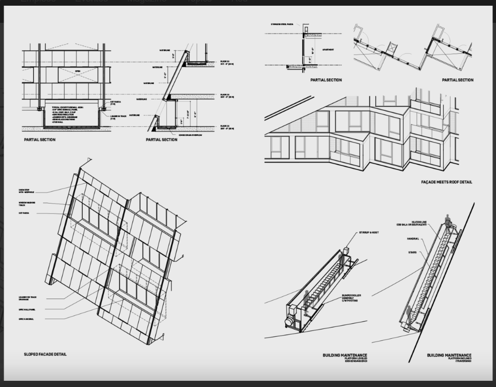
In the meticulous world of interior design, detail drawings represent the bridge between conceptual vision and tangible reality. These intricate diagrams are the blueprint for craftsmanship, embodying the precision required to bring a design project to fruition.
By dissecting the minutiae of design elements, detail drawings allow interior designers, architects, and builders to visualise and execute complex structures with unmatched accuracy.
The Crucial Role of Detail Drawings
Detail drawings are technical illustrations that focus on specific aspects of a project, providing a deep dive into the construction details that are crucial for accurate implementation. They cover everything from the type of screws used in joinery to the finishes on a custom cabinetry piece.
This high level of detail ensures that every element is perfectly aligned with the designer’s intentions, preventing costly mistakes and ensuring a seamless construction process.
Enhanced Understanding
Detail drawings provide a clear and comprehensive view of how various components of a project fit together. These drawings include multiple views and sections of furniture, fixtures, and fittings, illustrating connections and transitions that might not be visible in more general plans.
This enhanced understanding is crucial for contractors and builders who rely on these drawings to create accurate and faithful realisations of the design concepts.
Precision and Accuracy
The precision provided by detail drawings is paramount. They contain specific measurements, material specifications, and fabrication details, which are vital for ensuring that every aspect of the project is executed with precision.
This level of detail minimises the risk of construction errors and allows for the efficient use of materials, reducing waste and maintaining budget control.
Guiding Construction

Detail drawings serve as an indispensible guide during the construction phase. They offer a roadmap that artisans, craftsmen, and builders follow, ensuring that the design vision is realised to the last detail.
These drawings also facilitate clear communication among various teams involved in the project, aligning everyone with the project requirements and timelines.
Crafting Perfect Detail Drawings
Detail drawings are essential in interior design, providing a meticulous blueprint that guides the construction of complex elements within a space. These drawings demand precision and a deep understanding of both the aesthetic and structural components of a project. Here’s a detailed guide on how to create both hand-drawn and CAD-developed detail drawings that meet professional standards.
Understanding the Basics
Detail drawings illustrate smaller components or complex features of a design project, such as custom furniture, intricate joinery, or specialized fixtures. They should communicate effectively to craftsmen what needs to be built, specifying materials, dimensions, and assembly instructions.
Tools and Materials
For Hand-Drawn Detailing:
- Graph paper: Provides a scaled background to aid precise measurements.
- Drafting pencils: Use various grades for different line weights.
- Rulers and scales: Essential for accurate measurement.
- Erasers: For making corrections without smudging.
- Colored pencils or pens: To highlight different materials or sections.
For CAD Drawings:
- Software: AutoCAD, Revit, SketchUp, or other design software that allows detailed modeling.
- High-resolution monitor: Ensures that fine details are visible.
- Advanced input devices: Such as a drawing tablet, can enhance control over the design process.
Step-by-Step Process
1. Site and Component Analysis:
- Measure accurately: Whether you’re designing a piece of furniture or detailing architectural features, start with exact measurements of the space or item.
- Understand the context: How does the detail fit within the broader scope of the interior space?
2. Initial Sketches (Both Methods):
- Sketch roughly: Begin with freehand sketches to explore ideas and configurations. Use tracing paper to refine these sketches without losing the original drafts.
- Establish views: Decide which views (top, front, side) will most effectively illustrate the design.
3. Material and Finish Specifications:
- Choose materials wisely: Specify materials that are suitable for the function, budget, and aesthetic of the design.
- Detail finishes: Include information on the type of finishes, such as varnishes, paints, or laminates.
4. Drafting the Detail Drawing:
- Hand-drawn: Use a clean sheet of graph paper to draft the detailed drawing to scale. Begin with the framework and add finer details, ensuring all lines are clean and precise.
- CAD-drawn: Set up your drawing sheet in the software, ensuring scale and unit settings are correct. Use layers to separate different elements, making the drawing easier to edit and understand.
5. Adding Dimensions and Annotations:
- Clear labeling: Both hand-drawn and CAD drawings require clear, legible labeling and dimensioning. Use leader lines smartly to avoid clutter.
- Annotations: Provide additional notes or instructions necessary for understanding the construction or assembly details.
6. Review and Revision:
- Consult with professionals: Share your drawings with experienced designers or constructors to get feedback.
- Make adjustments: Refine your drawing based on feedback and practical considerations.
7. Finalization and Presentation:
- Hand-drawn: Ensure that the final drawing is neat, with all elements clearly marked and legible. Use a fixative spray to protect the drawing.
- CAD-drawn: Finalize the drawing in your CAD program, and prepare files for printing or digital sharing, ensuring the format is compatible with the stakeholders’ requirements.
The Digital Edge in Detail Drawings

Advancements in digital tools have transformed how detail drawings are created and used. Software like AutoCAD, Revit, and SketchUp not only enhance the precision of these drawings but also allow designers to make real-time adjustments as projects evolve.
Digital tools also facilitate easier sharing and collaboration among teams, ensuring that updates are efficiently communicated and integrated.
Conclusion
Detail drawings are foundational to the success of any interior design project. They are not just technical necessities but are also a testament to the meticulous planning and detailed though that goes into transforming space.
In a profession where precision translates directly to quality, the mastery of detail drawings is what sets apart great designers from the good. They ensure that every crafted element resonates with the integrity of the original design, fulfilling the vision of spaces that are not only aesthetically pleasing but also supremely functional.
And with that, we wrap up our series on communication techniques in interior design. If you have any suggestions on future series, I want to hear them!
I’ll see you next time,
JG x
Get new content delivered directly to your inbox
-

The Interior Life of the Closet
A psychological dissection of the storage lie. This essay argues that the modern obsession with seamless, integrated, invisible storage is an architectural attempt to deny our consumerist reality. We critique the walk-in wardrobe as the last sanctuary—the only truly private room remaining in the open-plan home—where the inhabitant is finally permitted to hoard, display, and…
-

The Anxiety of the Open Concept
A ruthless dissection of the modern open-plan home. This essay argues that the dissolution of walls is a symptom of a society that prioritizes surveillance and perpetual productivity over the right to privacy and retreat. We critique the open concept as an architectural mandate designed to keep family members, guests, and workers in a constant…
-

The Tyranny of the Pure Surface
A philosophical takedown of the pursuit of sterile perfection. This essay critiques the obsessive use of unforgiving, high-maintenance surfaces (Carrara marble, ultra-white quartz) in the modern kitchen. We argue that the material’s impracticality is the point: it’s a luxury status symbol requiring endless maintenance, serving as a constant, expensive performance of aspirational hygiene and total…
 GALATEA
Leave a comment