
Welcome to the enchanting world of Art Nouveau!
Today, we embark on a captivating journey through one of the most influential periods in the history of design. Art Nouveau, with its graceful curves and nature-inspired motifs, marked a defining moment at the dawn of the 20th century, blending beauty with functionality in unprecedented ways. But this is just one gem in the treasure trove of design history we’re set to explore.
You’re currently reading the latest installment in our series on interior design movements, where we unravel the stories, inspirations, and legacies of the styles that have shaped our environments and our experiences.
Whether you’re a dedicated historian, an art enthusiast, or someone who appreciates the beauty in everyday spaces, this series promises to enlighten, inspire, and ignite your imagination. So, stay with us as we delve into the heart of Art Nouveau today, and don’t forget to check out our upcoming and previous posts on other fascinating movements that have influenced the canvas of our lives.
Let the journey begin!
Introduction to Art Nouveau
In the transition from the 19th to the 20th century, a design revolution blossomed, known as Art Nouveau. This movement, characterised by organic forms, intricate details, and a seamless blend of art and function, marked a departure from the historical imitations of the past, inviting beauty into the everyday. Across Europe and the United States, Art Nouveau manifested through various names and styles, from the sinuous lines of Parisian metro entrances by Hector Guimard to the intricate glasswork of Tiffany Lamps, embodying elegance and fluidity.
Art Nouveau was not merely a style; it was a philosophy advocating for a life lived in harmony with art. It championed the integration of the beauty of nature into our constructed environments, transforming mundane objects into masterpieces of design. As we delve into this article, we explore Art Nouveau’s roots as a reaction against the industrial age, its celebration of natural forms, and its enduring impact on modern design.
The Dawn of Art Nouveau
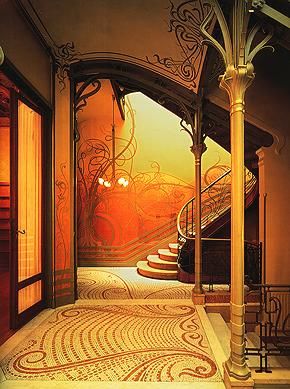
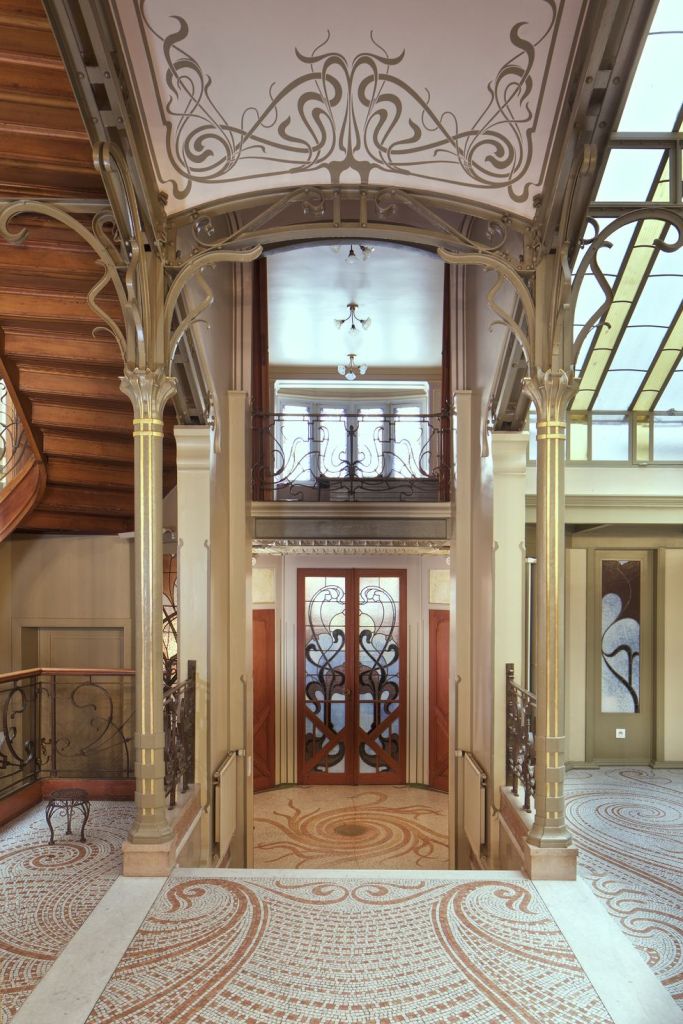
Emerging in the late 1890’s, Art Nouveau was a response to the rapid industrialisation and urbanisation of the time, longing for a reconnection with organic forms and personal craftsmanship. This movement sought to make beauty and function integral to everyday objects, representing a desire to blend the modern world with the organic. The name “Art Nouveau” itself signifies a break from tradition and a forward-looking ethos, manifesting uniquely across various regions but united by the common goal of integrating art into modern life.

Influenced by Japanese art, Post-Impressionism, Symbolism, and the Arts and Crafts movement, Art Nouveau was a synthesis of diverse artistic movements, emphasising fluid lines, asymmetry, and elaborate ornamentation. Its brief but impactful period signaled a shift towards forms that echoed nature, challenging the status quo and envisioning a world where art integrates seamlessly into everyday life.
The Flourishing of a Movement


Art Nouveau was more than a new aesthetic; it was the birth of a movement that redefined the role of art and design in society. This movement’s international appeal led to its manifestation in architecture, interior design, furniture, and more, becoming known by various names across different cultures. It represented a broader cultural shift towards modernity, emphasising craftsmanship, individuality, and the beauty of integrating art into daily life.


Historical Context and Artistic Inspirations


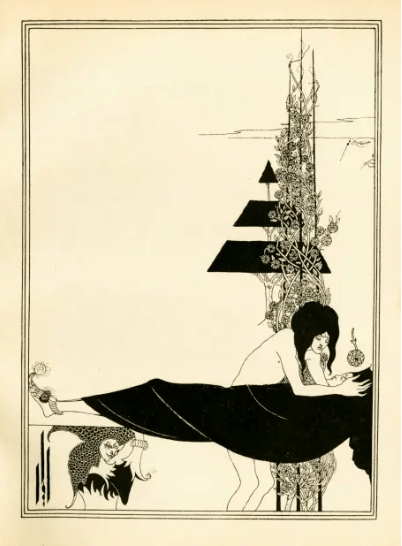
Art Nouveau didn’t emerge in a vacuum; it was the culmination of a complex interplay of social, cultural, and artistic influences at the turn of the 20th century. This movement, while looking to the future, was deeply rooted in the era’s broader cultural and technological shifts, from rapid industrialization to the burgeoning urban landscape. Against this backdrop, Art Nouveau offered a refreshing contrast, advocating for a return to organic forms and personal craftsmanship amid an increasingly mechanized world.
- The Influence of Japanese Art: The opening of Japan to international trade in the mid-19th century introduced the West to Japanese aesthetics, particularly the ukiyo-e woodblock prints. These works, with their bold lines, flat areas of color, and asymmetrical compositions, deeply influenced European artists and designers, contributing significantly to the Art Nouveau style. The simplicity and elegance of Japanese art encouraged a departure from the complex, perspective-driven realism of Western tradition, inspiring the movement’s hallmark flat, decorative patterns, and natural motifs.
- Post-Impressionism and Symbolism: Art Nouveau was also contemporaneous with Post-Impressionism and Symbolism, movements that sought to convey deeper personal or mystical meanings through abstract forms and symbolic imagery. Artists like Paul Gauguin and Henri de Toulouse-Lautrec, known for their expressive use of line and color, played pivotal roles in shaping Art Nouveau’s visual language, paving the way for its distinctive stylization and abstraction.
- The Arts and Crafts Movement: Led by visionaries such as William Morris in England, the Arts and Crafts movement exerted a profound influence on Art Nouveau. With its advocacy for the unity of art and craft and the importance of high-quality craftsmanship, the movement provided a foundational ethos for Art Nouveau. It emphasized handcrafted beauty, the use of natural motifs, and the integration of art into everyday life, principles that became central to Art Nouveau’s philosophy.
- Aestheticism: Lastly, the Aesthetic movement, with its credo of “art for art’s sake,” contributed to the development of Art Nouveau. Influential figures like Aubrey Beardsley, who pushed the boundaries of art as decoration, championed the use of line and form for their inherent beauty. This focus on decorative aesthetics and the elevation of design to fine art resonated with, and was reflected in, Art Nouveau’s core principles.
This rich tapestry of historical context and artistic influences underscored Art Nouveau’s emergence as a groundbreaking movement. It was a synthesis of various artistic and cultural currents, each contributing to its unique aesthetic and philosophy.

The Quintessence of Art Nouveau: A Closer Look at Its Defining Features
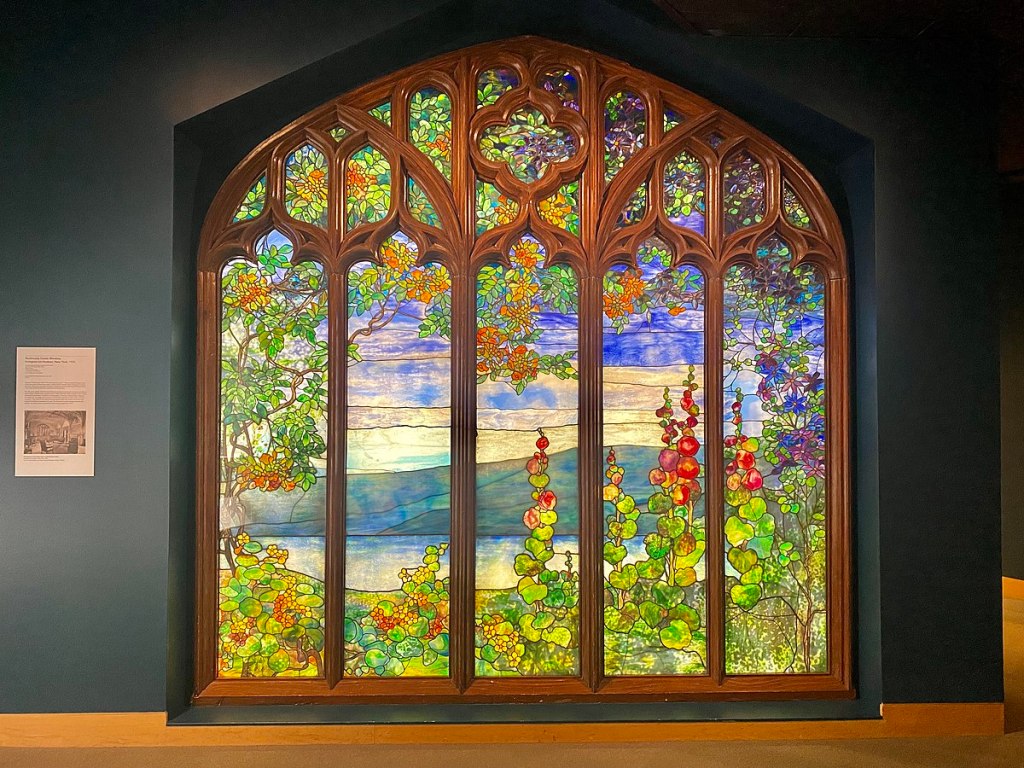
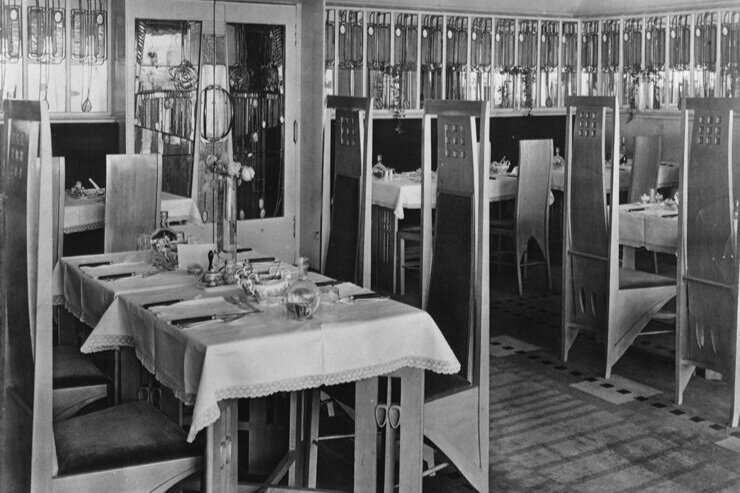
Beyond a mere aesthetic shift, Art Nouveau signified the birth of a movement poised to redefine the role of art and design within society. Garnering international acclaim, it found expression in architecture, interior design, furniture, and beyond, each region lending its unique voice to the chorus calling for a modernity infused with artistry and individuality.
- Organic Inspiration: The primary muse for Art Nouveau was the natural world, with its myriad forms, textures, and motifs deeply influencing the movement’s designs. This is vividly seen in the characteristic use of long, flowing lines, reminiscent of plant tendrils and flower petals. These organic lines were more than mere decoration; they were fundamental to the structural integrity and aesthetic cohesion of Art Nouveau creations, guiding everything from architectural facades to the intricate patterns of jewellery and glassware.
- Embracing Asymmetry: In a bold departure from classical norms, Art Nouveau embraced asymmetry, infusing its works with a dynamic sense of movement and spontaneity. This choice reflected nature’s own irregularities and unpredictability, such as the uneven growth of vines or the diverse shapes of leaves. Asymmetrical designs in Art Nouveau pieces conveyed vitality and growth, echoing the natural world’s ever-changing, evolving beauty.
- Ornamentation as Essence: The 19th century often treated ornamentation as an afterthought or an unnecessary addition. In contrast, Art Nouveau redefined ornamentation, integrating it seamlessly into the object or structure’s overall design. Ornament in this movement was not merely added but organically grew from the work itself, blurring the lines between the decorative and the structural. This approach to ornamentation, characterised by fluidity and unity, ensured that every detail was harmonious and essential to the whole.
- Innovative Use of Materials: Art Nouveau marked a significant shift in material selection and application, favoring substances that could be shaped to achieve the desired organic forms. Glass, iron, and ceramics emerged as a preferred materials, offering new possibilities for creative expression. Iconic Art Nouveau stained glass windows and lamps showcased these materials’ ability to capture and play with light in novel ways. This embrace of new materials underscored Art Nouveau’s commitment to modernity and innovation, allowing for greater experimentation and creativity in design.

These characteristics wove together to form Art Nouveau’s distinctive language, a celebration of the interplay between art and nature, envisioning a world where design is an intrinsic part of the human experience.
Art Nouveau’s Enduring Legacy
Though Art Nouveau was a brief movement, its impact on design, architecture, and beyond has been profound. It paved the way for modernism, influenced Art Deco, and continues to inspire contemporary designers and artists. Many of Art Nouveau’s architectural masterpieces are now recognised as UNESCO World Heritage Sites, underscoring its lasting appeal and significance.


Art Nouveau holds a unique place in history of art and design, embodying a philosophy that bridges art and life. Its legacy continues to inspire the pursuit of beauty in the everyday, reminding us of the value of looking to nature for inspiration and the importance of craftsmanship. As we look towards the future, Art Nouveau serves as a reminder of the enduring power of creativity in enriching our lives, inspiring us to imagine a world where design continues to transcend boundaries, drawing from the past to foster innovation and sustainability.
And there we conclude our exploration of Art Nouveau, but our journey is far from over. Next time, we’ll step into the realm of functionality, simplicity, and innovation with the Bauhaus movement, a pivotal era that reshaped the world of design with its radical ideas and visionary creators.
Until then, may the elegance of Art Nouveau inspire you to find harmony and beauty in your surroundings!
JG x
Resources
- Palau de la Música Catalana (n.d.) Visits and Tickets. Available at: https://www.palaumusica.cat/en/visits/visits-and-tickets_1159168 (Accessed: 1 April 2024).
- The Creative Adventurer (n.d.) Experience Luxury Dining with Art Nouveau Aesthetics in Prague’s Municipal House. Available at: https://thecreativeadventurer.com/experience-luxury-dining-art-nouveau-aesthetics-in-pragues-municipal-house/ (Accessed: 1 April 2024).
- Wikipedia (2023) File:Corning Museum of Glass – Stained-glass window with landscape scene from Rochroane Castle, Irvington-on-Hudson, New York (Louis C. Tiffany, 1905).jpg. Available at: https://en.wikipedia.org/wiki/File:Corning_Museum_of_Glass_-_20220312_-_42_-_Stained-glass_window_with_landscape_scene_from_Rochroane_Castle,_Irvington-on-Hudson,_New_York_%28Louis_C._Tiffany,_1905%29.jpg (Accessed: 1 April 2024).
- Casa Batlló (n.d.) Inside Casa Batlló. Available at: https://www.casabatllo.es/en/antoni-gaudi/casa-batllo/inside/ (Accessed: 1 April 2024).
- ArchDaily (2011) AD Classics: Majolikahaus / Otto Wagner. Available at: https://www.archdaily.com/125067/ad-classics-majolikahaus-otto-wagner (Accessed: 1 April 2024).
- We Love Brussels (2023) Hotel Van Eetvelde: Art Nouveau Masterpiece by Victor Horta. Available at: https://welovebrussels.org/2023/05/hotel-van-eetvelde-art-nouveau-masterpiece-victor-horta/ (Accessed: 1 April 2024).
- Financial Times (n.d.) [No title available]. Available at: https://www.ft.com/content/4f42711d-5116-4627-ae00-9271cbb91409 (Accessed: 1 April 2024).
- Discovering Belgium (n.d.) Victor Horta. Available at: https://www.discoveringbelgium.com/victor-horta/ (Accessed: 1 April 2024).
- Wikipedia (n.d.) File:Paris Metro 2 Porte Dauphine Libellule.JPG. Available at: https://en.m.wikipedia.org/wiki/File:Paris_Metro_2_Porte_Dauphine_Libellule.JPG (Accessed: 1 April 2024).
- The Willow Tea Rooms Trust (n.d.) The Salon de Luxe. Available at: https://www.willowtearoomstrust.org/the-salon-de-luxe (Accessed: 1 April 2024).
- Royal Academy of Arts (n.d.) Aubrey Beardsley. Available at: https://www.royalacademy.org.uk/art-artists/name/aubrey-beardsley (Accessed: 1 April 2024).
- Victoria and Albert Museum (n.d.) Chair Mackmurdo, Arthur Heygate. Available at: https://collections.vam.ac.uk/item/O7926/chair-mackmurdo-arthur-heygate/ (Accessed: 1 April 2024).
- Britannica (n.d.) Art Nouveau. Available at: https://www.britannica.com/art/Art-Nouveau (Accessed: 1 April 2024).
- ArchDaily (2022) From Art Nouveau to the Bauhaus: How Home Interiors Looked in Popular Art Movements. Available at: https://www.archdaily.com/1005570/from-art-nouveau-to-the-bauhaus-how-home-interiors-looked-in-popular-art-movements (Accessed: 1 April 2024).
- The Metropolitan Museum of Art (n.d.) Art Nouveau. Available at: https://www.metmuseum.org/toah/hd/artn/hd_artn.htm (Accessed: 1 April 2024).
- Design Wanted (n.d.) Art Nouveau’s Comeback: A Design Guide. Available at: https://designwanted.com/art-nouveau-comeback-design-guide/ (Accessed: 1 April 2024).
- Chairish (n.d.) Design 101: Art Nouveau Style. Available at: https://www.chairish.com/blog/design-101-art-nouveau-style/amp/ (Accessed: 1 April 2024).
- Old House Online (n.d.) Art Nouveau Town House Makeover. Available at: https://www.oldhouseonline.com/house-tours/art-nouveau-town-house-makeover (Accessed: 1 April 2024).
- The Nordroom (n.d.) An Art Nouveau Villa in France Decorated in Pastel Colors. Available at: https://www.thenordroom.com/an-art-nouveau-villa-in-france-decorated-in-pastel-colors/ (Accessed: 1 April 2024).
 GALATEA


Leave a comment