Hello, interior fanatics!
In the grand orchestra of design movements, the Rococo period is a high-pitched, trilling flute that commends attention with its intricate melodies and spirited charm.
Emerging as a reaction to the grandiose and majestic Baroque style, Rococo came to life in the 18th century, embodying a more playful, intimate, and decorative artistry.
As my tutor put it, “Rococo is like a fairy tried to imitate Baroque design”…
Origins of Rococo: From Grottoes to Gilded Interiors

Rococo emerged in France around the 1730s, as a reaction against the strict regulations and monumental scale of Baroque. It began as a decorative style in interior design before influencing painting, sculpture, and other art forms.
The term “Rococo” stems from the French word “Rocaille,” alluding to the rock and shell motifs prevalent in the ornate grottoes of the time. Initially, these designed adorned the outdoor spaces of the aristocracy but soon made their way indoors, becoming an emblematic feature of interior décor.
Rococo, often considered the late Baroque or “Late Baroque,” blossomed throughout Europe, notably in France during the Regence period when Paris became the epicenter of this lavish style.
The Ethos of Rococo: Elegance and Whimsy
Rococo interiors are a testament to sensuality and sophistication. The style revels in asymmetrical patterns, sensuous curves, and a penchant for the ornate. Key elements of Rococo include:
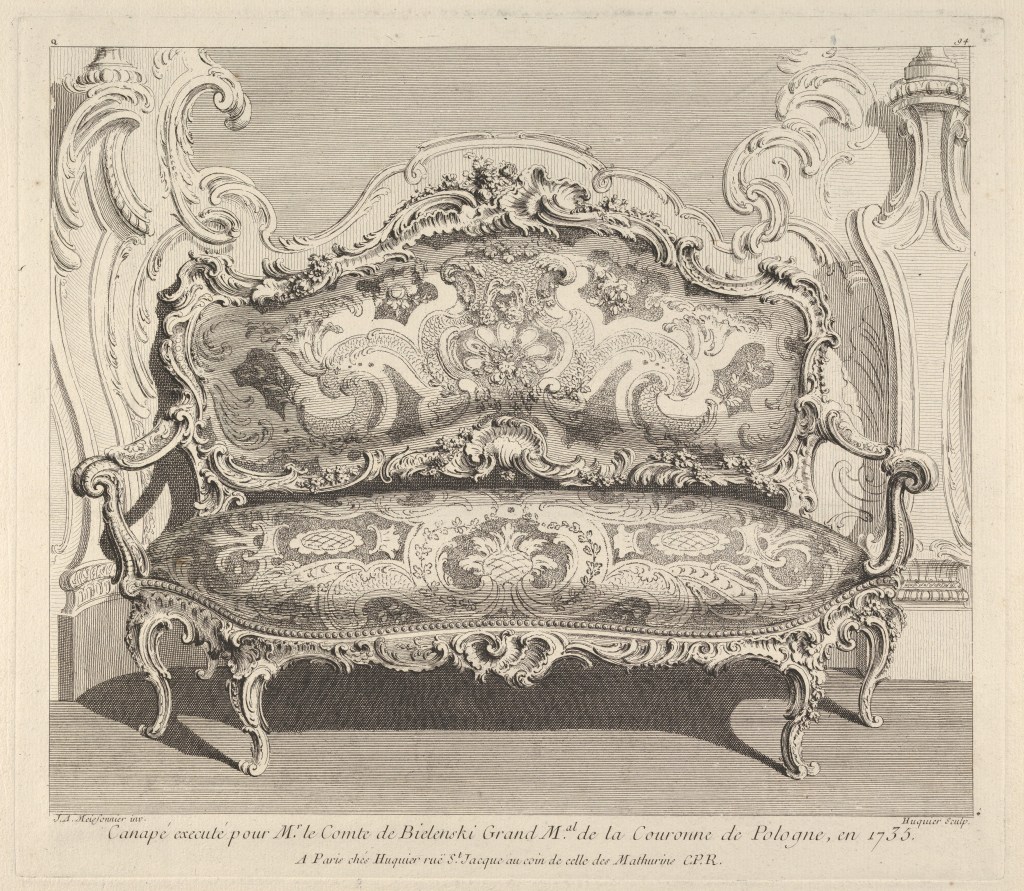
- Asymmetry and Curvilinearity: Unlike the symmetry and straight lines of Baroque, Rococo embraced asymmetrical designs and curves. Interiors often featured undulating lines and natural motifs.
- Lightness and Elegance: Rococo spaces were airy and light, with a focus on elegance and grace. This was a move away from the grandeur and heaviness of Baroque.
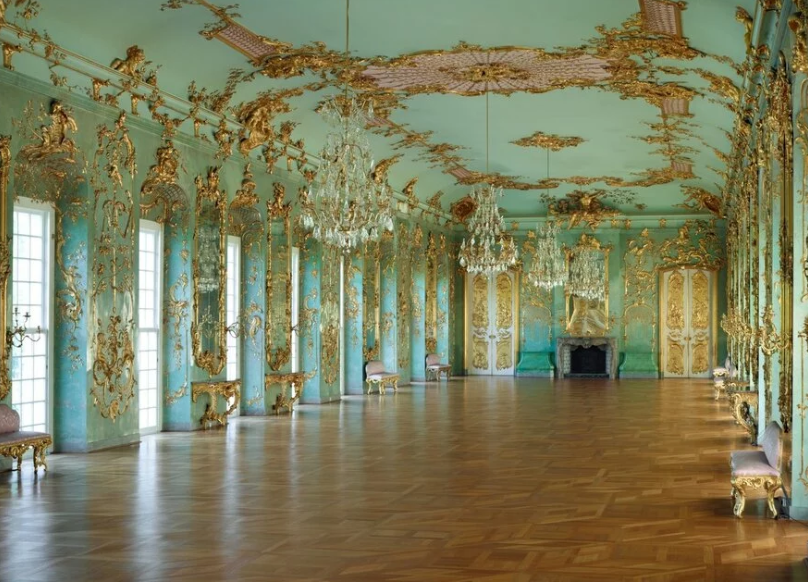
- Pastel Color Palette: Soft pinks, greens, and blues, often highlighted with gold, defined the Rococo color scheme. This was in line with its theme of lightness and playfulness.
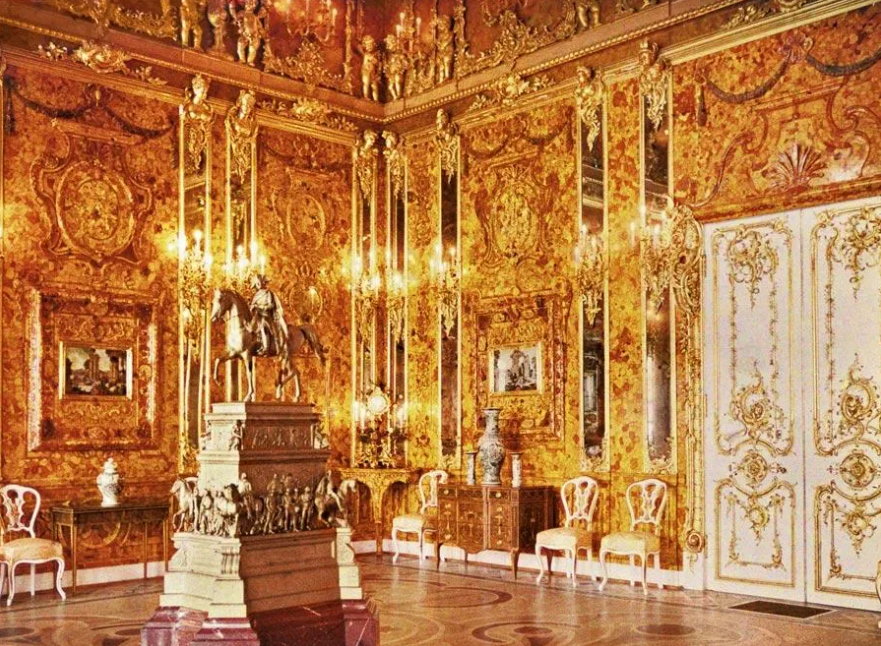
- Elaborate Ornamentation: Mirrors, ornamental sculptures, intricate moldings, and lavish use of gilding were hallmarks of Rococo interiors. Rooms were filled with artworks, furniture, and decorative objects that exemplified fine craftsmanship.
- Themes of Romance and Nature: Rococo art and design often depicted themes of love, nature, and mythology. Cherubs, pastoral scenes, and romantic imagery were commonly featured.

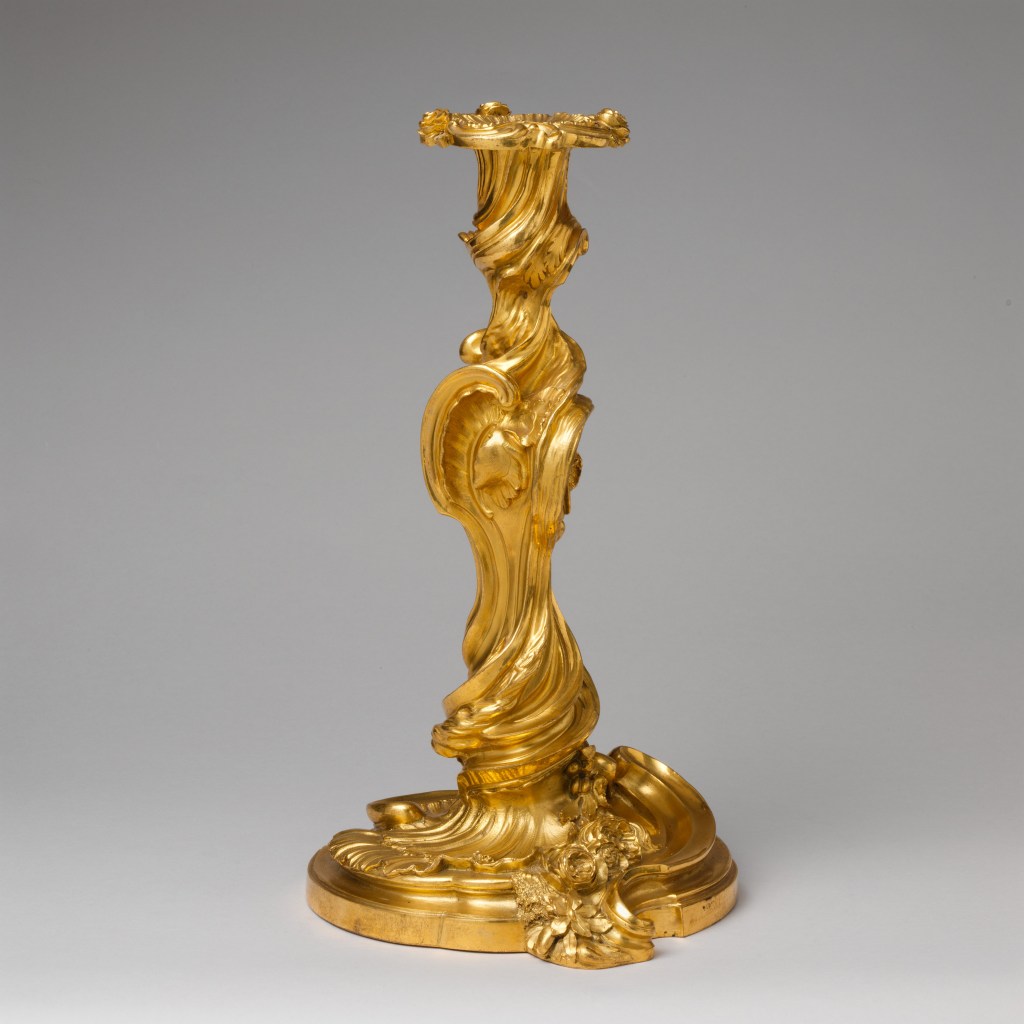
Rococo vs. Baroque: A Contrast in Temperament


While the Baroque era was marked by its serious demeanor and dramatic intensity, Rococo introduced a lighter, more feminine aesthetic. In place of Baroque’s stark contrasts and monumental scale, Rococo favored delicate pastels and a scale suitable for more intimate spaces. The result was an environment that was both inviting and exuberantly decorated, a stark contrast to the imposing grandeur of its predecessor.
Rococo in England: The Chippendale Influence
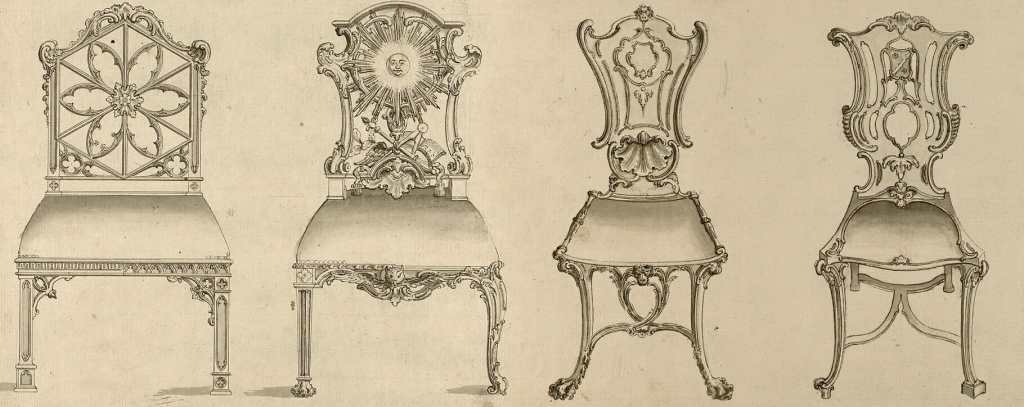
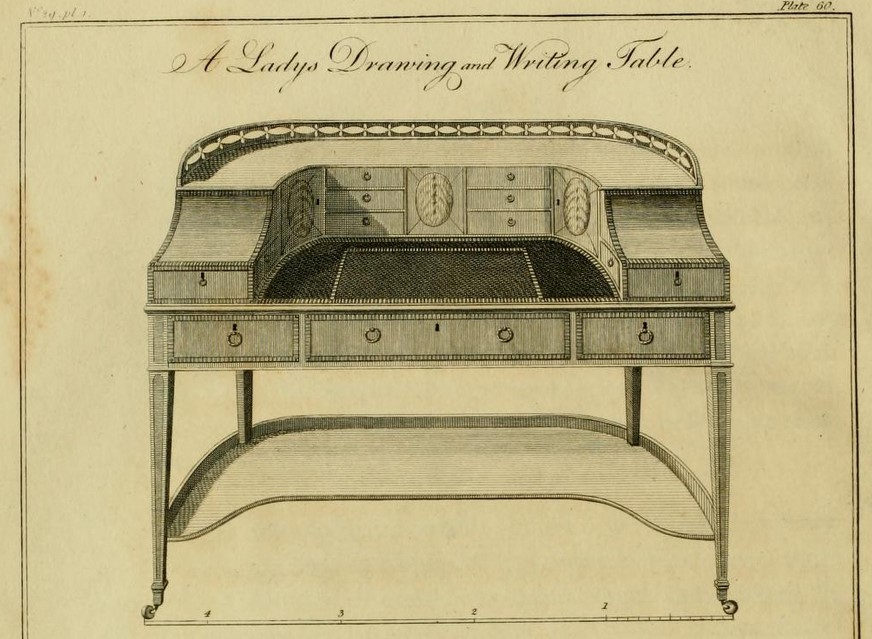
The Rococo style also found a home in England, where the famous cabinet-maker Thomas Chippendale published “The Gentleman and Cabinet-maker’s Director.” This guidebook blended Rococo with Chinese and Gothic elements, giving birth to a unique “English Rococo” characterised by intricate chinoiserie furniture and decoration.
The Legacy of Rococo in Modern Interiors


Today, the Rococo style continues to influence interior design. Its legacy lives on through:
- Furniture with curvaceous forms and elegant ornamentation
- Wall and ceiling patterns featuring intricate stucco work
- Delicately carved mirrors and candle holders
- Comfortable seating designed for social salons and intimate gatherings.
The ornate and romantic world of Rococo interior design is experiencing a modern-day resurgence. Originally flourishing in 18th-century France, Rococo – or Late Baroque – is known for its exceptional detail, playful asymmetry, and pastel colour palette. Today, designers and homeowners alike are rediscovering its charm, weaving elements of this historic style into contemporary spaces (Rococo Interior Design: Embracing Ornate Elegance).
To infuse a space with the Rococo spirit, consider adding:
- Furniture pieces that boast curved legs and intricate details
- Floral, avian, and botanical patterns on fabrics or wallpaper
- Rococo-style mirrors as a nod to French sophistication
- A harmonious blend of white and pastel shades to create a serene ambiance.
Embracing Rococo: A Touch of Gilded Glamour
Rococo’s enduring appeal lies in its ability to inject a sense of historical opulence into the contemporary home. Whether through a statement piece of furniture or a subtle textile pattern, the elegance of Rococo can bring a unique and sophisticated layer to modern interiors.
As a design movement, Rococo is a delicate balance between grandeur and grace, tradition and whimsy. It invites us to look beyond the straight lines and embrace the curves of life, all while basking in the beauty of artful excess.
Until our next design journey, allow your spaces to tell their own stories of elegance and allure.
JG x
References
- ArchDaily. 2022. Understanding the Rococo Style. Available at: https://www.archdaily.com/1013322/understanding-the-rococo-style [Accessed 27 February 2024].
- Butchoff Antiques. n.d. Identifying Chippendale Furniture: Understanding the Influence & Design Style of Thomas Chippendale. Available at: https://www.butchoff.com/blog-detail/33609 [Accessed 27 February 2024].
- Fine Art Restoration Company. n.d. Identifying Chippendale Furniture: Understanding the Influence & Design Style of Thomas Chippendale. Available at: https://fineart-restoration.co.uk/news/identifying-chippendale-furniture-understanding-the-influence-design-style-of-thomas-chippendale/ [Accessed 27 February 2024].
- Ireland, K. n.d. Projects. Available at: https://www.kathrynireland.com/projects [Accessed 27 February 2024].
- MasterClass. n.d. Rococo Architecture: A Guide to the Rococo Style. Available at: https://www.masterclass.com/articles/rococo-architecture [Accessed 27 February 2024].
- McDonald, M. [@marymcdonaldinc]. n.d. Instagram. Available at: https://www.instagram.com/marymcdonaldinc/?hl=en [Accessed 27 February 2024].
- Pinterest. n.d. [Rococo Style Interiors]. Available at: https://www.pinterest.co.uk/pin/216172850836707064/ [Accessed 27 February 2024].
- Regency Explorer. n.d. The Comforts of a Private Library in the Age of Enlightenment. Available at: https://regency-explorer.net/chd/ [Accessed 27 February 2024].
- Schloss Nymphenburg. n.d. Amalienburg. Available at: https://www.schloss-nymphenburg.de/englisch/p-palaces/amalien.htm [Accessed 27 February 2024].
- Smithsonian Magazine. 2012. A Brief History of the Amber Room. Available at: https://www.smithsonianmag.com/history/a-brief-history-of-the-amber-room-160940121/ [Accessed 27 February 2024].
- The Art Story. n.d. Rococo. Available at: https://www.theartstory.org/movement/rococo/ [Accessed 27 February 2024].
- The Metropolitan Museum of Art. n.d. [Title of Artwork]. Available at: https://www.metmuseum.org/art/collection/search/209464 [Accessed 27 February 2024].
- The Metropolitan Museum of Art. n.d. [Title of Artwork]. Available at: https://www.metmuseum.org/art/collection/search/377493 [Accessed 27 February 2024].
- Victoria and Albert Museum. n.d. The Rococo Style: An Introduction. Available at: https://www.vam.ac.uk/articles/the-rococo-style-an-introduction#slideshow=74976771&slide=0 [Accessed 27 February 2024].
- Visit Berlin. n.d. Charlottenburg Palace – Old Palace. Available at: https://www.visitberlin.de/en/charlottenburg-palace-old-palace [Accessed 27 February 2024].
 GALATEA
Leave a comment