Welcome, design devotees!
This week we’re surrounding ourselves in the world of Baroque – a time of exuberance, dynamism, and theatrical splendor.
Born from the fervent spirit of the Counter-Reformation and the Catholic Church’s desire for grandiosity, the Baroque style emerged as a statement of power and religious fervor. This era saw a dramatic shift from the secular focus of the Renaissance to a style that embraced both the sacred and the spectacular. It was an age where every element of design was imbued with meaning and where architecture and interiors served a purpose far beyond mere aesthetics.
Let’s journey together through the resplendent age of Baroque, where we’ll discover the intricate interplay of light and shadow, the richness of colours, and the deep symbolism that defines this storied era in design.
The Birth of Baroque
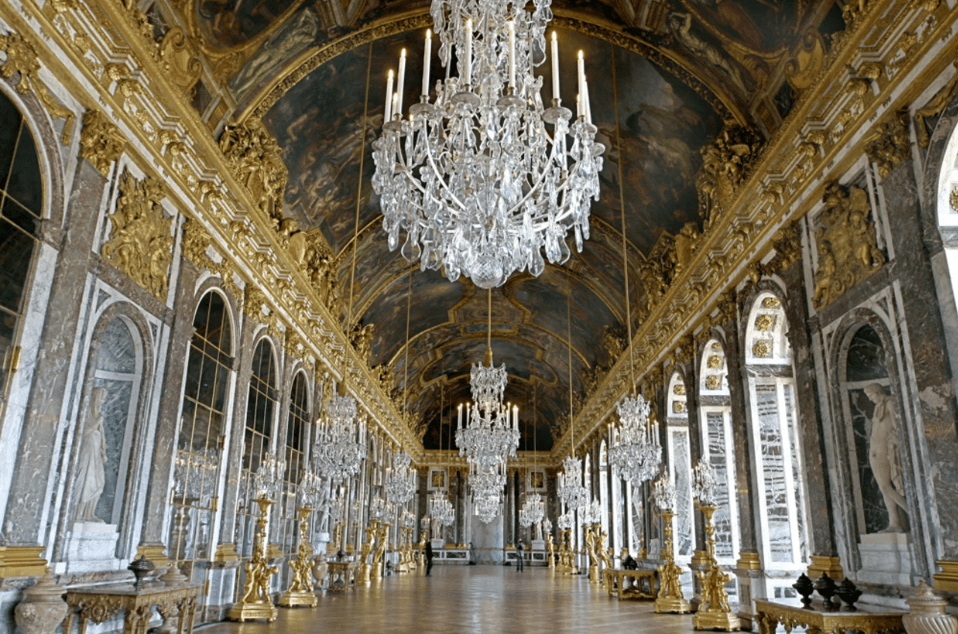
The early 1600’s marked the dawn of Baroque in Italy, particularly in Rome, with its dramatic response to the austerity of the Protestant Reformation. The Catholic Church, eager to reclaim its influence, embraced Baroque’s emotive power to inspire devotion through its grand architecture and interiors.
Societal Context and Implications

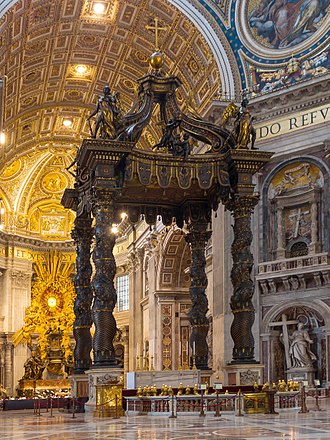
Baroque design was a product of its time – reflecting social hierarchy, political power, and the Church’s might. This period’s artistic style intersected with the Age of Discovery, significant scientific progress, and the consolidation of monarchies, all of which influenced the evolution of Baroque aesthetics.
Characteristics and Attributes
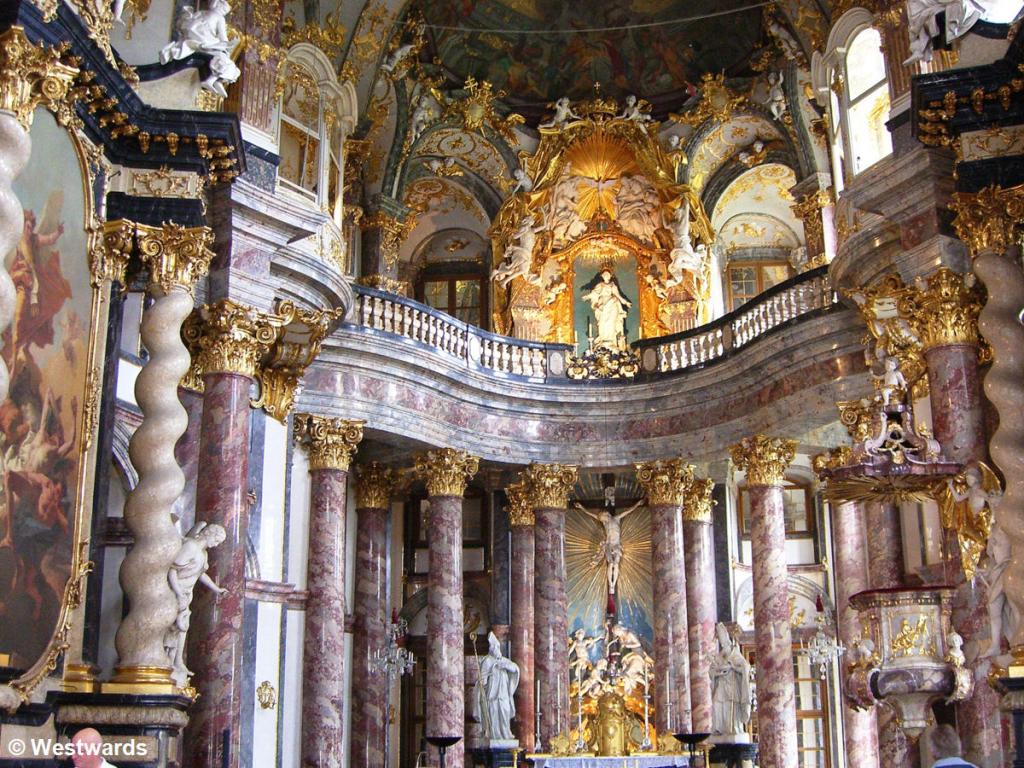
Baroque design’s hallmark was its:
- Dramatic Use of Light: The interplay of light and shadow in Baroque interiors created a dynamic environment that depicted movement and depth, often achieved through artfully placed windows and candles.
- Rich Colour Palette: The Baroque palette was a tapestry of deep reds, golds, greens, and blues, imparting warmth and sumptuousness to the spaces.
- Opulent Materials and Textures: Luxurious silks, velvets, gold gilding, marbles, and intricate wood carvings were the era’s signature, reflecting its penchant for the lavish.
- Ornate Details and Decor: Baroque was synonymous with grand frescoes, elaborate plasterwork, and heavily carved furniture that adorned majestic interiors.
- Asymmetry and Curves: Contrasting the Renaissance’s symmetry, Baroque, celebrated bold contrasts with complex shapes and sweeping curves.
- Iconography and Symbolism: Art and decorations were replete with religious and mythological symbols that conveyed powerful narratives of triumph and devotion.
Notable Baroque Figures

During the Baroque design movement, individual interior designers as we think of them today were not as well documented as architects and artists who played significant roles in shaping interiors. Here are some notable figures associated with Baroque interior design:
- Gian Lorenzo Bernini (1598-1680): Gian Lorenzo Bernini was a prolific Italian architect, sculptor, and painter during the Baroque period. He was known for his work on interior spaces within churches, including the design of the Baldacchino in St. Peter’s Basilica in Rome and the interior of the Cornaro Chapel in Santa Maria della Vittoria, where he created the famous sculpture “The Ecstasy of Saint Teresa.”
- Francesco Borromini (1599-1667): While Francesco Borromini’s work is also associated with the early Baroque period, his innovative architectural designs, including church interiors, incorporated elements of Baroque interior design characterized by dramatic and dynamic forms.
- Jules Hardouin-Mansart (1646-1708): A French architect, Jules Hardouin-Mansart, was known for his contributions to the Palace of Versailles, where he designed opulent and grand interiors, including the Hall of Mirrors (Galerie des Glaces).
- Carlo Fontana (1634-1714): Carlo Fontana, an Italian architect and sculptor, contributed to the design of Baroque interiors in churches and palaces in Rome, including the Palazzo Barberini and the Church of Santa Maria dei Miracoli.
- André-Charles Boulle (1642-1732): André-Charles Boulle was a French cabinetmaker known for his exquisite marquetry work. His furniture pieces with intricate inlays of brass, tortoiseshell, and ebony were highly sought after for Baroque interiors.
- Gian Battista Tiepolo (1696-1770): Gian Battista Tiepolo was an Italian painter whose frescoes adorned the ceilings and walls of numerous palaces and churches across Europe, contributing to the grandeur of Baroque interiors.
- Francesco Solimena (1657-1747): An Italian painter of the late Baroque period, Francesco Solimena’s frescoes and decorative paintings enhanced the splendor of many Baroque interiors in Naples and beyond.
- Charles Le Brun (1619-1690): Charles Le Brun, a French painter and decorator, played a significant role in the interior decoration of the Palace of Versailles during the reign of Louis XIV, contributing to the grandiose Baroque style.
- Daniel Marot (1661-1752): Daniel Marot was a French-born architect and designer who worked in the Netherlands. He was known for his contributions to the interiors of Dutch palaces with his decorative and ornate designs.
Baroque Design Influence on Modern Design
Today the Baroque legacy thrives in:
- Dramatic Contrast and Dynamics: Modern interiors often draw on the Baroque’s love for drama and movement, using bold colours and textures to create spaces that are both visually stimulating and emotionally resonant.
- Ornamentation and Detailing: High-end spaces today nod to Baroque’s ornate detailing incorporating luxurious materials and elaborate designs for a lavish feel.
- Integrated Art and Design: Like the Baroque movement, contemporary interior design often integrates art as a fundamental component of the overall design narrative.
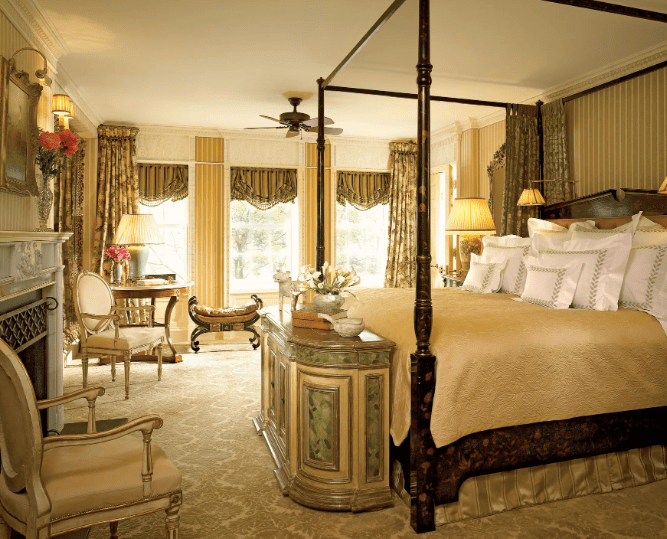


As we close the ornate doors on our Baroque journey, we are left with the undeniable impact of an era the redefined not only art and design but also the very way we interact with our spaces. Baroque teaches us that interior design is a powerful form of storytelling, one that can inspire awe and command wonder across ages.
Until our next design adventure, may the bold spirit of Baroque inspire your spaces and infuse them with a sense of historical grandeur and luxury.
JG x
References
- Architectural Digest. (n.d.) How to add Baroque style to any interior. Available at: https://www.architecturaldigest.com/gallery/how-to-add-baroque-style-to-any-interior (Accessed: 26 February 2024).
- NBC News. (2007) ‘Inside the Vatican Museums’, 28 June. Available at: https://www.nbcnews.com/id/wbna19418708 (Accessed: 26 February 2024).
- ThoughtCo. (n.d.) The Palace of Versailles: History and Facts. Available at: https://www.thoughtco.com/palace-of-versailles-history-4686085 (Accessed: 26 February 2024).
- Vogue France. (n.d.) 8 things you didn’t know about the Palace of Versailles. Available at: https://www.vogue.fr/fashion-culture/article/8-things-you-didnt-know-about-the-palace-of-versailles (Accessed: 26 February 2024).
- Walks in Rome. (n.d.) Chiesa del Gesu Rome. Available at: https://www.walksinrome.com/chiesa-del-gesu-rome.html (Accessed: 26 February 2024).
- Westwards. (2016) ‘Würzburg Residence’, 1 January. Available at: https://westwards.de/2016/01/wuerzburg-residence/ (Accessed: 26 February 2024).
- Wikipedia. (2024) Gian Lorenzo Bernini. Available at: https://en.wikipedia.org/wiki/Gian_Lorenzo_Bernini (Accessed: 26 February 2024).
- Wikipedia. (2024) St. Peter’s Baldachin. Available at: https://en.wikipedia.org/wiki/St._Peter%27s_Baldachin (Accessed: 26 February 2024).
 GALATEA
Leave a comment