
Greetings, interiors obsessed!
Today’s class delves into the Renaissance Design Movement. In the tapestry of history, the Renaissance period emerges as a vibrant thread, weaving a narrative of rebirth, innovation, and timeless elegance that continues to shape our aesthetic sensibilities.
Spanning from the 14th to the 17th centuries, this epoch, illuminated by the genius of Leonardo da Vinci and Michelangelo, marked a profound cultural, artistic, and intellectual revival that reshaped European history.
Let us embark on a journey to explore the Renaissance design movement, its unique characteristics, the luminaries who championed its cause, and its enduring impact on the tapestry of contemporary aesthetics.
The Dawn of Renaissance
In the heart of Italy, amidst the bustling streets of 14th century Florence, the Renaissance bloomed as a vibrant ‘rebirth,’ turning its back on the medieval Gothic movement’s shadows. This era, fueled by the intellectual fervor and generous patronage of the Medicis, witnessed a dramatic shift in focus— from the medieval preoccupation with the afterlife to a renewed exploration of human experience, classical antiquity, and the natural world.

It was a time when artists and designers dared to experiment, to redefine the boundaries of creativity, spurred on by a society ripe with curiosity about the physical world and the legacies of ancient civilizations.
Florence, in the 1400’s, became the cradle of this cultural awakening, establishing a stable government, amassing wealth through trade and banking, and fostering a communal optimism that spurred curiosity about the physical world and the civilisation of ancient Rome and Greece.
However, artists and thinkers of this era were not content to merely replicate the achievements of their forebears; instead, they sought to transcend them, fuelled by a society that valued curiosity and innovation.
The Renaissance’s Philosophical Underpinning
The Renaissance was not merely an artistic upheaval but a philosophical one, grounded in humanism. This new way of thinking did not reject the religious values of the medieval worldview; instead, it sought a harmonious balance, augmenting religious beliefs with faith in human endeavor.
The era was a testament to the belief in the possibilities of human efforts in a balanced relationship with the divine teachings of the church. Artists and designers of the time, inspired by the rediscovered wisdom of Plato, Archimedes, and Vitruvius, embarked on a quest to marry the teachings of ancient Rome and Greece with the Christian traditions of their day.
While the Renaissance undeniably revered the artistic and architectural achievements of ancient Greece and Rome, its approach to design was far from mere imitation. Artists and architects of the Renaissance did not just replicate ancient details and concepts; they reinterpreted and synthesized them into new forms, breathing fresh life into the classical ideals.
Titans of Renaissance Design
The Renaissance, a period rich in cultural, artistic, and intellectual rebirth, saw the emergence of individual creators who left an indelible mark on art, architecture, and interior design. This era, moving away from the medieval tradition of anonymous craftsmanship, was characterized by the rise of named architects and artists, underscoring the humanism at the movement’s heart.
In an attempt to find order in the complexity of Renaissance development, historians have identified three of its main phases: the early renaissance, the high renaissance, and the late renaissance and mannerism. Many older histories view these phases as forming a pattern, made up of a hesitant beginning, a triumphantly successful ‘high’ period, followed by a period of decline and decadence.
The Early Renaissance: Seeds of Change
The Early Renaissance laid the groundwork for this transformative era, with figures like Filippo Brunelleschi leading the charge. Brunelleschi, renowned for designing the dome of Florence Cathedral (Il Duomo), introduced innovative architectural solutions, emphasizing the creation of impressive interior spaces that departed from medieval norms. Similarly, Leon Battista Alberti, through works like the church of S. Andrea in Mantua, showcased the importance of symmetry and classical motifs.
The High Renaissance: The Apex of Artistry
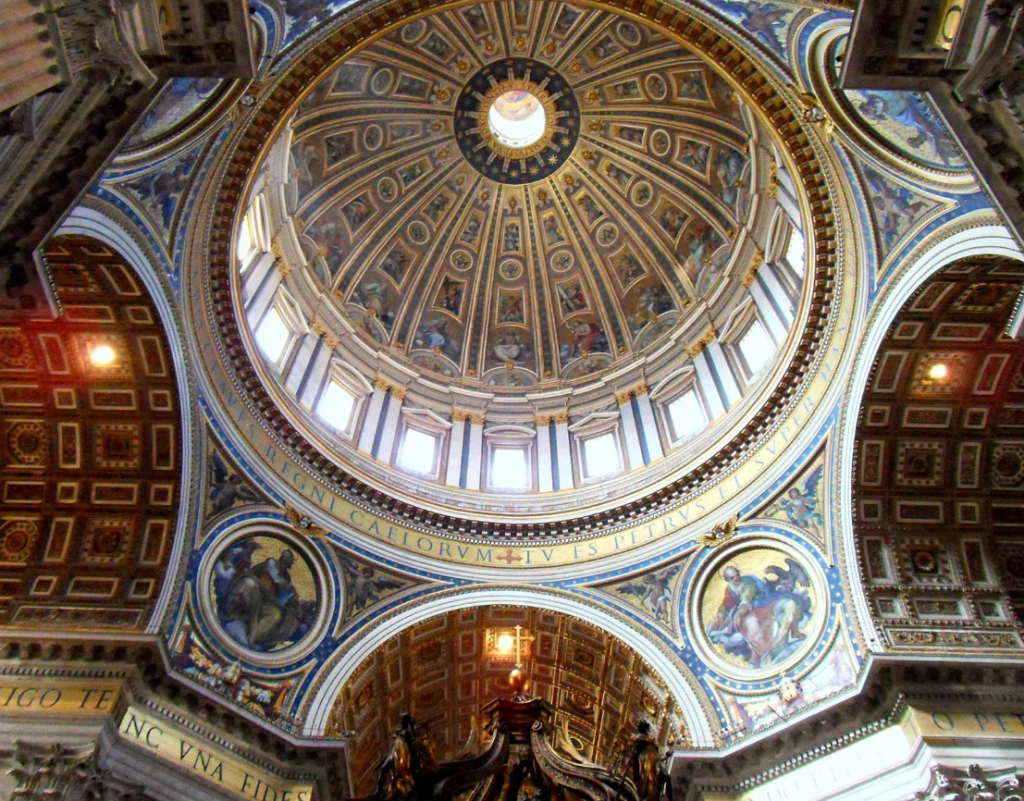
The High Renaissance represented the zenith of classical ideals and individual creativity. Architects like Donato Bramante, known for S. Pietro in Montorio in Rome, celebrated for refined architectural language, marked the era.
Leonardo da Vinci, though primarily recognized as a painter, also made substantial contributions to the aesthetics of interiors with his designs for furniture and decorative elements, showcasing the era’s blend of artistry and functionality.
Similarly, Donatello’s sculptures, such as the bronze “David,” not only advanced the realm of sculpture but also enhanced interior spaces, imbuing them with unparalleled artistic and aesthetic value.
The Late Renaissance and Mannerism: A New Direction
As the Renaissance evolved into Mannerism, artists like Michelangelo Buonarroti and Giulio Romano explored more personal and experimental approaches. Michelangelo, a virtuoso in sculpture, painting, and architecture, epitomized the fusion of art and architecture, notably in his work in the Sistine Chapel, demonstrating the era’s innovative spirit.
Andrea Palladio, with his seminal treatise “The Four Books of Architecture,” further revolutionized both architecture and interior design, advocating for principles of symmetry and the use of classical motifs that would come to define Renaissance aesthetics.
This transition from the collective anonymity of medieval craftsmen to the celebrated masters of the Renaissance reflects the era’s deep-rooted humanism.
Characteristics and Elements of Renaissance Design
Gone were the days of fortified castles required in Medieval times, as the Renaissance ushered in an era where the homes of the affluent were palaces of comfort and beauty.
The Renaissance design movement is distinguished by its harmonious blend of symmetry, proportion, and classical motifs, a language inspired by the architectural principles of Roman and Greek antiquity.
Key features included:
- Symmetry and Proportion: Inspired by classical architecture, interiors showcased balanced and harmonious proportions.
- Classical Motifs: Designs incorporated columns, pilasters, and entablatures, echoing ancient architectural styles.
- Rich Colour Palettes: Interiors were adorned with deep, vibrant colours, often complemented with gold accents.
- Luxurious Materials: The use of sumptuous fabrics like velvet and silk, alongside fine woodwork and ornate furnishings, was prevalent.
- Artistic Mastery: The era is renowned for its artistic achievements, extending to interior design with frescoes and paintings integral to the overall aesthetic.
- Richly Decorated Ceilings: Ceilings in Renaissance interiors were often highly decorated, featuring intricate stucco work, frescoes, and decorative mouldings.
- Renaissance Furniture: Cabinets, also known as cassone or credenza, were popular furniture pieces during the Renaissance. These wooden cabinets featured intricate marquetry and intarsia work, depicting mythological scenes, religious motifs, and classical figures.

Renaissance interiors often featured frescoes and trompe-l’œil techniques, creating optical illusions that extended the artistic canvas to walls and ceilings.
Artists like Michelangelo and Rapheal were instrumental in integrating these art forms, masterfully transforming ceilings and walls into celestial realms and tricking the eye into perceiving three-dimensional spaces which metaphorically brought the heavens into earthly abodes.
Renaissance Design Across Europe

The Renaissance’s influence was not confined to the Italian peninsula; it rippled outwards, touching the shores of England, France, and beyond. Each region adapted the movement’s principles to its cultural context, blending local traditions with the Renaissance’s classical motifs.
The English Renaissance unfolded under a different lens, influenced significantly by the country’s estrangement from Catholic Europe. Here, the Renaissance was less about a wholesale revival of classical antiquity and more about integrating Renaissance elements with existing Gothic traditions. The result was a unique stylistic blend, seen in the oak-panelled halls and stately manors of the Elizabethan era.

Notable structures like Hardwick Hall and Hampton Court Palace stand as testaments to this unique English interpretation of Renaissance grandeur, showing the fusion of opulent tapestries, intricate carvings, and lavish embellishments that defined the period.


Notably, Inigo Jones played a pivotal role in introducing direct Italian classicism to England, inspired by Andrea Palladio, infusing English design with harmonious proportions and classical motifs.

The Renaissance Revival and Modern Impact
The 19th century witnessed a Renaissance Revival, a Neo-Renaissance movement that sought to recapture the spirit of this golden era.
This revival helped to preserve and propagate Renaissance principles, influencing modern design in several ways:
- Classical Motifs: Contemporary designers often incorporate classical motifs, like columns, pilasters, pediments and detailed ceiling mouldings, to evoke timelessness and grandeur.
- Human-Centric Design: The Renaissance emphasis on human-centered design has evolved into today’s user-centered design principles, focusing on creating spaces that are aesthetically pleasing and functional.
- Modern interpretations: Contemporary designers blend classical and contemporary elements, maintaining the essence of Renaissance opulence while adapting to modern needs.
Contemporary designers, drawing inspiration from this rich historical tapestry, continue to incorporate classical motifs and human-centric principles into their work, creating spaces that marry the essence of Renaissance opulence with the functionality of modern living.
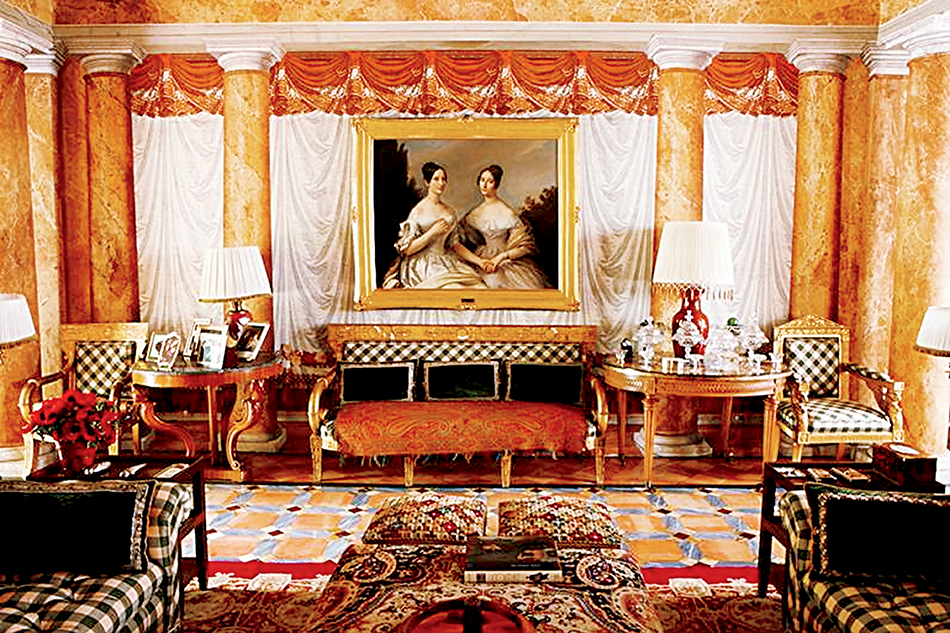

The Renaissance was more than a mere historical period; it was a profound movement that reshaped the landscape of human thought, art, and design. Its legacy in interior design, with its grand frescoes, rich colors, and classical motifs, continues to adorn our contemporary spaces, serving as a testament to the enduring influence of historical movements in shaping modern aesthetics.
Let’s catch up next time to talk about the successor to Renaissance – the Baroque movement.
JG x
Resources
- Architectural Digest. (n.d.). Designer Juan Pablo Molyneux on Preserving Craftsmanship. Available at: https://www.architecturaldigest.com/story/designer-juan-pablo-molyneux-on-preserving-craftsmanship [Accessed 16 Feb. 2024].
- Britannica. (n.d.). Saint Peter’s Basilica. Available at: https://www.britannica.com/topic/Saint-Peters-Basilica [Accessed 16 Feb. 2024].
- Château de Fontainebleau. (n.d.). Explore the Castle and Gardens. Available at: https://www.chateaudefontainebleau.fr/en/explore-the-castle-and-gardens/fontainebleau-rooms/ [Accessed 16 Feb. 2024].
- 1stDibs. (n.d.). Mongiardino and Mondadori. Available at: https://www.1stdibs.com/introspective-magazine/mongiardino-and-mondadori/ [Accessed 16 Feb. 2024].
- The Collector. (n.d.). Sistine Chapel. Available at: https://www.thecollector.com/sistine-chapel/ [Accessed 16 Feb. 2024].
- The Metropolitan Museum of Art. (n.d.). Paneling from the Hall Quay, Great Yarmouth, Norfolk. Available at: https://www.metmuseum.org/art/collection/search/204568 [Accessed 16 Feb. 2024].
- National Trust. (n.d.). History of Hardwick Hall. Available at: https://www.nationaltrust.org.uk/visit/peak-district-derbyshire/hardwick/history-of-hardwick-hall [Accessed 16 Feb. 2024].
- Palazzo Medici Riccardi. (n.d.). Visit. Available at: https://www.palazzomediciriccardi.it/ [Accessed 16 Feb. 2024].
- Peter Marino Architect. (n.d.). Available at: https://petermarinoarchitect.com/ [Accessed 16 Feb. 2024].
- Royal Museums Greenwich. (n.d.). Inigo Jones and the Queen’s House. Available at: https://www.rmg.co.uk/stories/topics/inigo-jones-queens-house [Accessed 16 Feb. 2024].
- Sistine Chapel. (n.d.). Available at: https://www.thesistinechapel.org/sistine-chapel [Accessed 16 Feb. 2024].
- Visit Florence. (n.d.). Palazzo Vecchio. Available at: https://www.visitflorence.com/florence-monuments/palazzo-vecchio.html [Accessed 16 Feb. 2024].
- Pile, J., Gura, J. and Pile, D. (2024). A History of Interior Design. 5th ed. Quercus Publishing. ISBN 9781529419979.Vatican Museums Rome. (n.d.). Raphael Rooms. Available at: https://www.vaticanmuseumsrome.com/raphael-rooms#:~:text=Raphael%20began%20the%20work%20in,the%20Borgo%2C%20Hall%20of%20Constantine [Accessed 16 Feb. 2024].
- Wikipedia. (2024). Hampton Court Palace. Available at: https://en.wikipedia.org/wiki/Hampton_Court_Palace [Accessed 16 Feb. 2024].
 GALATEA
Leave a comment