Hello, design enthusiasts!
Today, we embark on a fascinating exploration of the Gothic design movement, a journey that takes us through the awe-inspiring architectural feats and the profound societal impacts of this style.
Let’s uncover the mysteries and grandeur of Gothic design, a movement that gave the world some of the most beautiful religious and communal buildings.
The Dawn of Gothic: Out of the Dark Ages

The Gothic period was a significant design movement emerging from the Dark Ages and spanning to the early 17th century. Whilst it originated in France – particularly in the Paris Basin, it quickly spread across Europe. The movement emerged during a time of profound social, religious, and economic upheaval that influenced its characteristics and widespread adoption.
However, it wasn’t always known as the Gothic movement; It was originally dubbed the ‘Lavori Moderni’ (New Work) or ‘Opus Francigenum’ (French Work), thanks to its origins. The term ‘Gothic’ was a derogatory term applied to the movement by Giorgio Vasari, who saw the style as barbaric and a ‘new invasion’. The term derived from the Goth tribes, a nomadic Germanic group known for their role in the fall of the Roman Empire and its classical culture. Over time, however, the term shed its negative connotations, becoming synonymous with an architectural style characterized by grandeur, intricacy, and beauty.
Origins of the Gothic Style
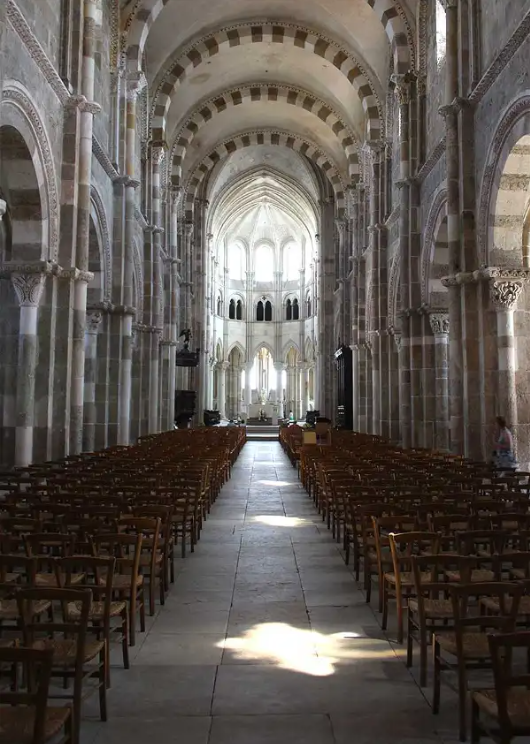
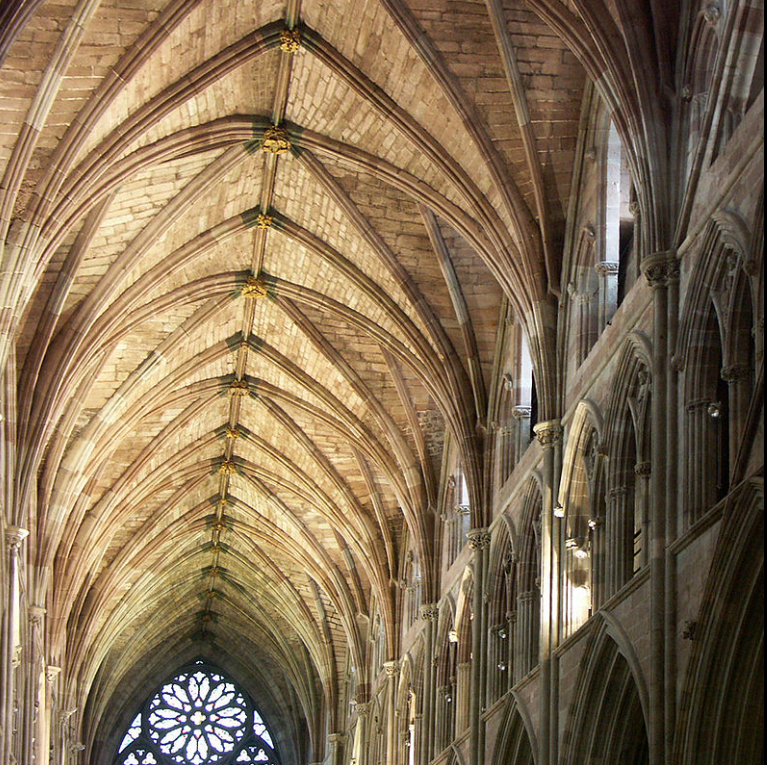
The Gothic style originated as an evolution of the Romanesque style, but was underpinned by innovative engineering techniques which emerged during the period. The introduction of pointed arches, rib vaults and flying buttresses redistributed the weight of the buildings, allowing Gothic structures to withstand greater weights. This enabled the construction of taller, more slender structures with large stained-glass windows.
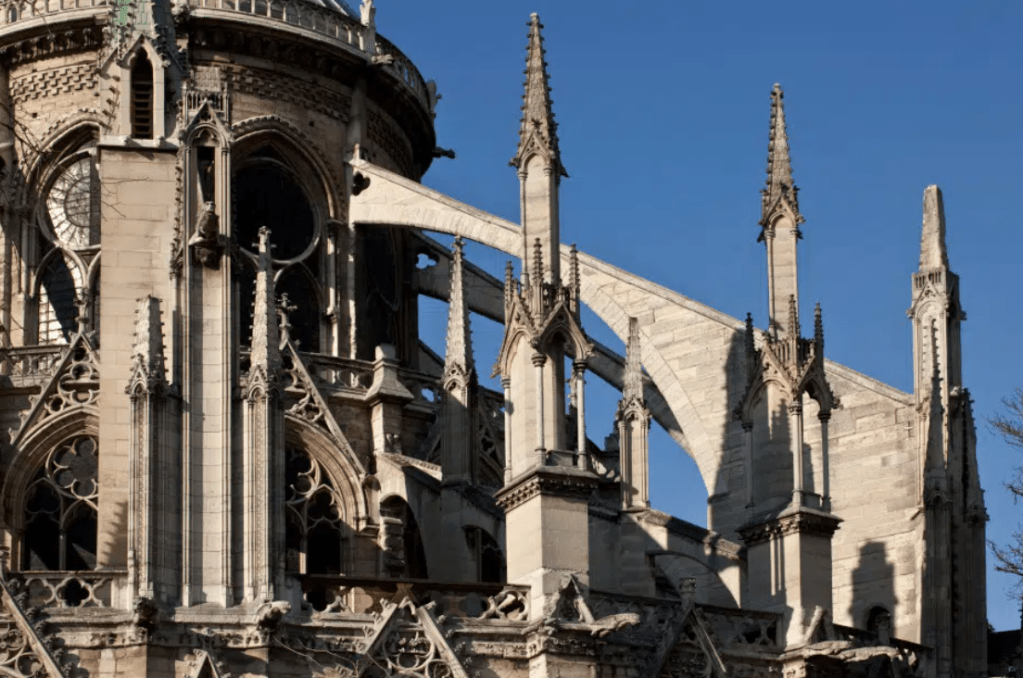
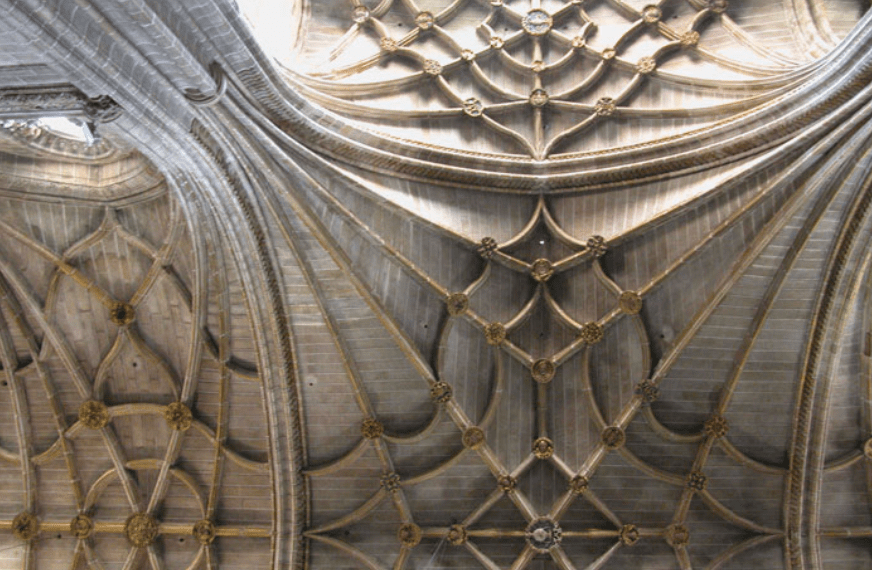
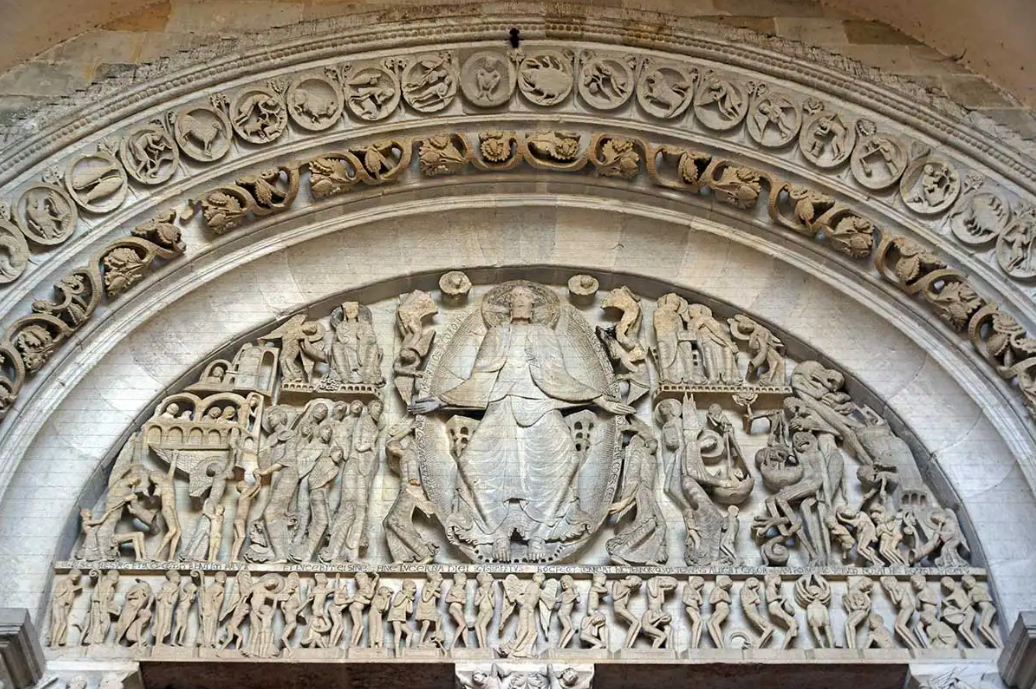
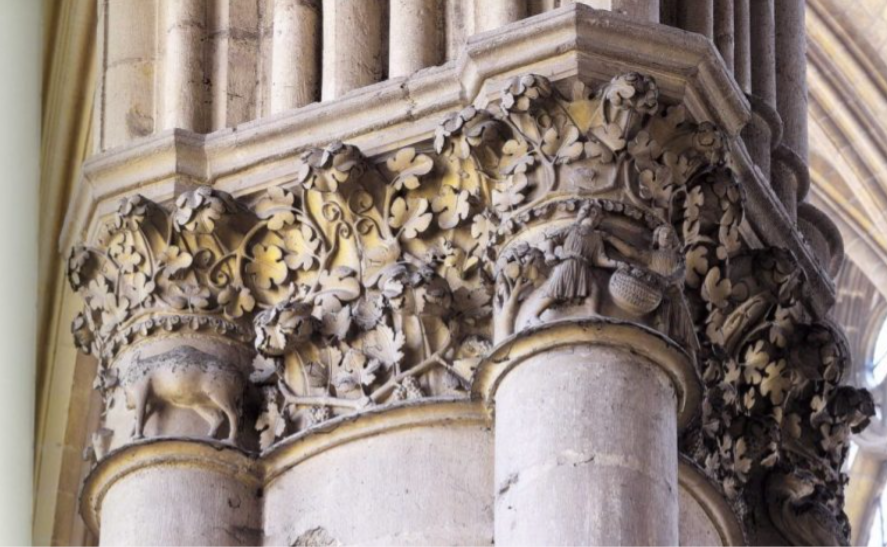
We can see the evolution from Romanesque architecture, characterized by heavy stone walls, rounded arches, and simple geometric decoration, to Gothic’s pointed arches, thinner columns, intricate floral and curvilinear decorations, and complex vaulting. New engineering methods allowed for light to fill wide open spaces without compromising the stability of the structures.
The Gothic Movement Across Europe

The Abbey of Saint Denis in Paris, completed between 1135 and 1144, is widely regarded as the first complete Gothic structure. Its design elements, such as buttress strips and rose windows, became prototypes for later Gothic buildings.
The style then rapidly spread throughout France, most notably to Notre Dame de Paris, and then to England, influencing major buildings like Canterbury Cathedral and Westminster Abbey.
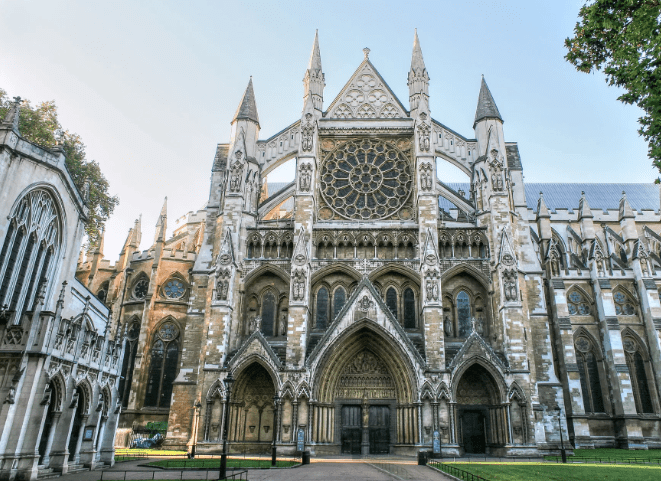
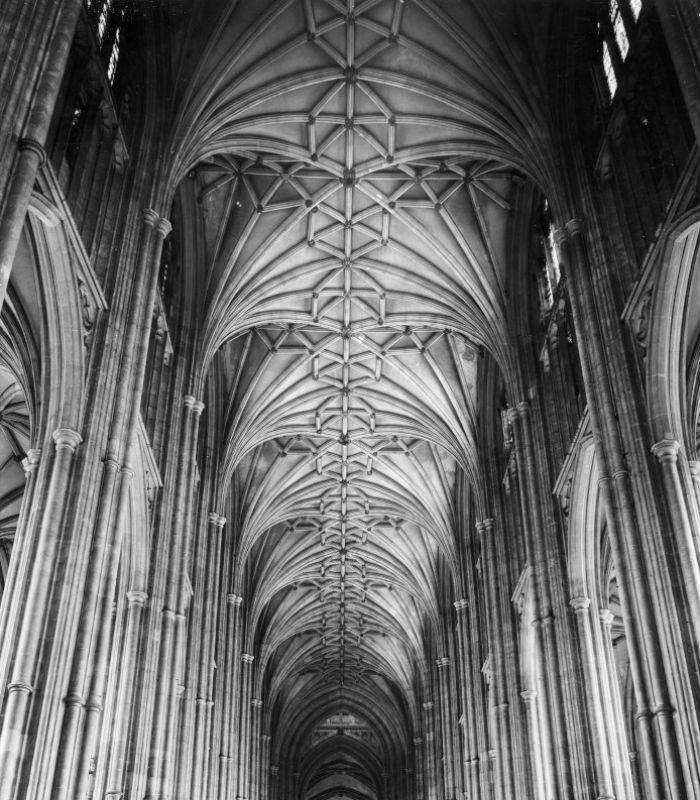
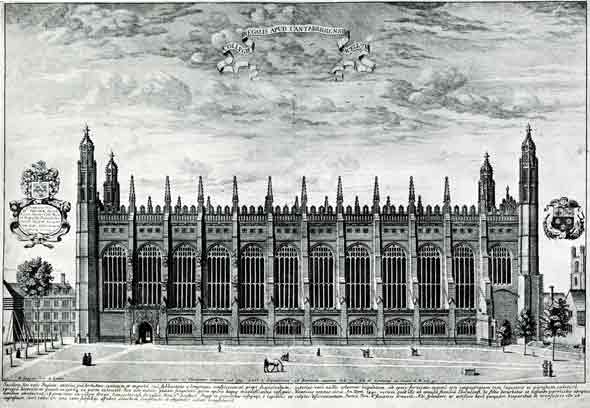
The Gothic style’s spread across Europe was swift and transformative, with each region adapting it to their cultural context. In England, the style evolved into distinct phases, including the Early English, Decorated, and Perpendicular Gothic, each marked by unique features such as elaborate traceries and vertical emphasis, as seen in King’s College Chapel, Cambridge.
Characteristics and Attributes of Gothic Design
Gothic interior design is characterised by several distinct features, each contributing to its unique allure:
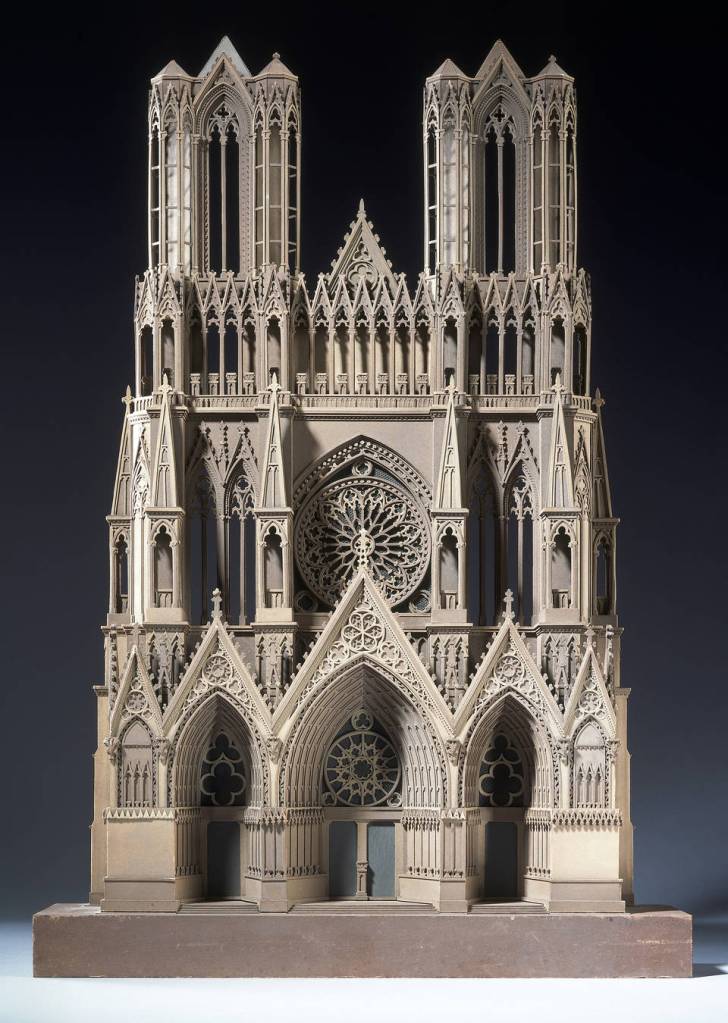
- Pointed Arches: Perhaps the most recognisable feature, these arches not only supported the structure’s weight better than their rounded predecessors but also added a sense of grace and majesty.
- Ribbed Vaults: These intersecting arches were both functional and aesthetic, creating patterns that draw the eye upwards. These supported the weight of the taller buildings.
- Flying Buttresses: While primarily an exterior feature, these structures were critical in supporting the high walls and large windows, allowing for more interior light. Flying buttresses allowed for thinner walls and thus larger windows, particularly for stained glass.
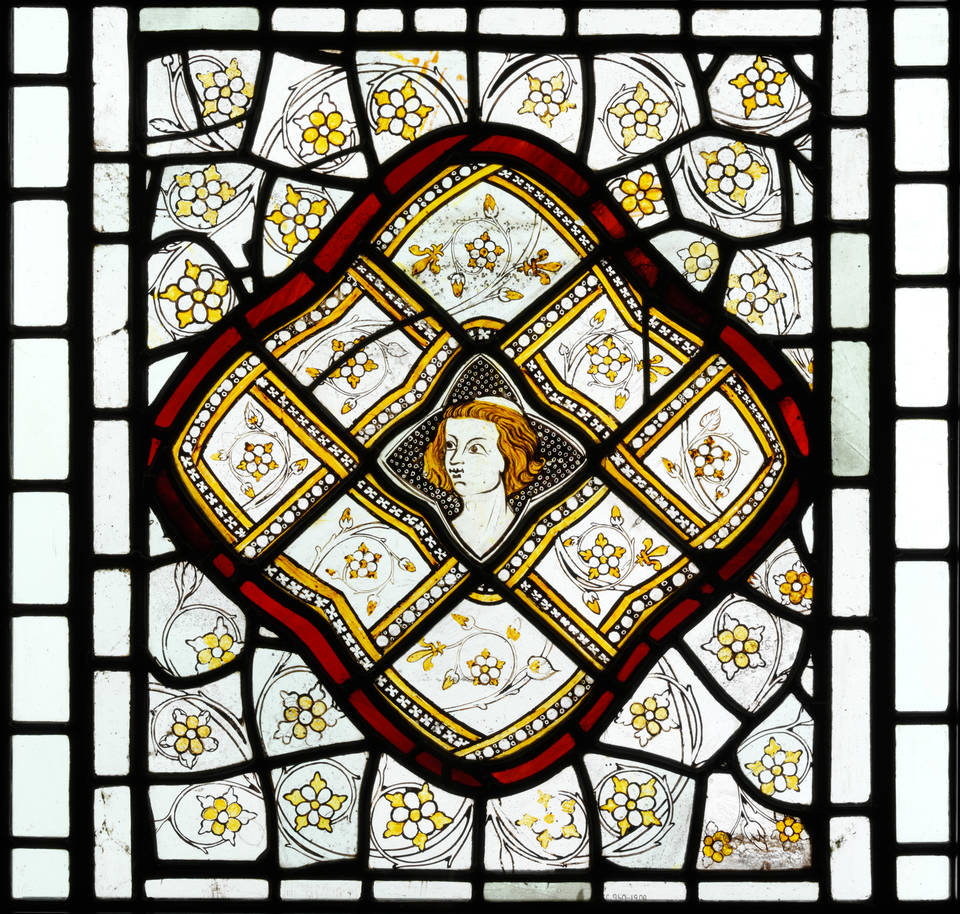
- Stained Glass Windows: A revival of the medieval rose window, these brilliantly coloured windows were more than just decorative. They narrated biblical stories, educated the masses, and bathed interiors in ethereal light, contributing to the spiritual atmosphere.
- Ornate Detailing: From the intricate carvings on columns to the elaborate stone work on walls, Gothic design is renowned for its attention to detail.
- Gargoyles: Serving a dual purpose, gargoyles functioned as spouts to divert rainwater away from the building’s walls, helping to prevent erosion. Symbolically, they were thought to ward off evil spirits and protect the sanctity of the church.
- Grotesques: Similar to gargoyles but primarily decorative, grotesques in Gothic architecture often took the form of chimeras or mythical creatures. These sculptures did not serve as water spouts but were used to convey moral or religious messages.


Gothic Design and the Church
The Gothic style found its most profound expression in church architecture. It was used by the Roman Catholic Church to create awe-inspiring cathedrals that were not only places of worship but also symbols of divine grandeur and the Church’s power. The interiors of these cathedrals, with their soaring arches and light-filled spaces, were designed to inspire spiritual contemplation and a connection with the divine – a far cry from the previously dark Romanesque interiors.
Gothic architecture was more than just a style; it was a representation of societal and religious ideals of the time. Its upward soaring lines and luminosity were seen as physical manifestations of the spiritual journey towards the heavens. The extensive use of stained glass, often depicting biblical narratives, served both educational and inspirational purposes, particularly for the illiterate populations.
During the 13th and 14th centuries, Europe experienced a surge in artistic consumption on an extravagant scale. The first patrons of this were bishops and abbots, but soon the power and sophistication of the New Gothic form captivated kings and nobles.
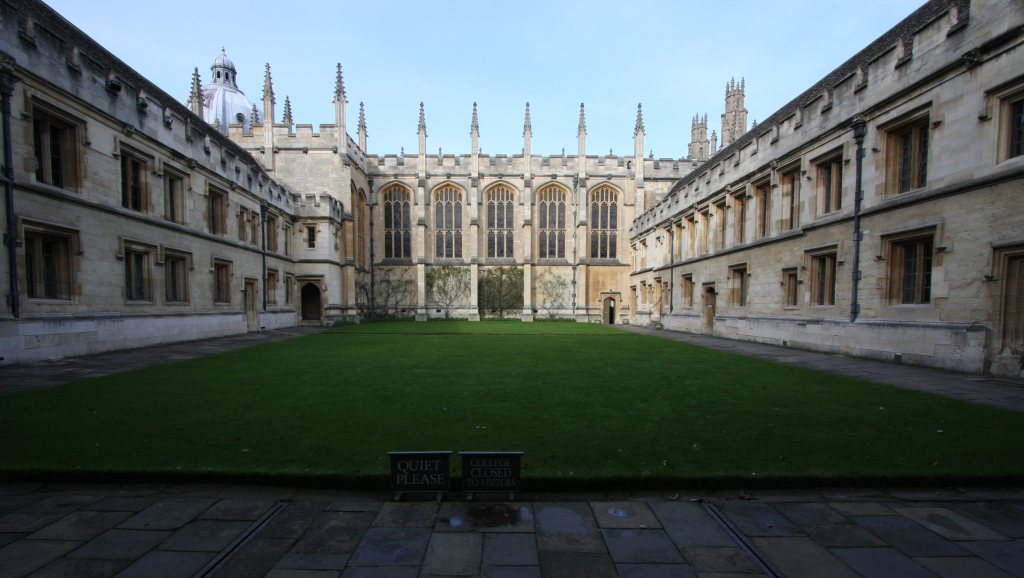
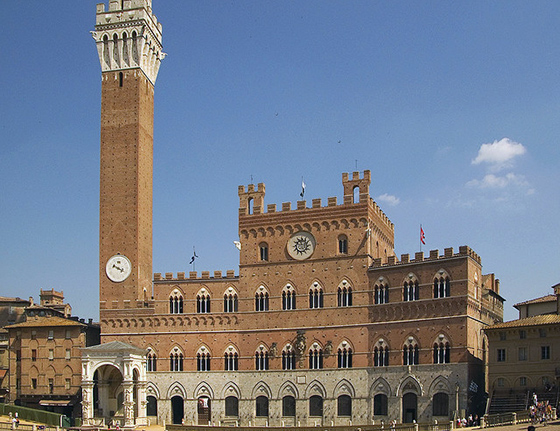
The rise of cities, the founding of universities, and the growth in trade in this period created a bourgeois class who could afford to patronise the arts and commission works. In this, Gothic design transcended its ecclesiastical roots, permeating secular buildings such as castles, universities, and even tool halls, showcasing the style’s versatility and appeal beyond religious boundaries.
Gothic Interiors
As the Middle Ages progressed, the architectural emphasis shifted from fortified castles to the more comfortable and refined manor houses preferred by the elite. This change significantly impacted interior design, leading to advancements in furniture design and room layouts that balanced functionality with aesthetics. The great hall remained a focal point in these homes, serving multiple purposes while showcasing a growing interest in comfort and decorative detail.
The introduction of screens, a partitioned area leading to kitchens in large rooms, marked an early approach to spatial planning and divided functional spaces. The area above the screens evolved into the minstrels’ gallery, a space specifically for entertainment, reflecting the increasing value placed on leisure in home design.
In the great hall, a raised dais for the family and guests highlighted social status, contrasting with the main area’s movable furniture, blending practicality with ceremonial importance.
The shift to more elaborate furniture, like canopied beds, signified a move towards privacy, comfort, and status, enriching interiors with color and texture against the backdrop of Gothic architecture.
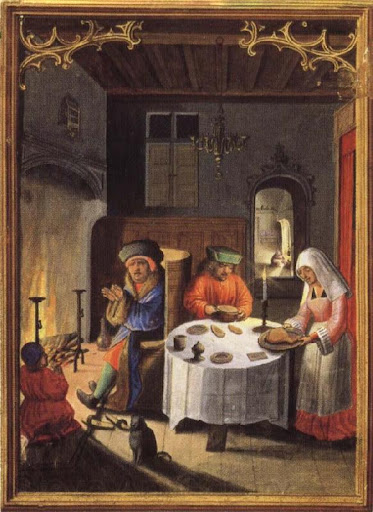
Manuscript illuminations and paintings reveal detailed insights into medieval aristocratic interiors, highlighting Gothic motifs and linenfold paneling that enriched room aesthetics, offering a realistic view of the era’s vibrant furniture and textiles.
Common living spaces were markedly simpler, featuring basic furniture and highlighting the era’s social divide. However, the late Middle Ages saw efforts to enhance interior comfort through wooden paneling and tile stoves in affluent homes, marking a shift towards greater domesticity and setting the stage for future interior design innovations.
The Gothic Revival
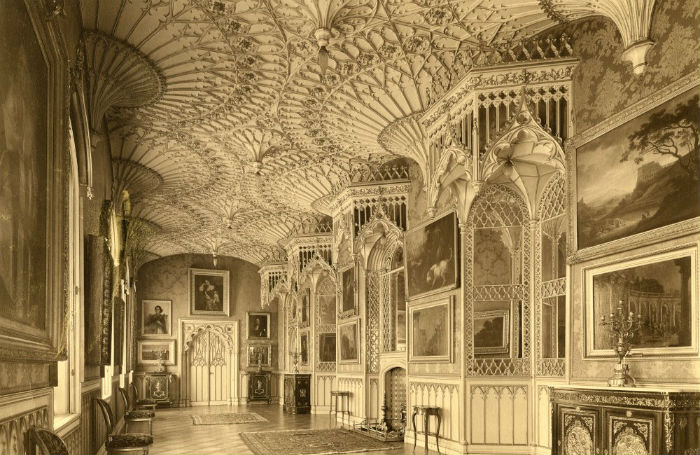
The 19th century witnessed a resurgence of the Gothic style, known as the Gothic Revival. This movement, led by figures like Augustus Pugin, sought to revive medieval designs, adapting them to contemporary needs. The Houses of Parliament in London exemplify this revival.

Gothic Design in Contemporary Times
In contemporary design, the Gothic style has been reinterpreted and integrated into various forms.
- Verticality and Light: Gothic architecture’s emphasis on height and light has influenced modern design in the use of all windows, high ceilings, and open floor plants to create a sense of space and openness.
- Structural Aesthetics: The use of exposed beams, vaulted ceilings, and pointed arches in Gothic architecture can be seen in contemporary architecture and interior design, bringing a touch of historical elegance to modern spaces.
- Decorative Detailing: Elements such as stained glass, intricate traceries, and ornamental stonework have found their way into modern design, often used to add a touch of sophistication and visual interest.
- Use of Dark Colours and Metallic Accents: A modern twist to the traditional Gothic palette.
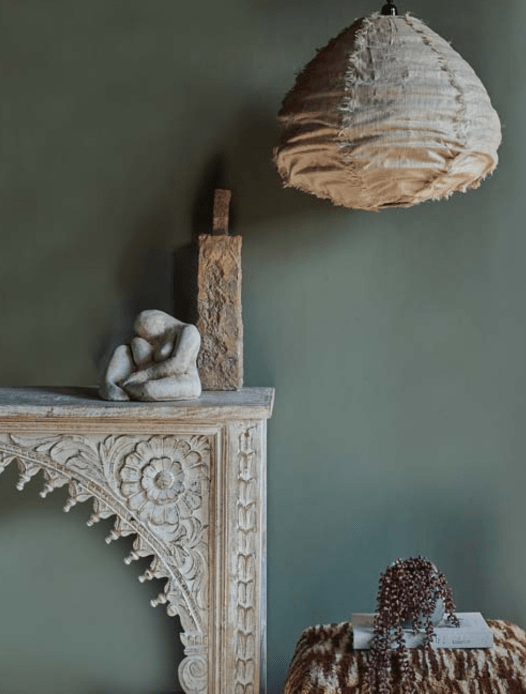
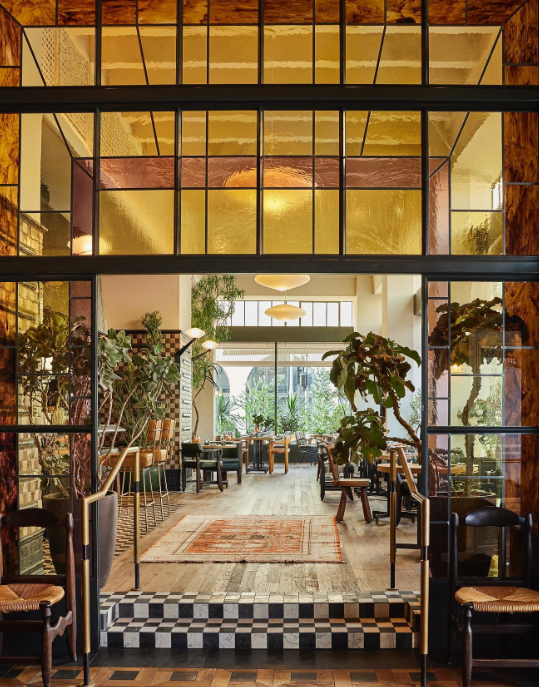
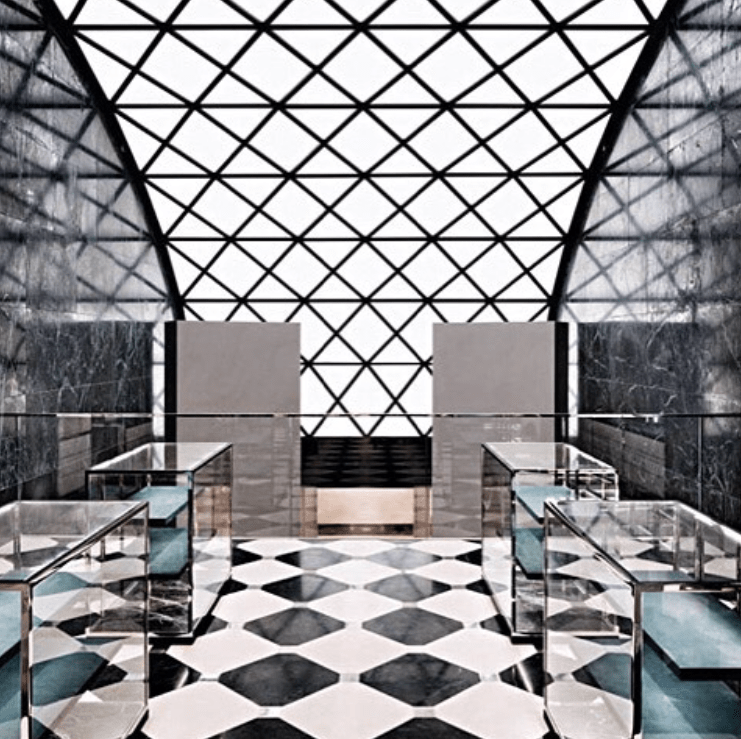
The Gothic Design Movement transcends its medieval origins, continuing to inspire and influence modern design. Its ensuring appeal lies in its ability to blend grandeur with intricacy, creating spaces that evoke a sense of awe and wonder. The gothic style remains a powerful narrative in the history of design, its legacy a testament to the enduring influence of historical movements in shaping contemporary aesthetics.
So the next time you find yourself under the towering arches of a Gothic cathedral, take a moment to appreciate not just its beauty but the centuries of history and human endeavour that it embodies.
JG x
Resources
- Architectural Digest. (n.d.). The best gothic cathedrals. Available at: https://www.architecturaldigest.com/gallery/best-gothic-cathedrals (Accessed: 24 January 2024).
- ArchDaily. (n.d.). The origins and evolution of gothic architecture. Available at: https://www.archdaily.com/983605/the-origins-and-evolution-of-gothic-architecture (Accessed: 24 January 2024).
- Architecture.com. (n.d.). Gothic. Available at: https://www.architecture.com/knowledge-and-resources/knowledge-landing-page/gothic (Accessed: 24 January 2024).
- Aperture Tours. (2017). Best place to photograph the Notre-Dame de Paris. Available at: https://www.aperturetours.com/blog/2017/best-place-to-photograph-the-notre-dame-de-paris (Accessed: 24 January 2024).
- Courtauld Institute of Art. (n.d.). Gothic architecture in Spain: Invention and imitation. Available at: https://courtauld.ac.uk/research/research-resources/publications/courtauld-books-online/gothic-architecture-in-spain-invention-and-imitation/2-the-sumptuous-style-richly-decorated-gothic-churches-in-the-reign-of-alfonso-the-learned-henrik-karge/ (Accessed: 24 January 2024).
- Eve Waldron Design. (n.d.). Design history: Gothic. Available at: https://evewaldron.com/blogs/news/design-history-gothic (Accessed: 24 January 2024).
- Smart History. (n.d.). Siena in the late gothic: An introduction. Available at: https://smarthistory.org/siena-in-the-late-gothic-an-introduction/ (Accessed: 24 January 2024).
- The Cambridge University. (n.d.). King’s College Chapel: An architectural masterpiece and the man who told its story. Available at: https://www.cam.ac.uk/research/features/kings-college-chapel-an-architectural-masterpiece-and-the-man-who-told-its-story (Accessed: 24 January 2024).
- The Collector. (n.d.). Roman & Romanesque architecture. Available at: https://www.thecollector.com/roman-romanesque-architecture/ (Accessed: 24 January 2024).
- The Guardian. (2011). Gothic buildings: A spotters’ guide. Available at: https://www.theguardian.com/artanddesign/gallery/2011/sep/10/gothic-buildings-spotters-guide (Accessed: 24 January 2024).
- The Oxford University. (n.d.). Architecture of the college. Available at: https://www.asc.ox.ac.uk/architecture-college (Accessed: 24 January 2024).
- Victoria and Albert Museum. (n.d.). The gothic style: An introduction. Available at: https://www.vam.ac.uk/articles/the-gothic-style-an-introduction (Accessed: 24 January 2024).
- Vinterior. (n.d.). How to get the gothic style. Available at: https://www.vinterior.co/blog/inspiration/style-guide/how-to-get-the-gothic-style/ (Accessed: 24 January 2024).

 GALATEA
Leave a comment