Hello, my lovely design aficionados!
We’re back! And this time we’re talking about the history of interior design.
Are you ready for an enchanting stroll down the memory lane of interior design? Get comfy in your coziest nook, a steaming brew in hand, and unravel the fascinating story of how interior design came to be.
In the Beginning: Cave Doodles and Comfy Stones
Did you know that the roots of interior design are as ancient as civilisation itself?
Long before our modern comforts, our ancient ancestors were already transforming their dwellings with cave drawings and simplistic yet personal touches. This primal instinct paved the way for more sophisticated designs, like those in Ancient Egypt, where Pharaohs adorned their palaces with art and the wealthy decorated their villas with luxury, using native woods and textiles.

But, interior design was more than just aesthetic. For instance, Egyptians skillfully designed courtyards to provide shade, demonstrating early understanding of people-led design.
Greek and Roman Chic
As we move into the Greek and Roman periods, there was a huge shift; these cultures introduced the concept of aesthetics in living spaces.
The Greeks introduced concepts of symmetry, proportion, and harmony, while the Romans pioneered the use of marble and colour, creating lavish, yet durable, personal spaces. Both public and private spaces reflected the wealth, status, and artistic flair of the inhabitants.

The Middle Ages: Practicality Strikes Back
The Middle Ages marked a step back in interior design. It was a period dominated by feudalism and the strong influence of the Church, which meant the focus was on functionality. Homes were dark and dreary, with furniture reflecting that seen in religious buildings.
Toward the end of this period, we see the Gothic movement, marked by pointed arches, stained glass and detailed woodwork. This movement began to reintegrate artistry with function, hinting at the return of design as a form of expression. However, this was mainly confined to religious buildings.
The Renaissance: The Artistic Comeback
The Renaissance period was a creative explosion in interior design. Inspired by the revival of classical arts and culture, interiors were thoughtfully designed to be both beautiful and cohesive.
“Homes became canvases for beauty and creativity.”

Homes were no longer just dwellings; they became canvases for beauty and creativity. They contained classical furniture, and innovative use of wall paintings and murals, signaling a shift in interior design philosophy.
The Industrial Revolution: Design for All
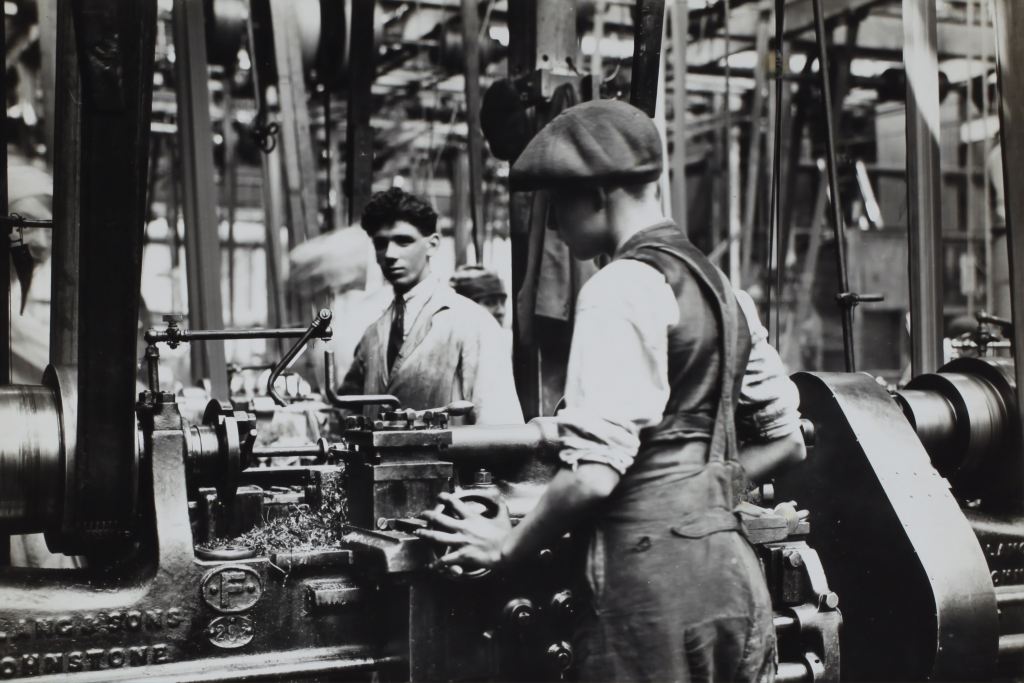
With the Industrial Revolution came new manufacturing processes, making furniture and décor more accessible to the masses. This era saw the introduction of wallpapers, affordable furniture and department stores, which democratised interior design, bringing beauty to the everyday home not just the elite.
Art Nouveau and Art Deco: The Glam Era
The late 19th and early 20th centuries introduced Art Nouveau and Art Deco. These styles were flamboyant, emphasising ornamental designs, bold geometric patterns, and luxurious materials. Interior design was no longer just functional necessity, but a form of personal expression and style.
These movements rebelled against the mass-produced items of the Industrial Revolution, returning focus to craftsmanship, sophistication, and personal expression.

The Modernist Movement: Less is More
The Modernist movement brought about a radical change. Their mantra, “less is more”, shifted focus to minimalism, functional furniture, and open-space concepts. This was a stark contrast to the ornate styles of the past, and influenced much of today’s interior design philosophies.

Postmodernism and Beyond: Eclecticism
Postmodernism ushered in an eclectic mix of styles, blending traditional and contemporary elements. There was a move toward personalisation of homes; it was no longer about following a specific style but about mixing and matching to reflect your own personality.
This era also saw a focus on sustainability and eco-friendly designs, aligning with global environmental awareness.
The Contemporary Era
Technology and Interior Design
In the 21st century, technology has revolutionised interior design. Software for 3D modeling and virtual reality has transformed the way designers work, allowing for more precise and imaginative creations.
The Global Melting Pot
Today’s interior design is highly influenced by global cultures. Increase in travel and communication has led to a global melting pot of design with a fusion of worldwide styles, from the minimalistic charm of Scandinavian design to the serene vibes of Japanese Zen.
The DIY Movement
The rise of the DIY movement has also impacted interior design significantly. With access to online resources and home improvement shows, more people are taking on the challenge of designing their own homes. This shift has democratised interior design further, meaning everyone can be a designer in their own right.
The world of interior design is a dynamic and ever evolving landscape. Societal changes, technological advancements, and cultural shifts all impact how we choose to design our homes.
What captures my fascination is how each successive wave of interior design often arises as a creative rebellion against the preceding era’s trends. We’ve seen this time and time again:
- From the evolution from the solemn religious motifs of the Gothic and Baroque periods to the Rococo era’s playful use of floral and classical motifs
- To the conscious shift from the mass production ethos of the Industrial Revolution to the personalized allure of handcrafted creations in the Arts and Crafts movement
- And more recently, the transition from the minimalist, neutral aesthetics of pre-Covid homes to today’s embrace of maximalism and colour.
This continual cycle of reaction and reinvention within interior design not only reflects our shifting cultural and aesthetic sensibilities but also illustrates a vibrant dialogue between eras.
Catch you next time for more design chit chat!
JG x
References & Resources
- Coates, M., Brooker, G., & Stone, S. (2009). The Timeline. In The Visual Dictionary of Interior Architecture and Design (pp. 274-283). Lausanne; London; La Vergne: AVA Publishing SA. Retrieved January 15, 2024, from http://dx.doi.org/10.5040/9781350088719.0257.
- Decor Aid. (n.d.). The Evolution of Interior Design. Retrieved January 15, 2024, from https://www.decoraid.com/blog/interior-design-history/.
- Metropolitan Museum of Art. (n.d.). Heilbrunn Timeline of Art History. Retrieved January 15, 2024, from https://www.metmuseum.org/toah/hd/hous/hd_hous.htm.
- Mies van der Rohe Pavilion. (n.d.). The Pavilion. Retrieved January 15, 2024, from https://miesbcn.com/the-pavilion/.
- Society of British and International Design. (2013). History of Interior Design. Retrieved January 15, 2024, from https://www.sbid.org/history-of-interior-design/.
- UNESCO World Heritage Centre. (n.d.). Villa Tugendhat in Brno. Retrieved January 15, 2024, from https://whc.unesco.org/en/list/1005/.
 GALATEA
Leave a comment